About this artwork
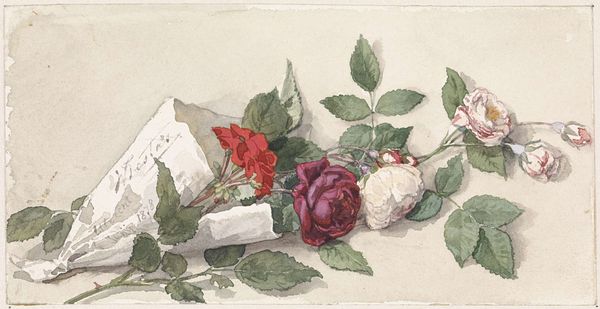
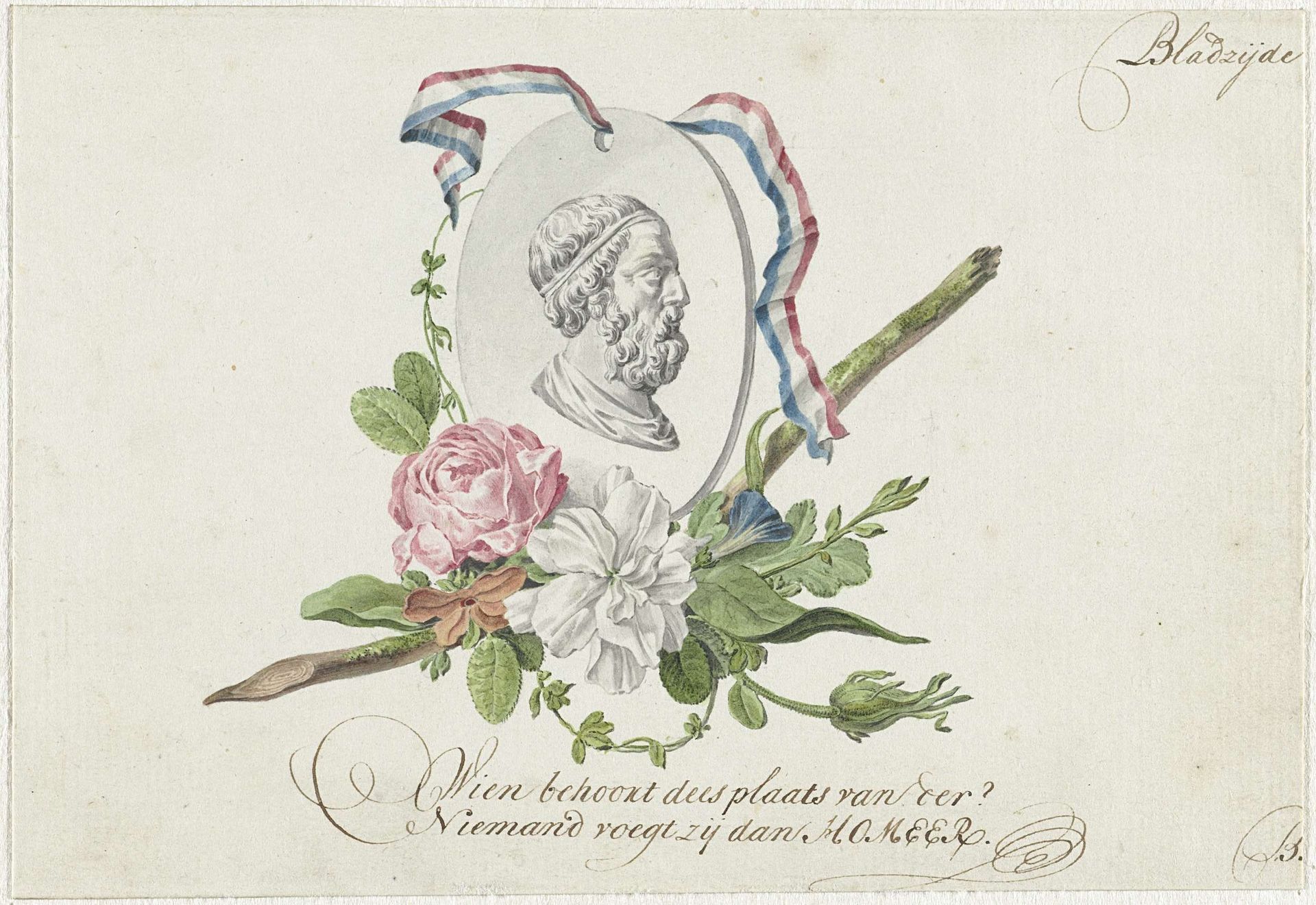
Willem Bilderdijk created this delicate watercolor, ink, and graphite vignette, sometime in the late 18th or early 19th century. We see a portrait medallion encircled by a vibrant array of flowers and foliage. The arrangement displays a structured yet asymmetrical balance, a common feature in the decorative arts of that time. The composition invites us to consider the relationship between nature and culture. The formal arrangement of the flowers, paired with the classical bust, may engage with the tradition of emblematic imagery and the philosophy of the Enlightenment. The medallion, adorned with a ribbon, suggests a symbolic gesture—perhaps a commemoration or dedication, subtly questioning conventional meanings of honor. The artist's chosen medium, with its capacity for detail and transparency, heightens the sense of refined elegance, which serves to subtly destabilize the traditional boundaries between art, craft, and intellectual pursuit.
Vignet met bloemen, portretmedaillon en lint
1782

Willem Bilderdijk
1756 - 1831Location
RijksmuseumArtwork details
- Dimensions
- height 115 mm, width 168 mm
- Location
- Rijksmuseum
- Copyright
- Rijks Museum: Open Domain
Comments
Share your thoughts
About this artwork
Willem Bilderdijk created this delicate watercolor, ink, and graphite vignette, sometime in the late 18th or early 19th century. We see a portrait medallion encircled by a vibrant array of flowers and foliage. The arrangement displays a structured yet asymmetrical balance, a common feature in the decorative arts of that time. The composition invites us to consider the relationship between nature and culture. The formal arrangement of the flowers, paired with the classical bust, may engage with the tradition of emblematic imagery and the philosophy of the Enlightenment. The medallion, adorned with a ribbon, suggests a symbolic gesture—perhaps a commemoration or dedication, subtly questioning conventional meanings of honor. The artist's chosen medium, with its capacity for detail and transparency, heightens the sense of refined elegance, which serves to subtly destabilize the traditional boundaries between art, craft, and intellectual pursuit.
Comments
Share your thoughts