#
pencil drawn
#
photo of handprinted image
#
aged paper
#
light pencil work
#
photo restoration
#
pencil sketch
#
light coloured
#
old engraving style
#
pencil work
#
watercolour illustration
Dimensions: height 430 mm, width 335 mm
Copyright: Rijks Museum: Open Domain
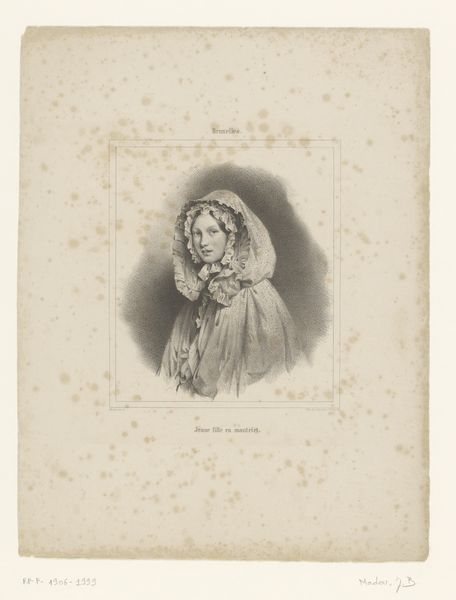
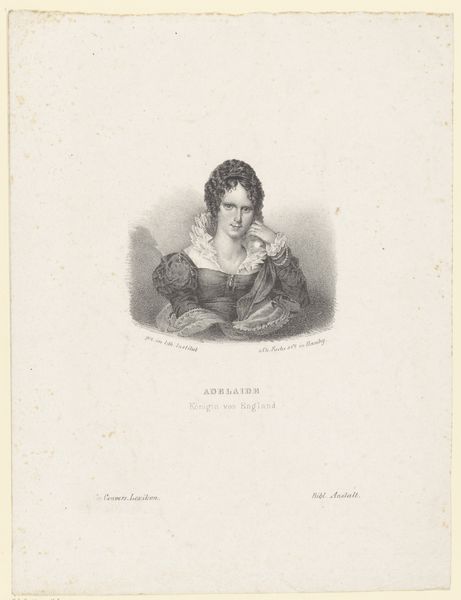
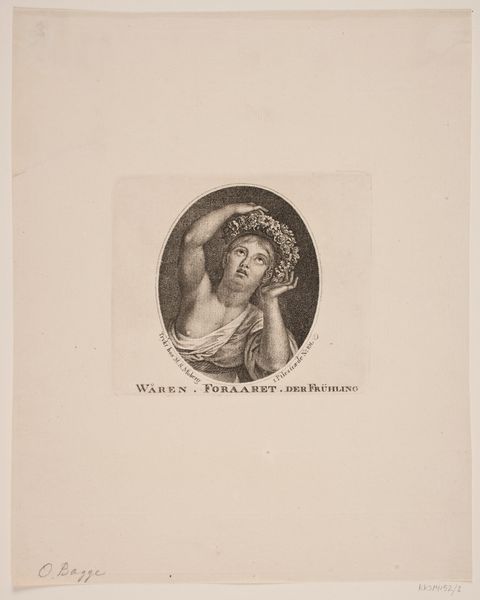
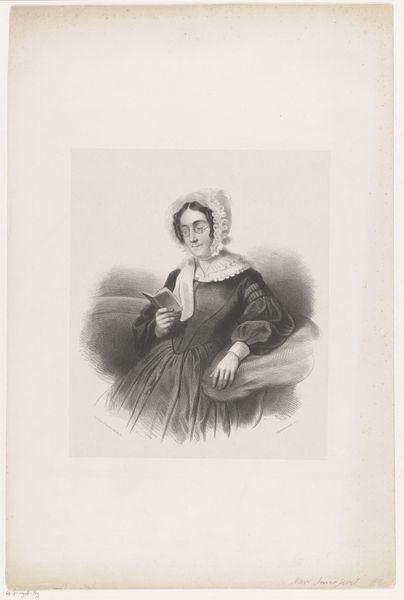
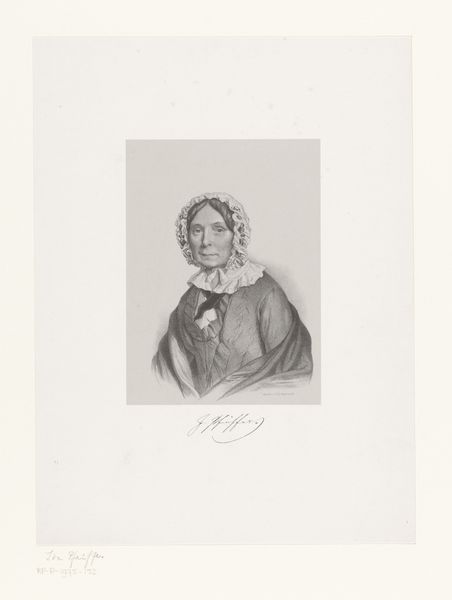
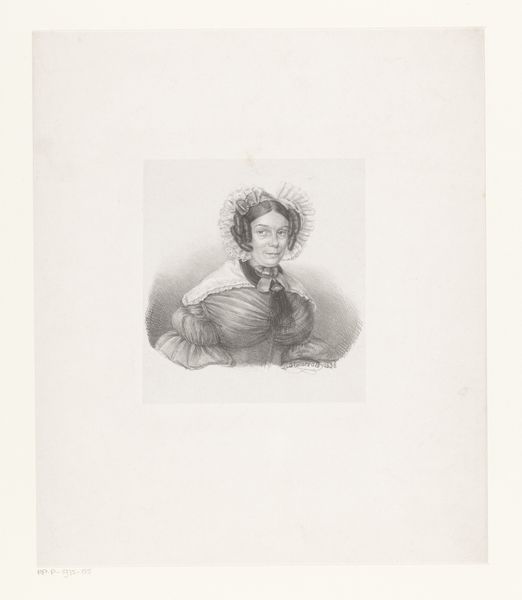
This portrait of Johanna Christina Hora Siccama-Eytelwein was created by Joseph Kayser in the nineteenth century. Her elaborate headwear, adorned with floral ornamentation, echoes symbols of purity, virtue, and celebration. Consider the floral wreath, a motif transcending epochs. In ancient Greece, wreaths crowned victors and deities, signs of honor and divine favor. Yet, these symbols evolve. In Renaissance paintings, floral garlands often framed the Virgin Mary, signifying her purity and spiritual authority. Here, this garland is not a sign of victory or divinity, but rather domesticity and celebration. Such symbols also undergo a psychological transformation. The collective memory embedded in these forms surfaces subconsciously, engaging viewers with deep, historical, and emotional associations. The circular form evokes wholeness, protection, and eternal return. The garland reminds us that symbols, like rivers, follow a cyclical course, resurfacing, evolving, and gathering new meanings as they cascade through time.
Comments
No comments
Be the first to comment and join the conversation on the ultimate creative platform.
 Collect
 React
React Comment
More like this