1798 - 1837
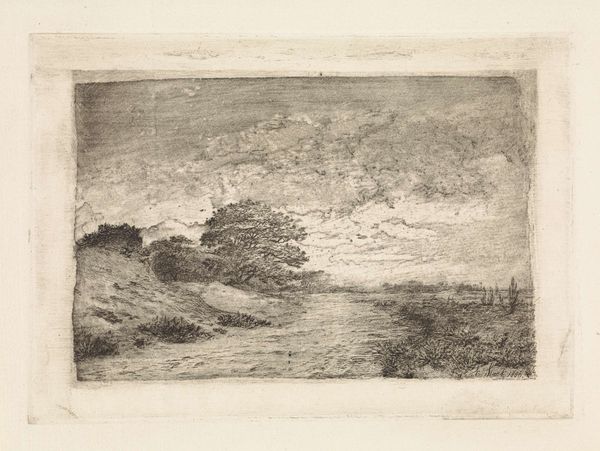
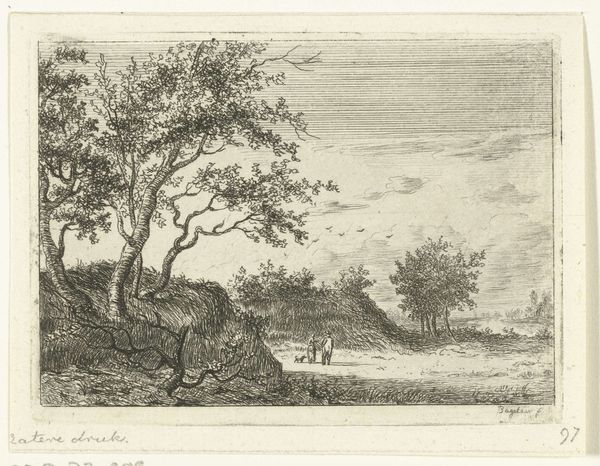
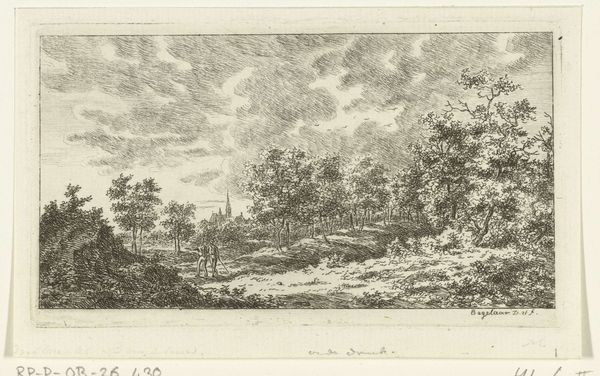
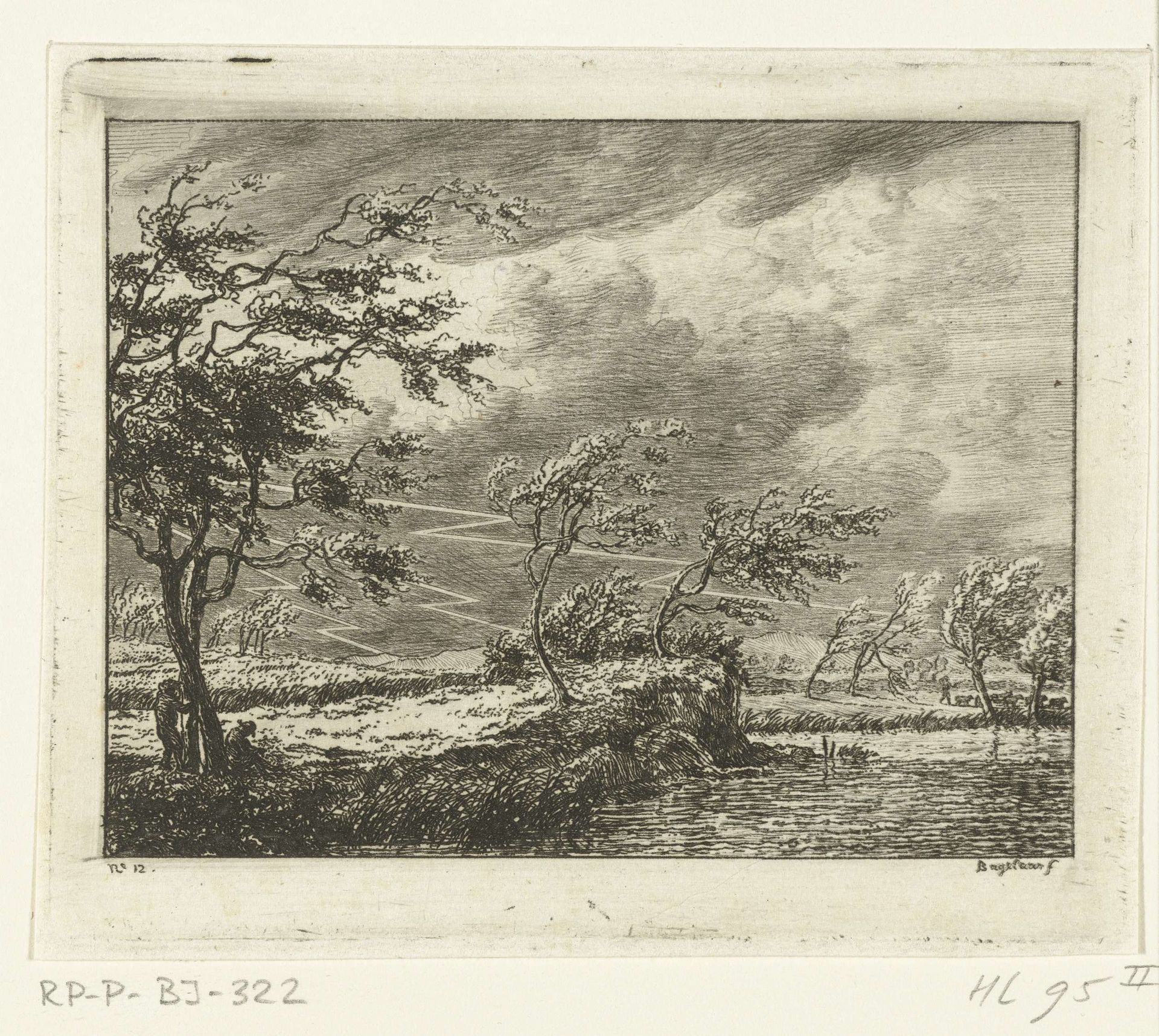
Riviergezicht met onweerslucht

Listen to curator's interpretation
Curatorial notes
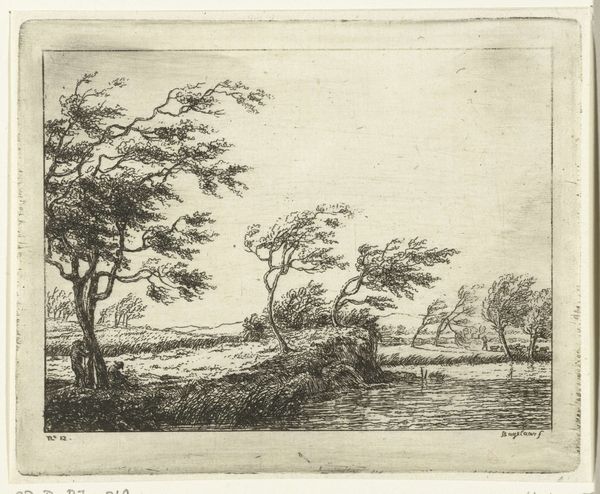
Editor: Here we have "River View with Storm Clouds," an etching by Ernst Willem Jan Bagelaar, created sometime between 1798 and 1837. The overwhelming feeling I get is one of tension—the sky feels heavy, and even the trees are bending to some unseen force. What stands out to you about this piece? Curator: The most compelling aspect is Bagelaar’s manipulation of the etching process to evoke that tension. Look closely at the lines: notice how their density and direction mimic the storm's energy. The very labor involved in creating the plate mirrors the effort to survive this landscape. Editor: So, the artist’s process becomes part of the story? Curator: Precisely. Etching wasn't a spontaneous act; it required preparation, acid, metal, deliberate action. The materials themselves - the copper plate, the acid used for biting - each played an integral role in defining the print’s aesthetic. Consider, too, the socio-economic implications of printmaking – how did the relative affordability of prints influence the art market and public access to art during that time? Editor: That's something I hadn't considered - the means of production shaping access and influence. So it's not just a landscape; it's also a record of labour and accessibility. How would prints like these be consumed? Curator: These images became part of a burgeoning print culture that served various functions from scientific illustration to disseminating political ideas or artistic styles. The act of collecting, displaying and discussing prints encouraged connoisseurship amongst a broader audience. So we have an interplay of artistic skill, market forces, and consumer desire influencing what we see here. Editor: I’m seeing how deeply interwoven process and social context truly are, offering entirely different lenses through which we can examine the work. I appreciate you shedding some light on that! Curator: And I you. This type of artwork underscores how materiality is inherently linked to production and accessibility in our interpretation.