About this artwork
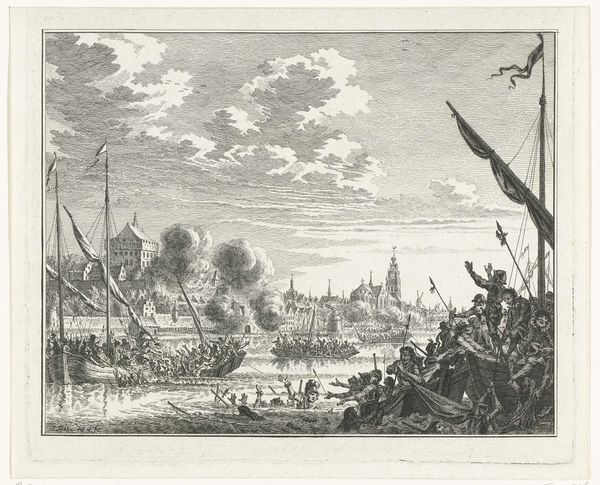
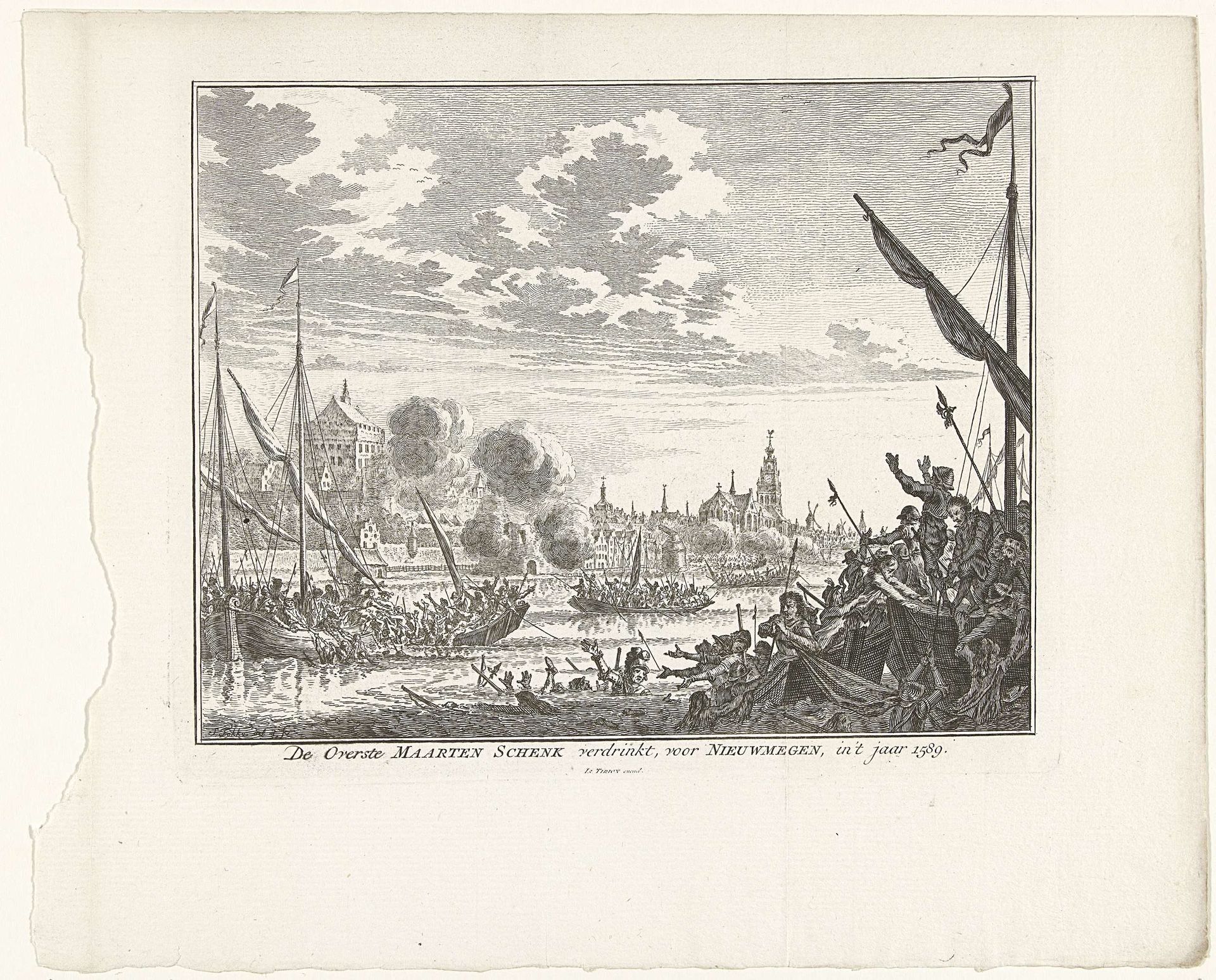
Simon Fokke created this print called 'Maarten Schenck van Nideggen Drowning Before Nijmegen, 1589' sometime in the 18th century. Fokke lived during the Enlightenment, a time when there was a renewed interest in rational thought and historical accuracy. Here we see the depiction of a military event from over a century before the print was made. The work illustrates a failed attempt by Maarten Schenck to capture Nijmegen during the Eighty Years' War. What can feel removed to us now, was a key moment in the collective memory of the Netherlands, a foundational narrative in the fight for independence. Consider, for a moment, the power dynamics at play. Schenck, a military leader, is remembered not for his victories but for his defeat. Fokke's print serves as a reminder of the human cost of war. It prompts us to reflect on who is remembered in history, and what aspects of their stories are told.
Maarten Schenck van Nideggen verdrinkt voor Nijmegen, 1589
1752

Simon Fokke
1712 - 1784Location
RijksmuseumArtwork details
- Medium
- print, engraving
- Dimensions
- height 177 mm, width 204 mm
- Location
- Rijksmuseum
- Copyright
- Rijks Museum: Open Domain
Tags
Comments
Share your thoughts
About this artwork
Simon Fokke created this print called 'Maarten Schenck van Nideggen Drowning Before Nijmegen, 1589' sometime in the 18th century. Fokke lived during the Enlightenment, a time when there was a renewed interest in rational thought and historical accuracy. Here we see the depiction of a military event from over a century before the print was made. The work illustrates a failed attempt by Maarten Schenck to capture Nijmegen during the Eighty Years' War. What can feel removed to us now, was a key moment in the collective memory of the Netherlands, a foundational narrative in the fight for independence. Consider, for a moment, the power dynamics at play. Schenck, a military leader, is remembered not for his victories but for his defeat. Fokke's print serves as a reminder of the human cost of war. It prompts us to reflect on who is remembered in history, and what aspects of their stories are told.
Comments
Share your thoughts