daguerreotype, photography
portrait
daguerreotype
photography
genre-painting
realism
Dimensions: height 85 mm, width 175 mm
Copyright: Rijks Museum: Open Domain
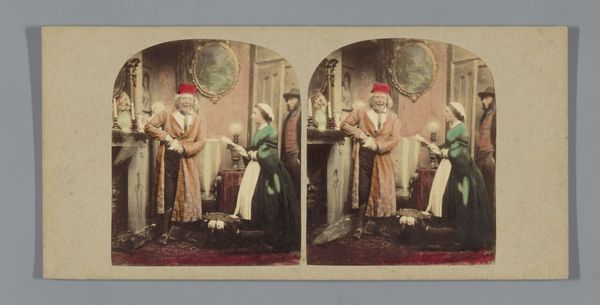
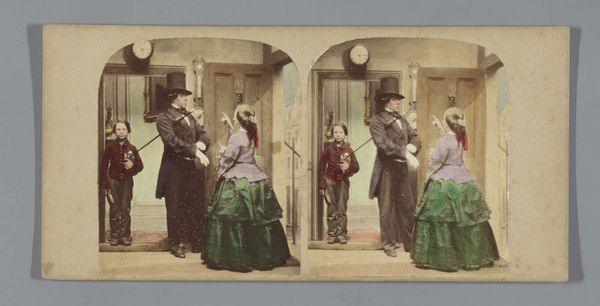
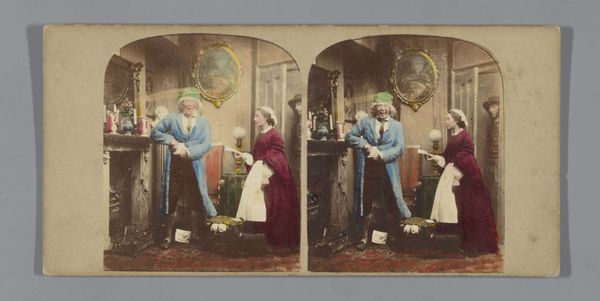
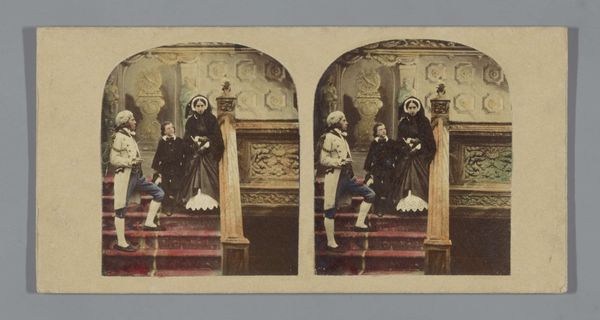
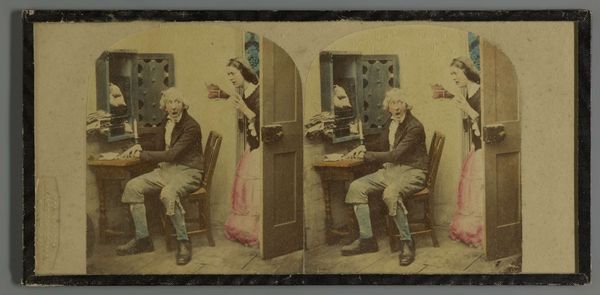
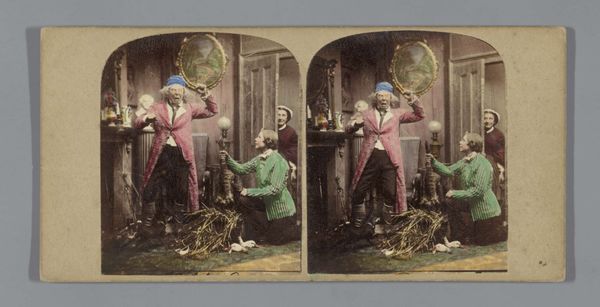
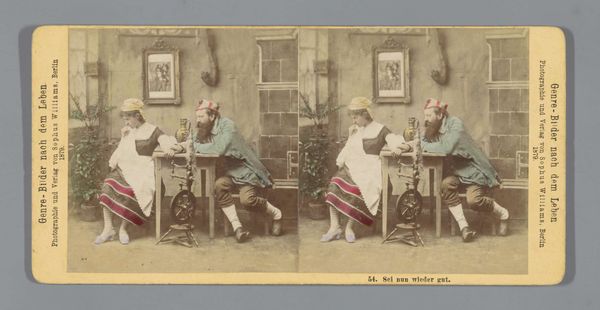
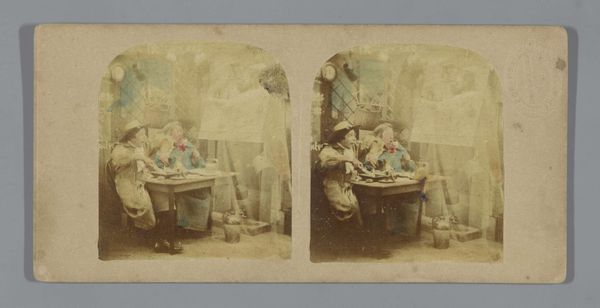
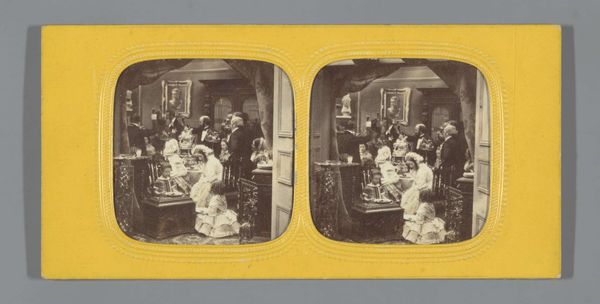
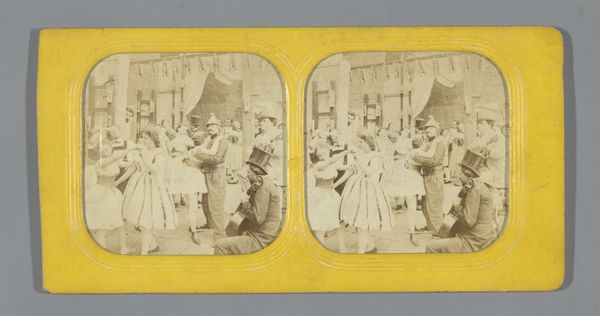
Editor: Here we have an anonymous daguerreotype from somewhere between 1852 and 1863 entitled "Man komt thuis," which translates to "Man Comes Home." There's something quite staged about it, like a scene from a play. What do you see in this piece? Curator: Well, immediately I see the carefully constructed symbolism of domesticity, though perhaps a bit forced. Notice how the woman sits rigidly, almost as if posing as the ideal of domestic tranquility. What do the objects placed around the space tell you? Editor: There's a clock, prominently displayed. It almost feels like it’s there to make sure the viewer sees that he’s back on time. Curator: Exactly! Time, punctuality, the man’s role as provider returning from work – these are powerful cultural signals. Think about the very act of coming home – a deeply ingrained human narrative of security and belonging. Is this perhaps *too* deliberate? Editor: It does seem a bit performative, right? I mean, is it just me, or does he seem *too* happy to be coming home? Curator: Precisely! And how does this clash, do you think, with our own, more modern expectations of home and family? Does this image reaffirm or perhaps question our preconceptions? Editor: It's fascinating how much a seemingly simple image can unpack. I definitely see it as less of an innocent snapshot and more of a crafted statement. Curator: Yes, images like this show us that cultural memory is often carefully constructed and preserved, not just organically grown. Every detail whispers something about the hopes and anxieties of its time.
Comments
No comments
Be the first to comment and join the conversation on the ultimate creative platform.
 React
React Comment