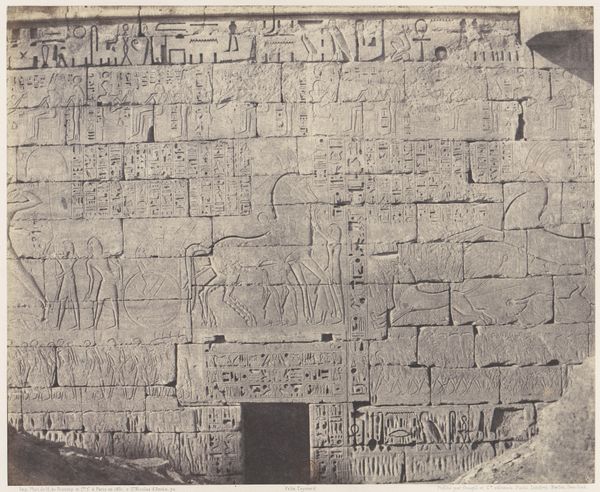
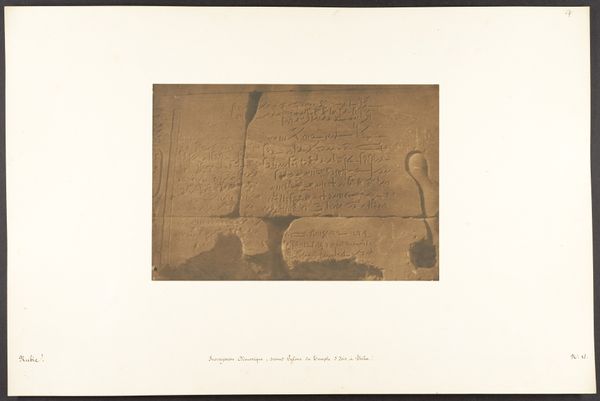
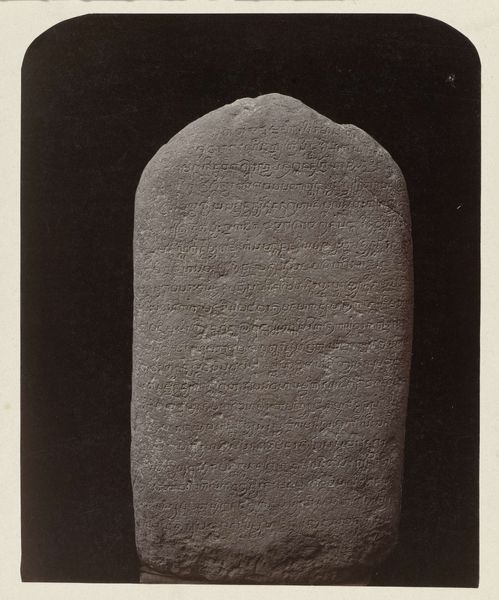
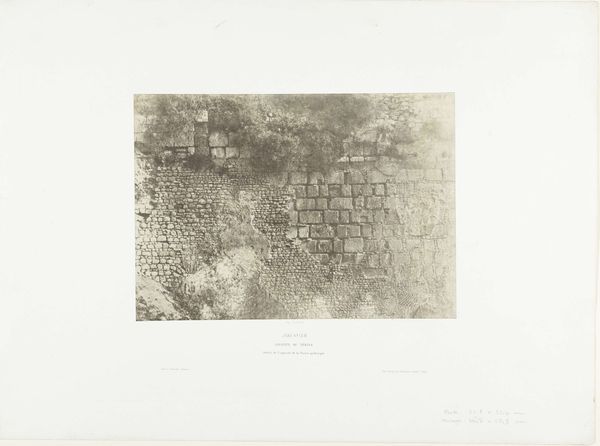
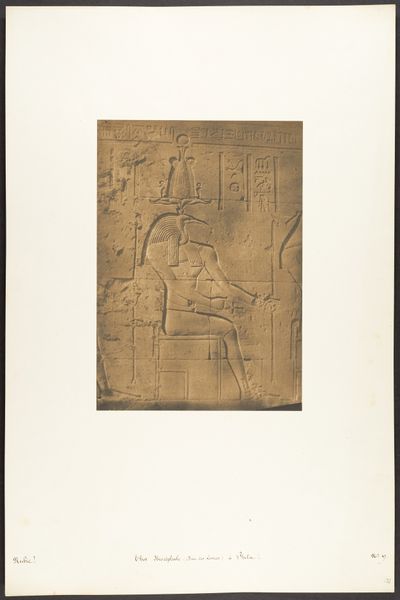
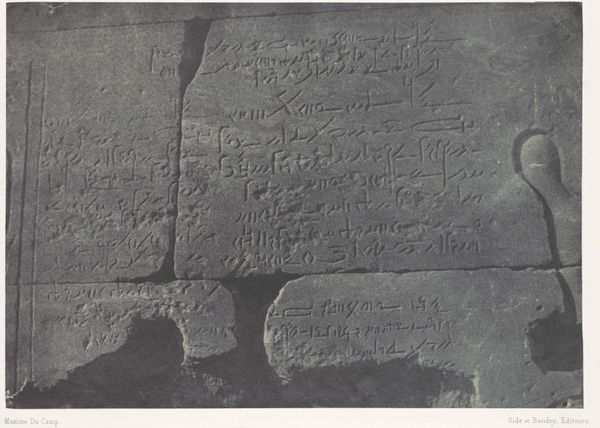
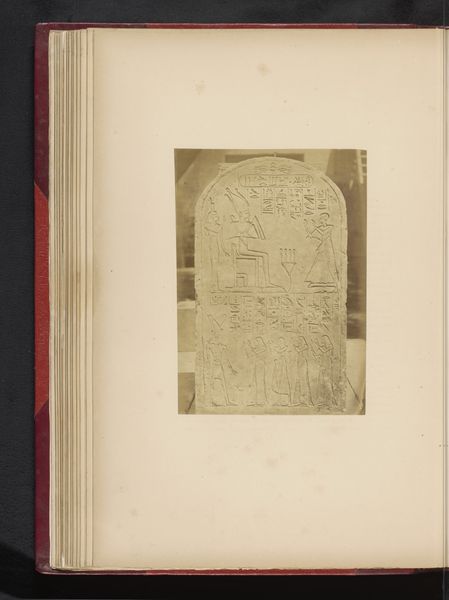
Stèle met hiërogliefen, gevonden bij het Serapeum te Memphis 1852 - 1857
0:00
0:00

charlesmarville
Rijksmuseum
carving, relief, daguerreotype, photography
#
portrait
#
carving
#
relief
#
daguerreotype
#
ancient-egyptian-art
#
form
#
photography
#
geometric
#
ancient-mediterranean
Dimensions: height 359 mm, width 229 mm
Copyright: Rijks Museum: Open Domain
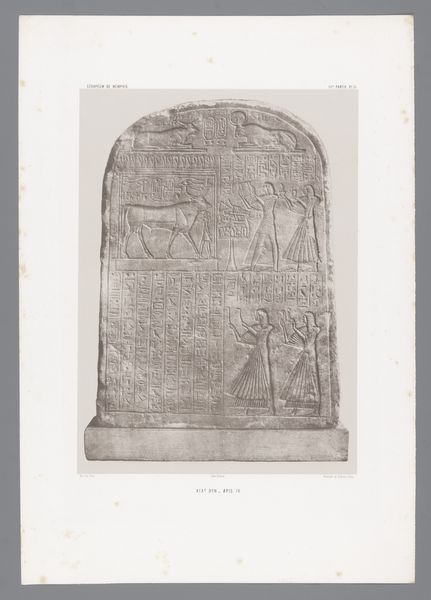
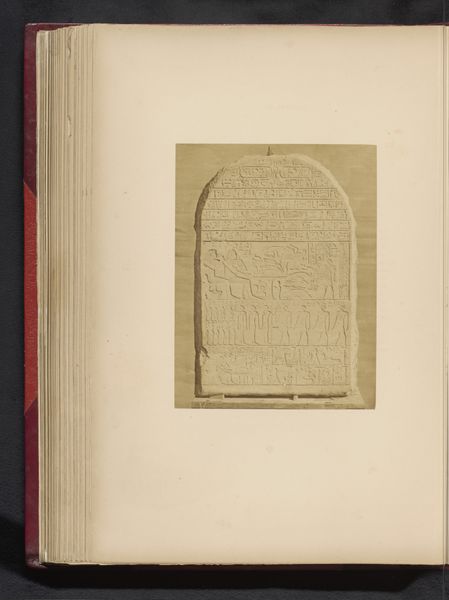
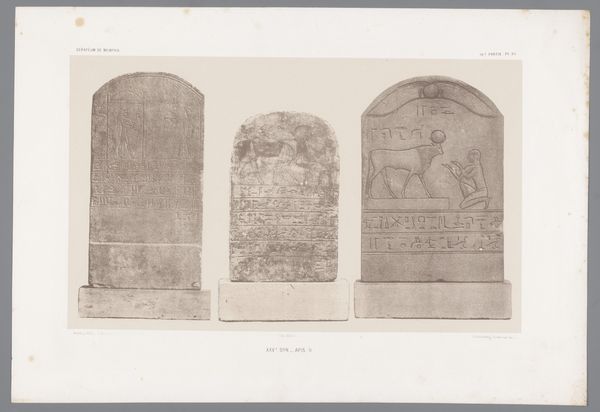
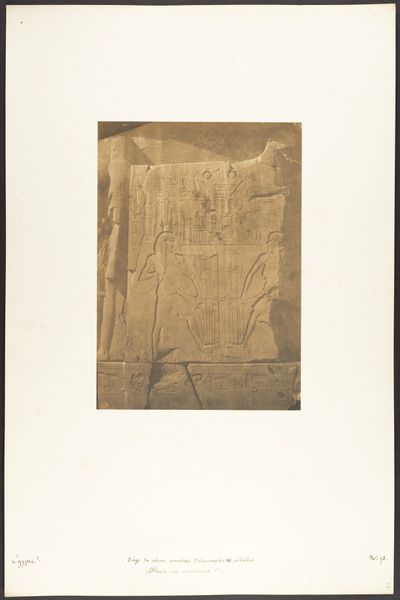
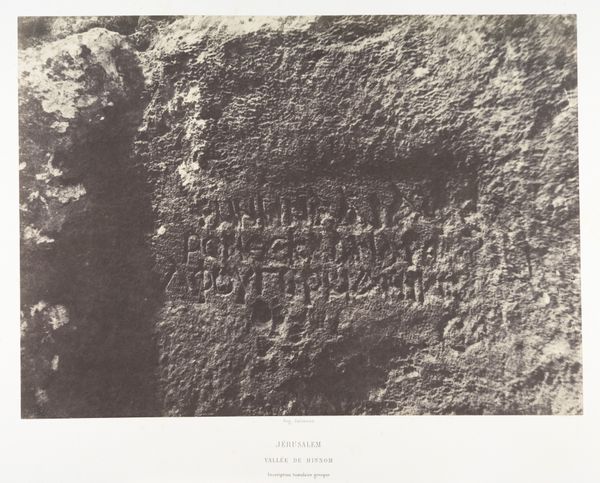
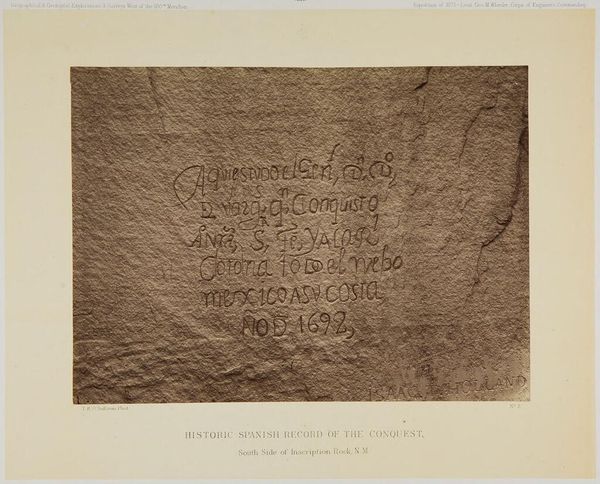
Editor: Here we have "Stèle met hiërogliefen, gevonden bij het Serapeum te Memphis" a daguerreotype by Charles Marville, dating from 1852-1857. It presents what appears to be a section of carved stone. The top portion has figures carved into the stone, but it's quite faded. Below that are lines and lines of glyphs, also in relief. How should we read such an ancient and geometrically driven work, Dr. Evans? Curator: Indeed. From a formalist perspective, the geometry evident within the hieroglyphs commands our attention. Notice how each symbol, irrespective of its potential semantic weight, contributes to the overall structure of the relief. Consider the orientation of these glyphs - the direction dictates the reading sequence, doesn't it? Editor: Absolutely! You're talking about syntax expressed visually through composition. How do the figures at the top play into this compositional framework? Curator: The figures at the top present a stark contrast to the rigid geometry of the hieroglyphs below. Their rounded forms and relative freedom of movement inject a sense of dynamism into the piece, wouldn't you say? They also anchor the visual plane, giving us a spatial relationship to navigate the glyphs as text but also as a structure within the stone. Editor: So the juxtaposition between the representational figures and the abstract hieroglyphs creates a certain tension within the work? It emphasizes form but it directs the viewers eyes in different planes? Curator: Precisely! Furthermore, the daguerreotype itself introduces another layer of form, through the artist’s chosen perspective, which flatten the relief on a single plane and, also, by turning the work into a reproduction. Editor: Thinking about it that way reveals so much about the internal push and pull between form and medium! Thanks for unpacking this with me. Curator: It has been my pleasure. By rigorously analyzing its form, we've discovered that its power rests not merely in historical meaning but also its very construction.
Comments
No comments
Be the first to comment and join the conversation on the ultimate creative platform.
 Collect
 React
React Comment
More like this