tempera, lithograph, print
#
narrative-art
#
tempera
#
lithograph
# print
#
asian-art
#
folk-art
#
genre-painting
Dimensions: height 384 mm, width 451 mm
Copyright: Rijks Museum: Open Domain
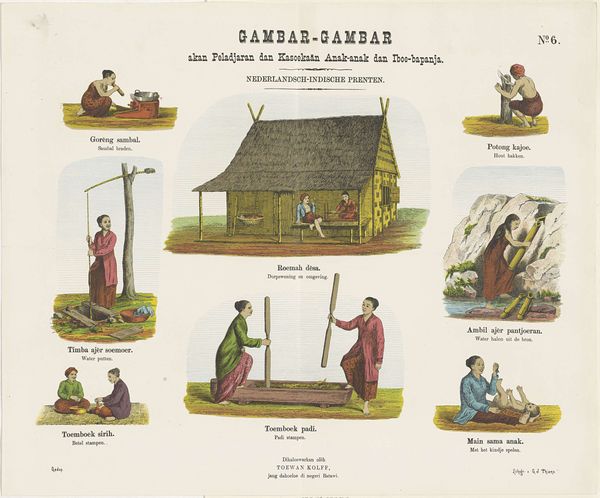
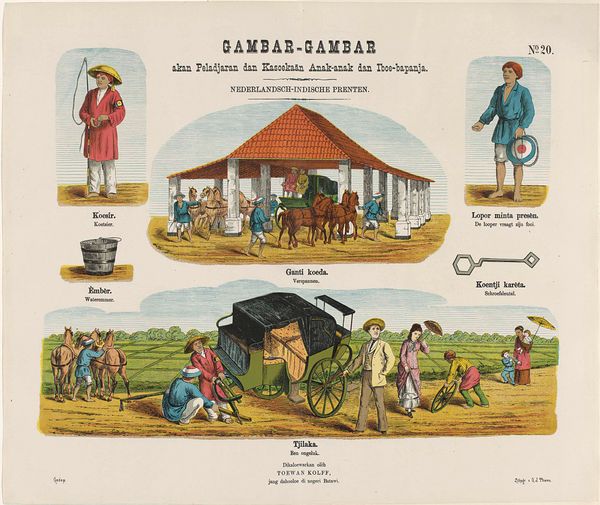
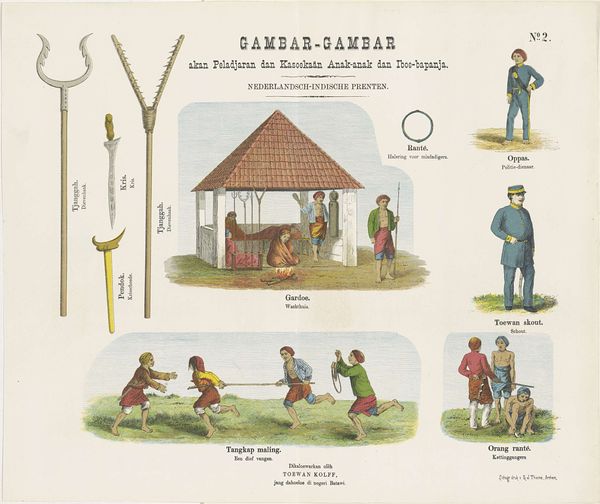
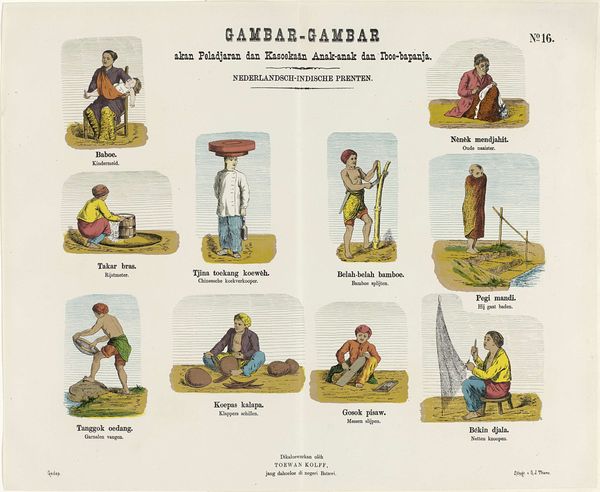
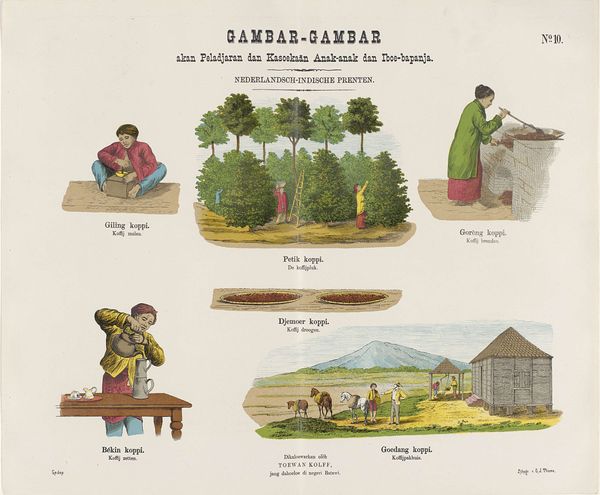
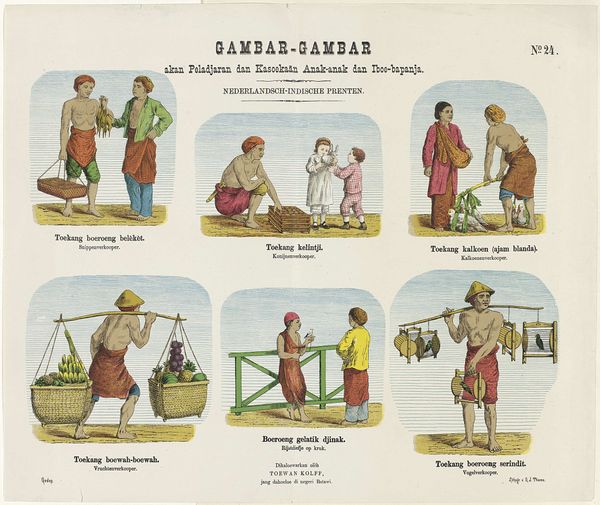
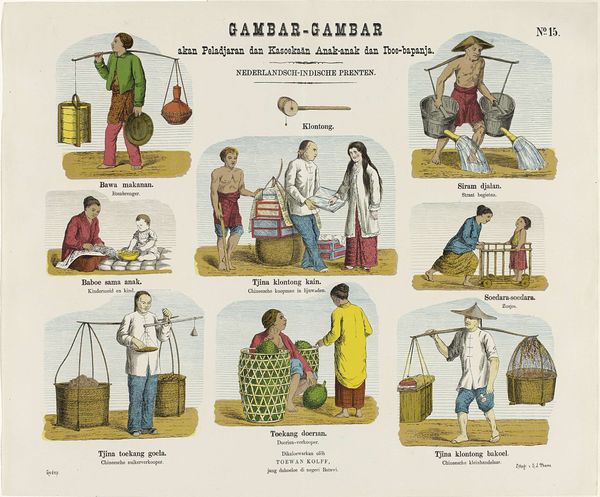
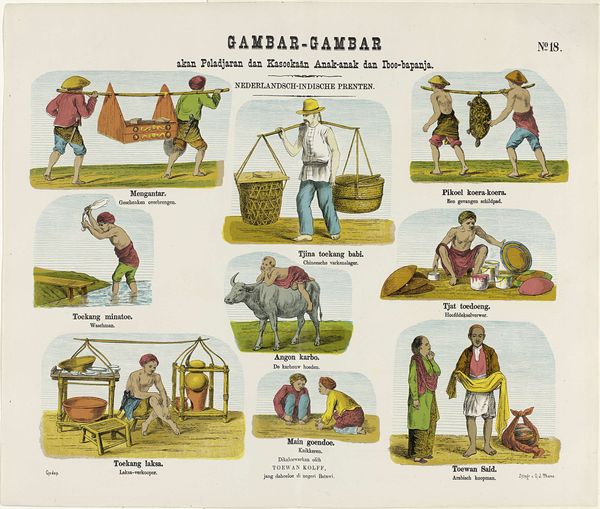
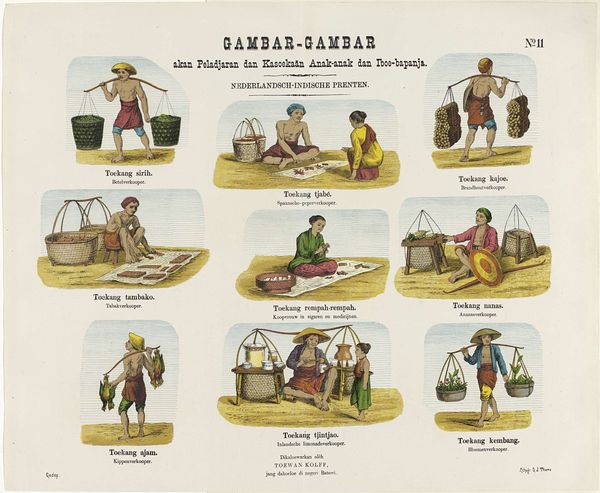
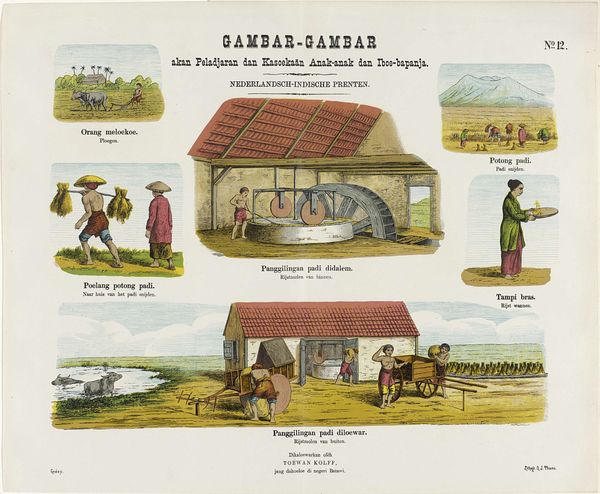
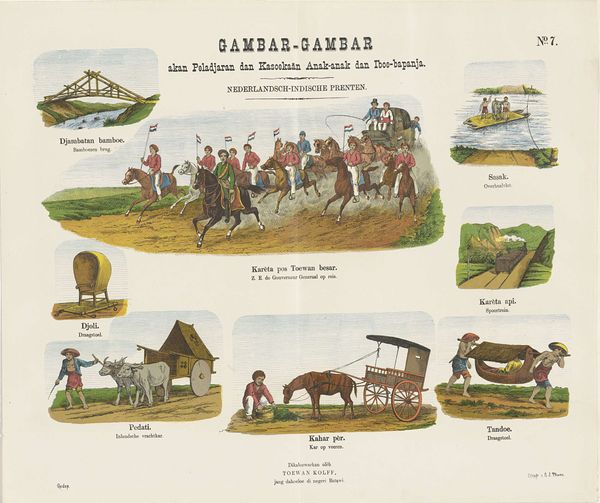
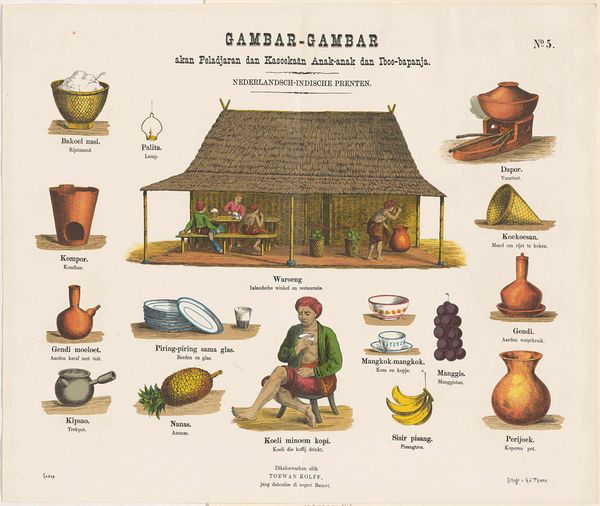
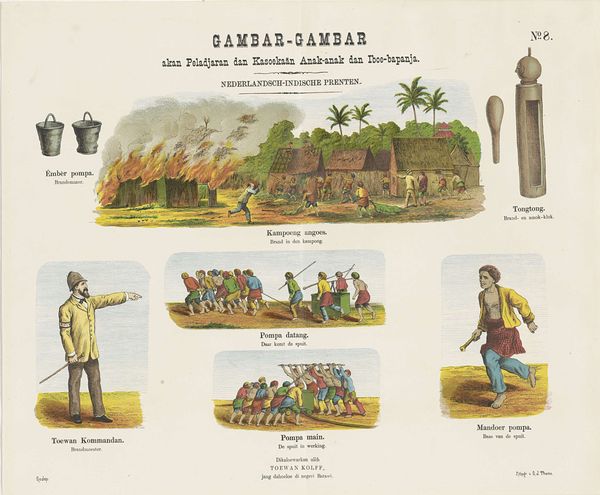
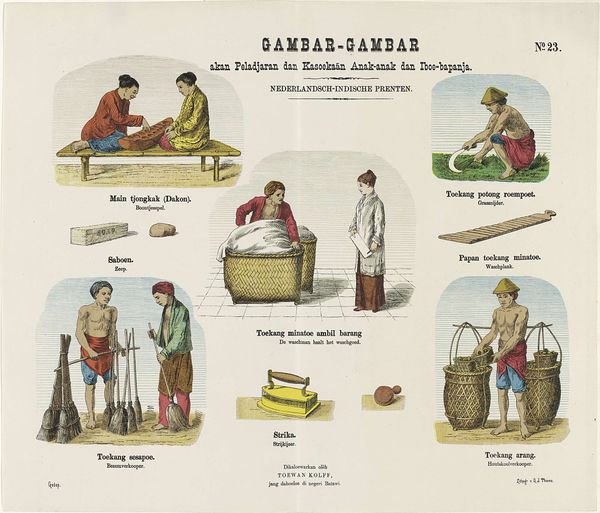
Editor: This lithograph, “Huis en personeel,” dating from 1868 to 1881 by Gualtherus Kolff, presents a series of vignettes depicting domestic scenes. It's quite fascinating – almost like an educational chart. What do you see as the key elements at play here? Curator: It’s interesting to consider this “educational chart” as a window into Dutch colonial society in Indonesia. The central image of the “Roemah blanda” – a European house – immediately establishes a hierarchy. The surrounding depictions of various laborers, each labeled with their respective job titles, reveal the structured social order of the time. How do these images contribute to the understanding of power dynamics within this society? Editor: It feels a bit… clinical. The separation of the house and the laborers creates distance. It makes me wonder, what kind of audience was this print intended for? Curator: Precisely! It’s highly likely this was aimed at a Dutch audience, perhaps even used in schools, to reinforce a particular view of colonial life. Consider the choices in imagery – are these objective observations or carefully constructed representations meant to legitimize colonial rule? Look at the labeling. Does it describe the subjects from an objective perspective? Or from that of a person who holds power over the individuals shown? Editor: That's a really good point. It is all neatly organized, almost like a catalogue, reinforcing a sense of control. I hadn't considered the role it might play in shaping perceptions of Indonesian life for those back in the Netherlands. Curator: The power of imagery should not be underestimated. Prints like these played a crucial role in constructing and disseminating specific narratives. The arrangement, the details… they all contribute to shaping public opinion and solidifying existing social structures. What new questions arise now about the role and display of these kinds of works in contemporary galleries or museums? Editor: I definitely have a lot more to consider, now, especially in terms of the legacy of colonialism and how these images continue to influence our understanding of the past. Curator: Indeed. Examining art through a historical lens reveals its entanglement with power structures and encourages us to critically engage with the narratives they promote.
Comments
No comments
Be the first to comment and join the conversation on the ultimate creative platform.
 Collect
 React
React Comment
More like this