drawing, pencil, graphite
#
drawing
#
landscape
#
pencil
#
abstraction
#
graphite
Dimensions: height 375 mm, width 522 mm
Copyright: Rijks Museum: Open Domain
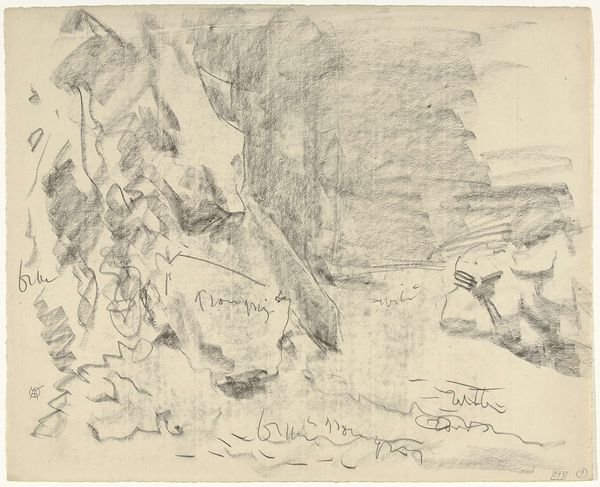
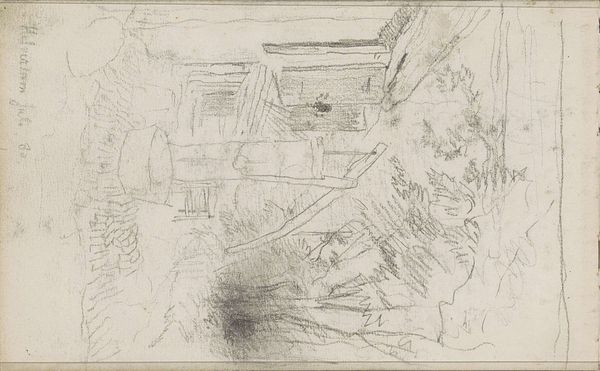
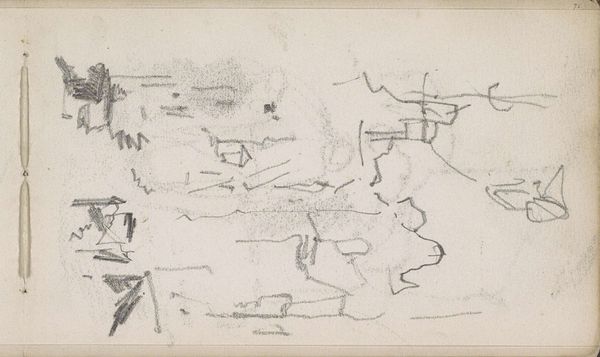
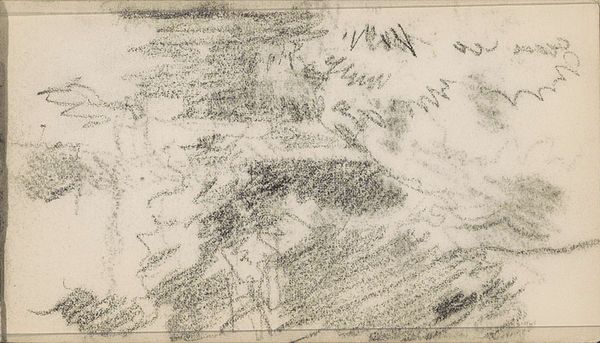
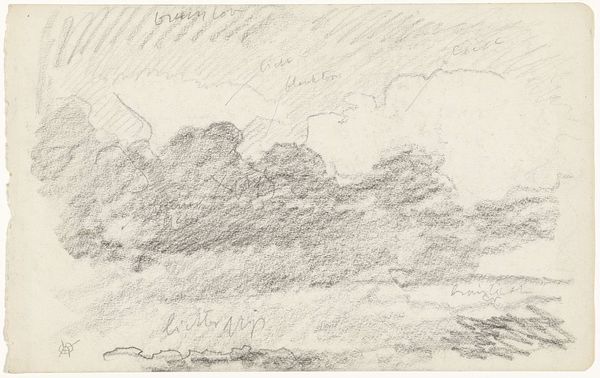
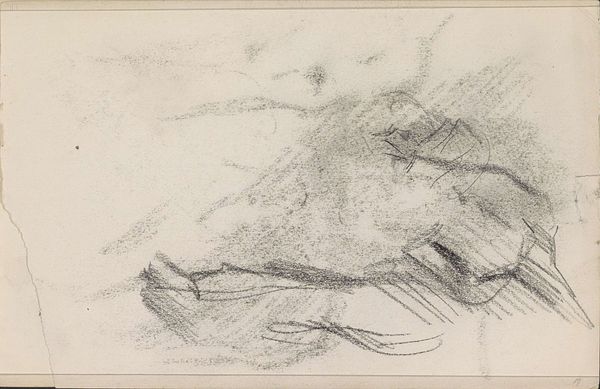
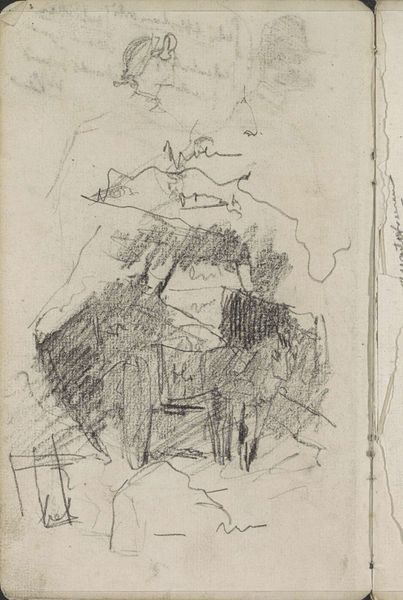
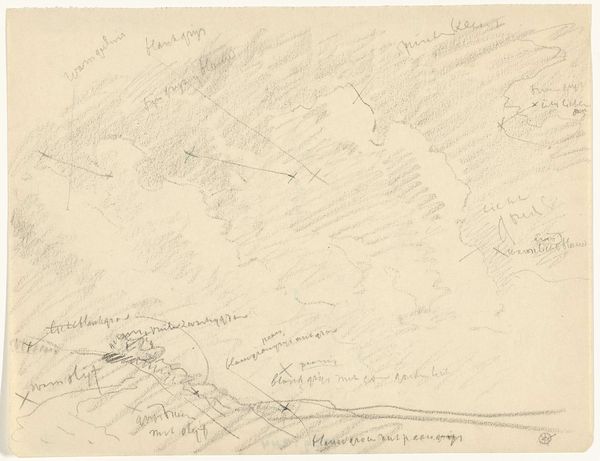
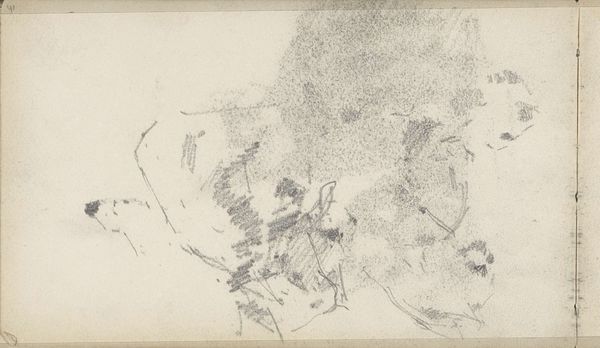
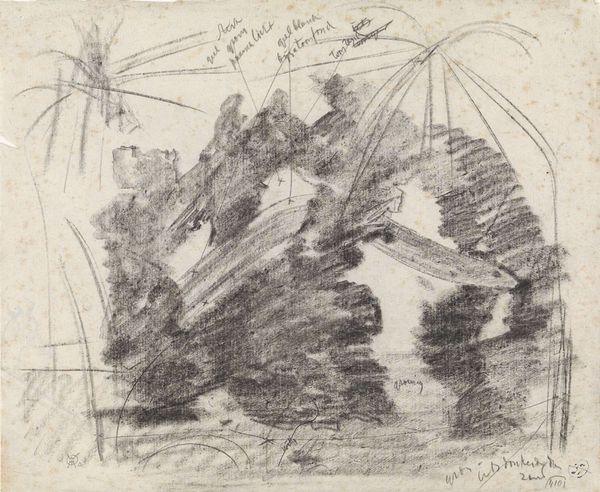
Curator: This is Gerrit Willem Dijsselhof’s “Sketch of an Aquarium,” made sometime between 1876 and 1924. It’s a drawing, using pencil and graphite on paper. You can find it here at the Rijksmuseum. What are your first thoughts? Editor: It's interesting—chaotic, almost. My eye bounces around trying to find a focal point, and the lack of crisp lines makes it feel unfinished, like a fleeting impression rather than a definitive image. Curator: Right, it's all about that preliminary stage. Dijsselhof was deeply interested in design and craft and considered preliminary drawings, not just finished pieces, works in their own right. Look closely at the variety of marks, the notations he's made around the edges. This reveals a great deal about his working methods and the labor involved. Editor: I see how the contrasting areas of light and shadow define the forms, creating a spatial ambiguity. There is something organic in this image—despite the precision expected from technical sketches. The artist successfully uses shades and tones to establish a clear contrast. Curator: Precisely. Also, thinking of Dijsselhof’s wider production which covers furniture design, textile patterns, and even interior decoration, this “sketch” provides insight into the labor and design process of how different pieces came together. He explored the synthesis of different materials and craft traditions to meet new aesthetic needs, which aligns with his wider ideology on material culture. Editor: That makes me reconsider the 'unfinished' quality. It is more of an intimate glimpse into the artist’s creative thinking process rather than an error. By abstracting, Dijsselhof transforms the common motif of the aquarium into a microcosm of formal interplay. It makes you look at it and actively reconstruct the composition, trying to put it back to an image. Curator: Exactly. And while a finished painting could sell and function as a decorative or art object, this drawing would function differently within Dijsselhof’s production. Its value isn’t purely aesthetic or even representational; it provides functional instructions, design guidance. It’s a work of both art and labor. Editor: It's interesting to note how the close visual analysis—composition, tonal range, and gestural marks—mirrors an understanding of his craft and engagement with design. My view of it evolved from initially seeing it as chaos to seeing it as a study of form itself. Curator: Absolutely. So from examining material choices to understanding the broader context, there is an important lesson here about how design and functionality are closely interwoven.
Comments
No comments
Be the first to comment and join the conversation on the ultimate creative platform.
 Collect
 React
React Comment
More like this