1881 - 1900
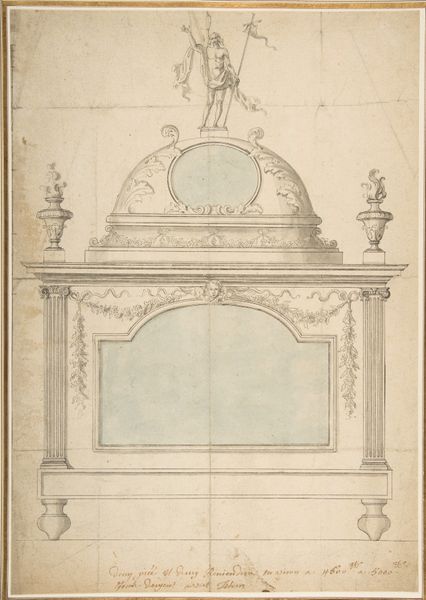
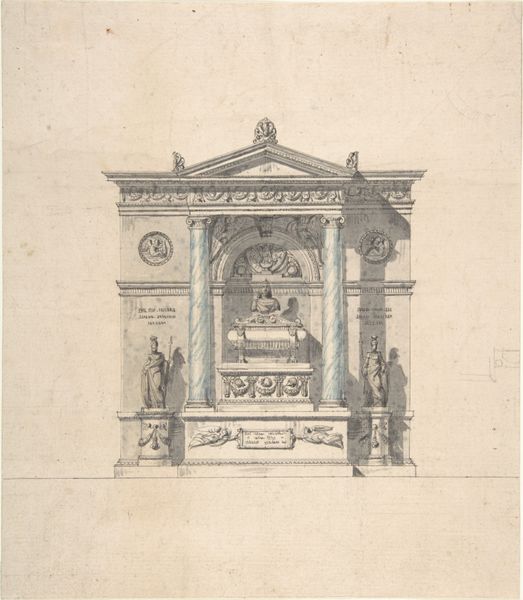
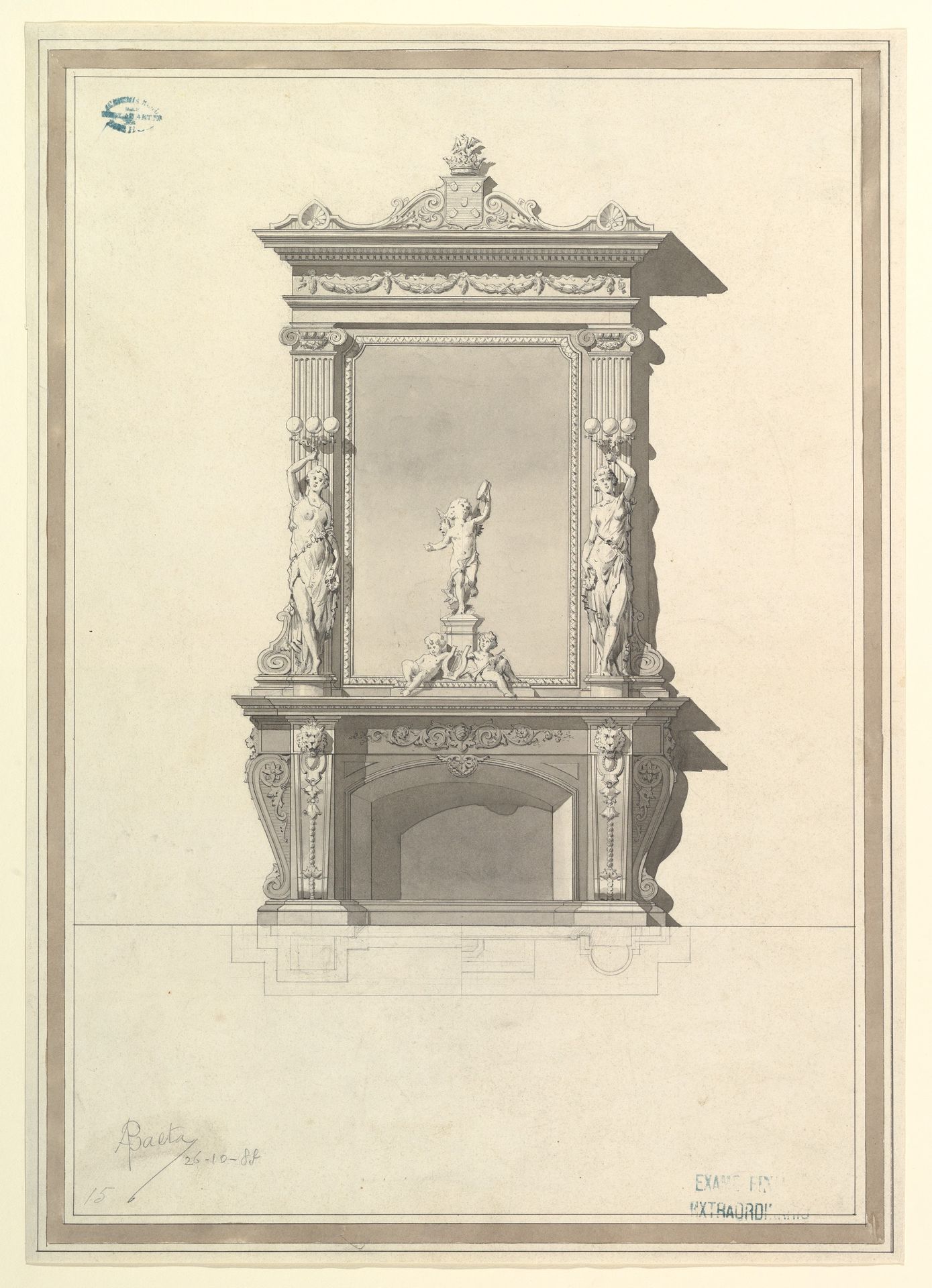
Design for Mantlepiece

Antonio Francisco Baeta
1886 - 1900
The Metropolitan Museum of Art
Metropolitan Museum of Art, New York, NYListen to curator's interpretation
Curatorial notes
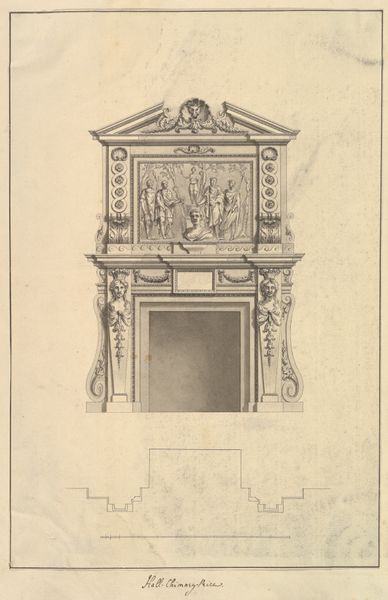
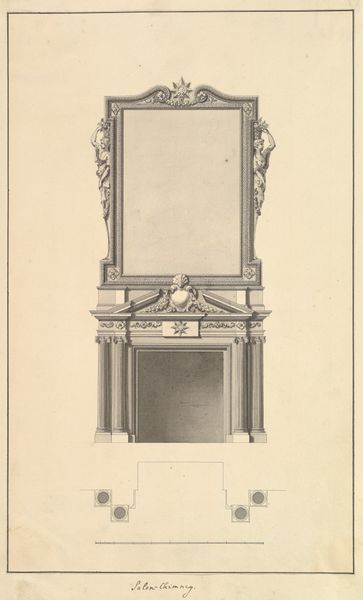
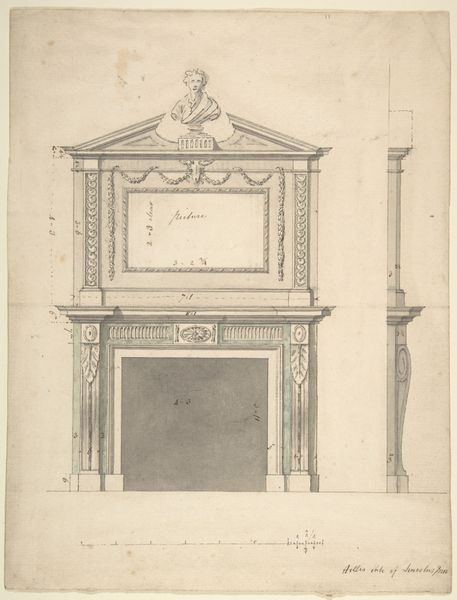
This drawing, "Design for Mantlepiece," was created by Antonio Francisco Baeta using graphite and gray wash, likely around the turn of the 20th century. The design presents a symmetrical façade, structured by classical elements and rendered in meticulous detail with its architectural components. Consider the form of this piece: the cool grays and precise lines lend an air of stately elegance to the design. The mantlepiece's structure is articulated through vertical pilasters topped with decorative capitals, flanking a central panel which suggests a mirror. Ornamentation such as carved figures and floral motifs enhance the surface, adding layers of visual texture. The composition is hierarchical, drawing the eye upwards from the hearth to the ornate pediment. The piece engages with historical styles and conveys the social values attached to the interior space. The design could be seen as a semiotic representation of power and taste, intended to evoke an atmosphere of refinement and classical learning. As a design, it challenges established notions of interior design, inviting viewers to contemplate the interplay of space, status, and aesthetic expression within the domestic sphere.