1768 - 1796
Melkmeid

Pieter de Mare
1758 - 1796Location
RijksmuseumListen to curator's interpretation
Curatorial notes
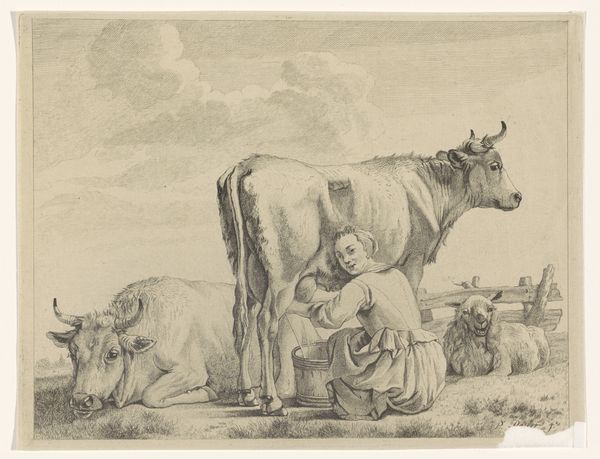
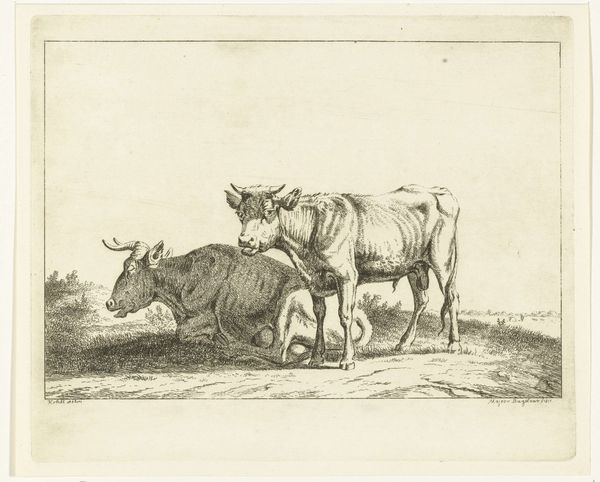
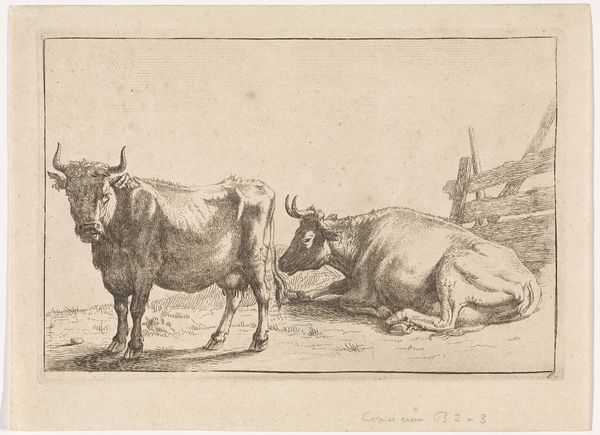
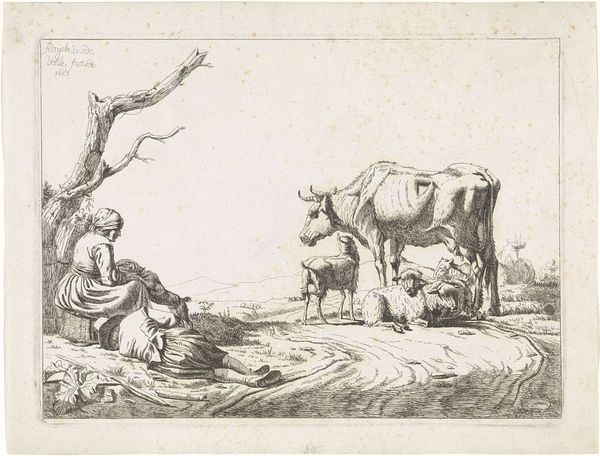
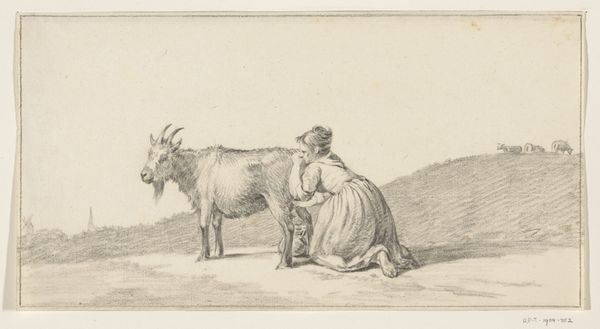
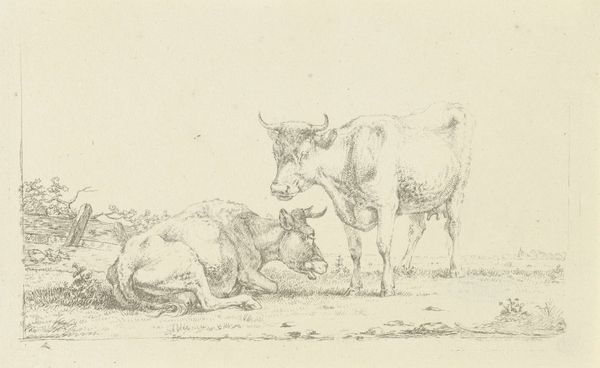
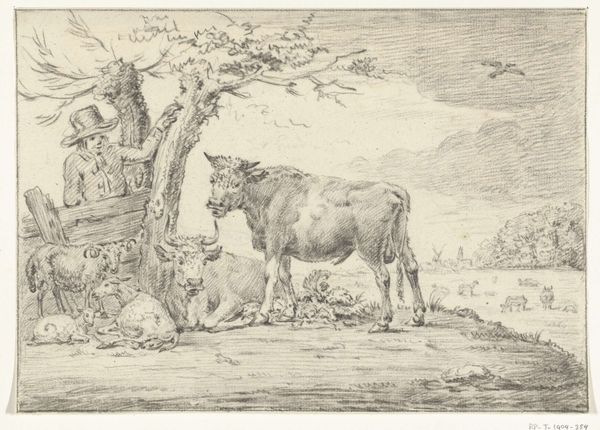
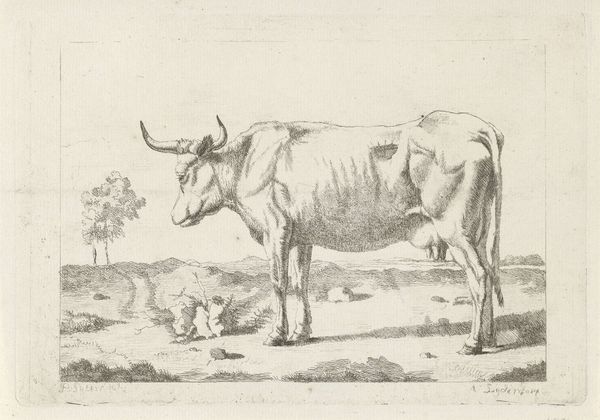
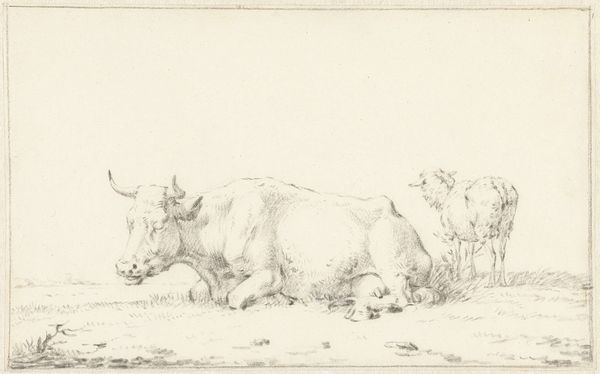
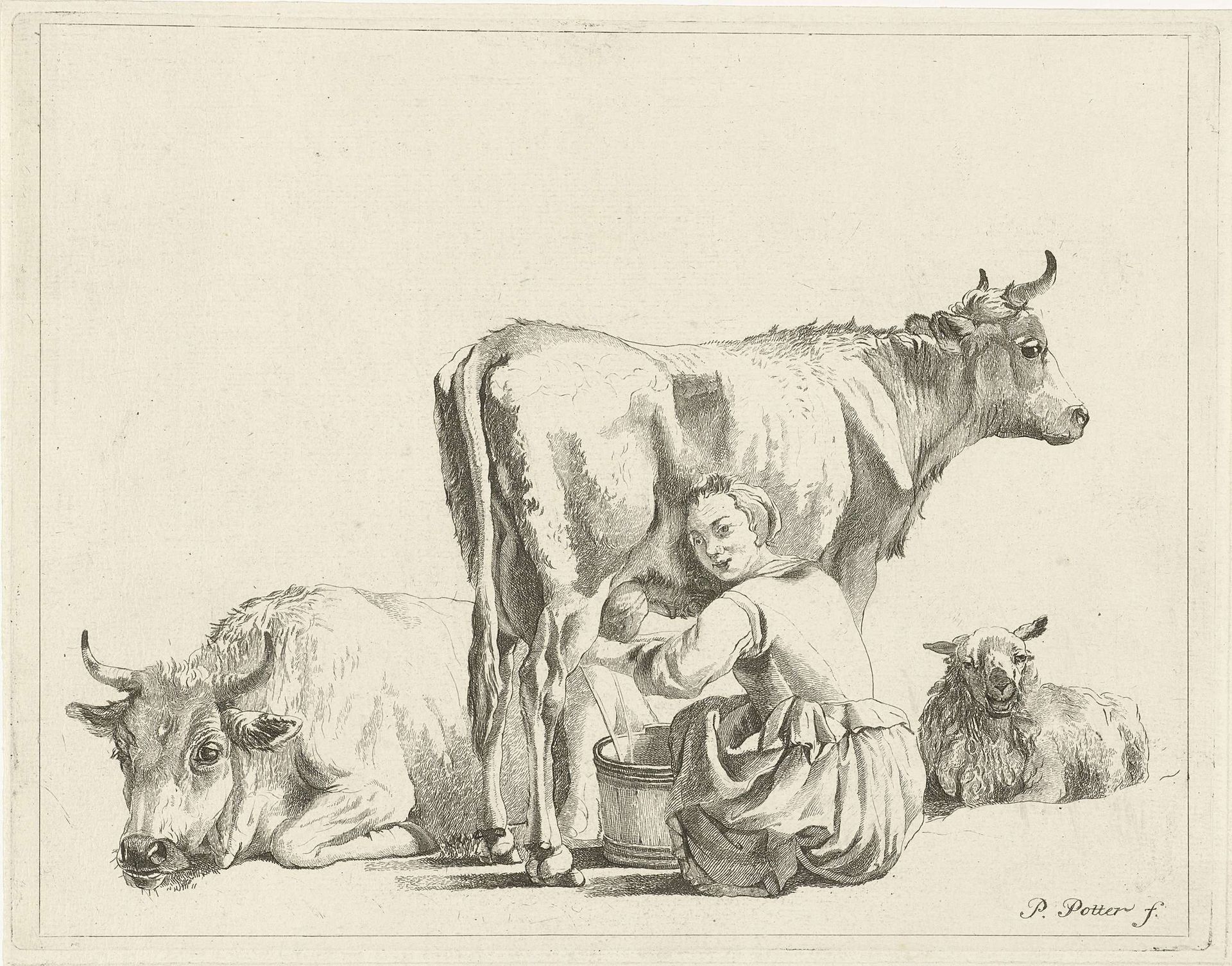
Editor: Pieter de Mare’s "Melkmeid," dating between 1768 and 1796, currently residing at the Rijksmuseum, is a rather charming engraving. There's a sense of calm in the everyday scene it depicts. How do you interpret the formal aspects of this print? Curator: The strength of this piece lies in its compositional balance. Observe the strategic placement of the figures – the cows, the maid, and the lamb. They create a stable triangular arrangement, drawing the eye across the surface in a carefully orchestrated sequence. Editor: Yes, the triangular arrangement gives it stability. What about the artist's use of line? It feels quite detailed for a print. Curator: Indeed, the linework is exceptionally refined. Note how the artist uses varied densities of hatching and cross-hatching to model form and create tonal contrasts. The varying densities create areas of light and shadow to define shape and depth, and simulate texture. Editor: So, the detail arises from these subtle tonal shifts? Curator: Precisely. The formal strategy enhances our perception, doesn't it? The artist makes formal decisions in order to guide the viewer’s perception and ultimately create meaning within the composition. Editor: I never considered how line alone can sculpt so much detail. I tend to think of it more simply. Thank you! Curator: My pleasure. It's precisely these kinds of observations that allow us to understand and analyze what we respond to on an intuitive level.