1760 - 1785
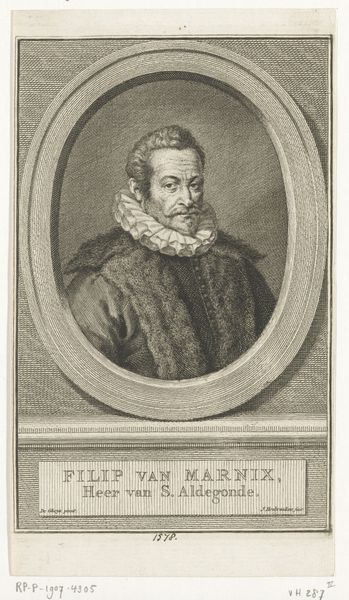
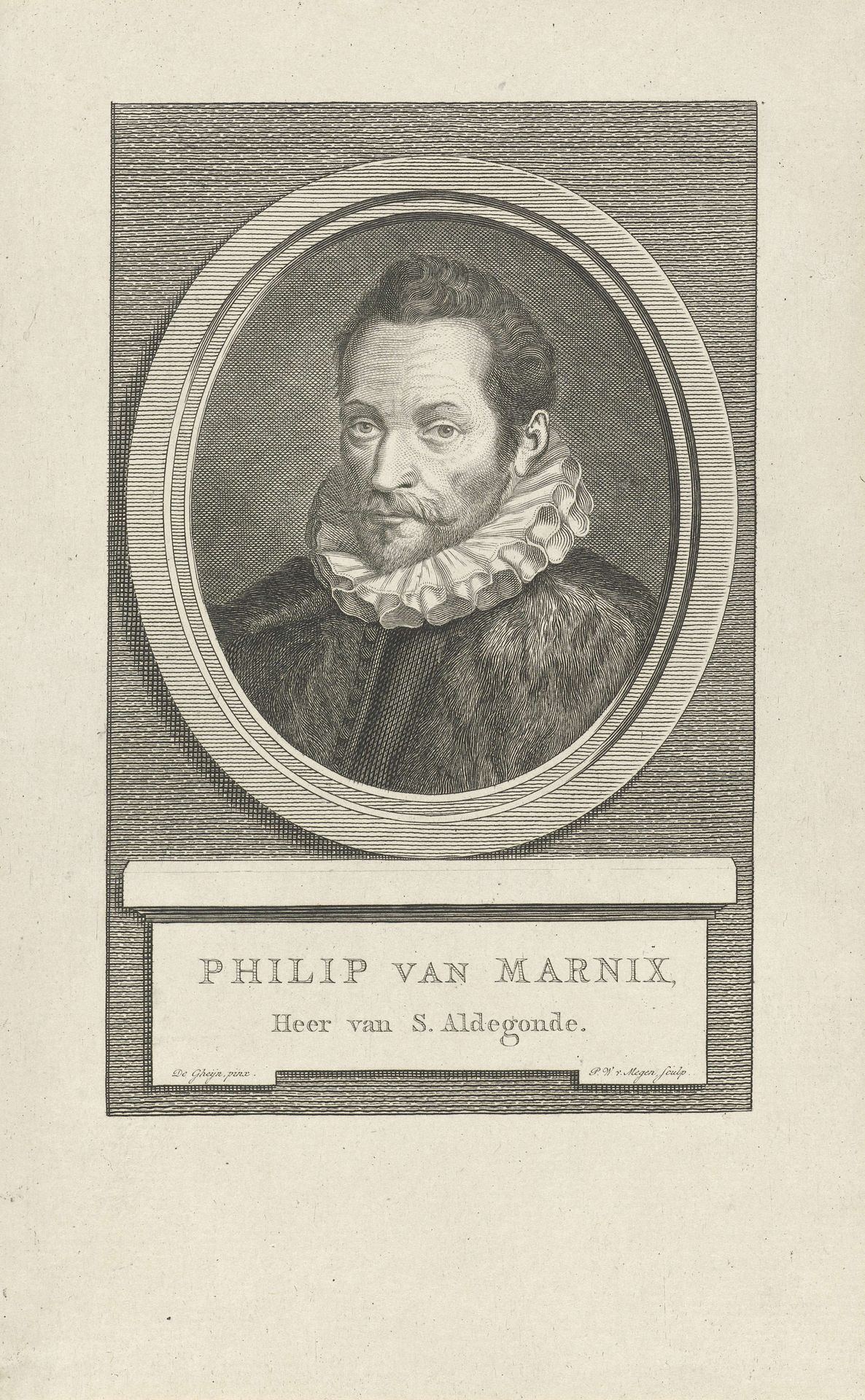
Portret van Filips van Marnix, heer van Sint-Aldegonde

Pieter Willem van Megen
1750 - 1785Location
RijksmuseumListen to curator's interpretation
Curatorial notes
Curator: Here we have a later engraving, sometime between 1760 and 1785, of Philip van Marnix, Lord of Saint-Aldegonde. The engraver, Pieter Willem van Megen, worked from an earlier depiction of Marnix. Editor: It's so linear, isn’t it? You can almost feel the texture of the paper and the incisiveness of the burin as it cut into the plate. The very image is about reproducing a particular identity, circulating power, or creating a sort of brand awareness through repeated impression. Curator: Exactly. Engravings allowed for wider dissemination of images and ideas. This portrait echoes the symbolic weight associated with Marnix, a key figure in the Dutch Revolt. The ruff around his neck, the somber attire... these project an aura of intellectual authority. Marnix was a theologian and writer, instrumental in shaping Dutch identity. Editor: The oval frame almost seems to domesticate the subject, containing this powerful figure within bourgeois aspirations. And the level of detail Van Megen manages to get – think of the labour involved in this micro-precision – is not only about reproducing an image but transforming it in relation to new emerging cultural norms, taste for printed ephemera and so on. What does this level of reproduction accomplish culturally and ideologically? Curator: A pertinent question! The engraving freezes Marnix into an icon, reminding viewers of his contributions but also setting him at a distance, solidifying a narrative for future generations. Note how he gazes directly at the viewer, inviting a sense of direct connection, even across time. He seems determined. Editor: He does! Also, it appears to be printed on paper, itself a manufactured product whose access changed so dramatically between Marnix's time and when the print was made! The context in which people consume art really conditions what they take away from it. And engravings – the history of mark making through intaglio is a world onto itself! It demands attention, right? It wasn’t quick like drawing. Curator: A labour-intensive process results in what seems like a simple image, and, from my vantage, the image communicates a rather specific persona tied to 16th-century religious and political tensions. It evokes continuity with this era. Editor: It does. Looking closely makes me realize how far removed it also is. All those layers of choices. It really makes you reflect.