photography, albumen-print
#
portrait
#
aged paper
#
stone
#
detailed texture
#
small detail
#
paper texture
#
photography
#
ancient-mediterranean
#
orientalism
#
albumen-print
#
historical font
Dimensions: height 225 mm, width 233 mm, thickness 24 mm, width 460 mm
Copyright: Rijks Museum: Open Domain
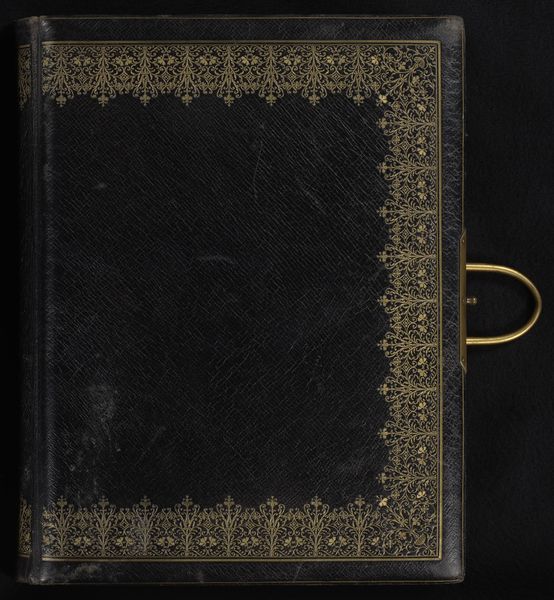
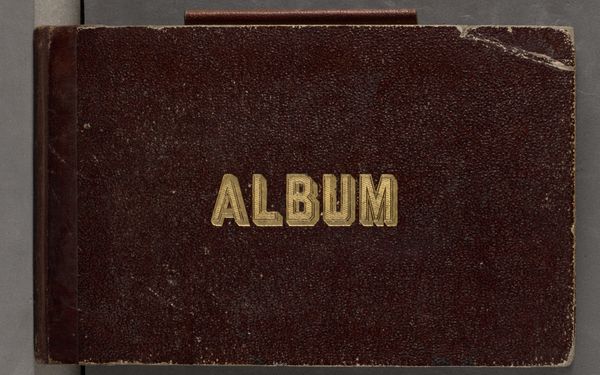
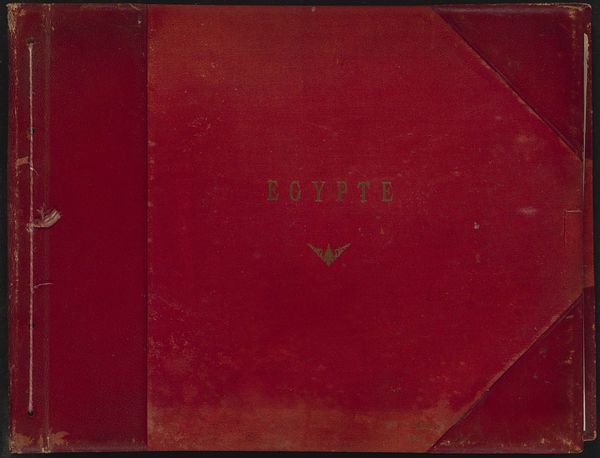
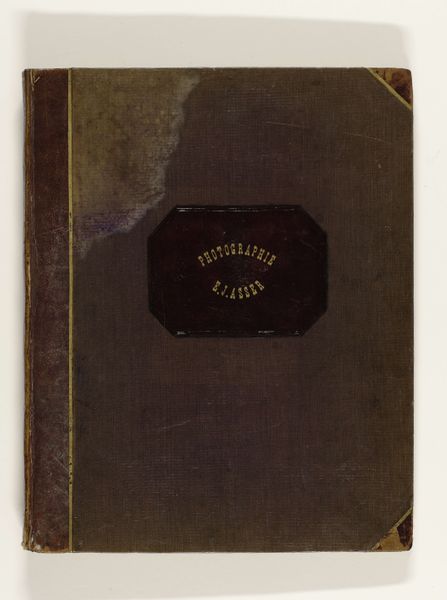
Editor: This is "Fotoalbum met twaalf foto's van Egyptenaren," an album of twelve photographs from 1850 to 1890 by E. Gravin, created using albumen print. The album cover itself feels very austere, with the gold lettering against the dark background. What should we be mindful of when considering a collection of images like this? Curator: We need to approach this album with a critical awareness of the power dynamics at play during its creation. In the mid-19th century, photography was frequently used to categorize and, frankly, "other" people from different cultures. The title itself, "Types Égyptiens," suggests an attempt to define and classify Egyptian people, which can be a problematic colonial impulse. What do you notice about how the subjects are presented? Editor: Now that you mention the title, it does feel… reductive. I suppose I hadn't considered that "types" suggests fixed categories. Curator: Exactly. Think about the context: European powers were expanding their influence in Egypt. Photography became a tool to document and often exoticize the people and landscapes. We have to ask, whose perspective is privileged here? Who had the power to represent, and who was being represented? We must examine whose gaze directed this album, and to what end. Editor: So, it's not just about admiring the historical detail of the photos, but also questioning the motivation and potential biases behind their creation. Curator: Precisely. The visual language used can reinforce stereotypes. Analyzing the composition, poses, and settings reveals a great deal about the photographer’s intent and the broader cultural attitudes towards Egypt at the time. This photograph isn’t neutral; it participates in a larger discourse about identity, power, and representation. Considering what this image and others in the album represent within this cultural narrative opens a valuable dialog. Editor: Thank you, this has changed how I'll look at historical photographs moving forward!
Comments
No comments
Be the first to comment and join the conversation on the ultimate creative platform.
 Collect
 React
React Comment
More like this