1682
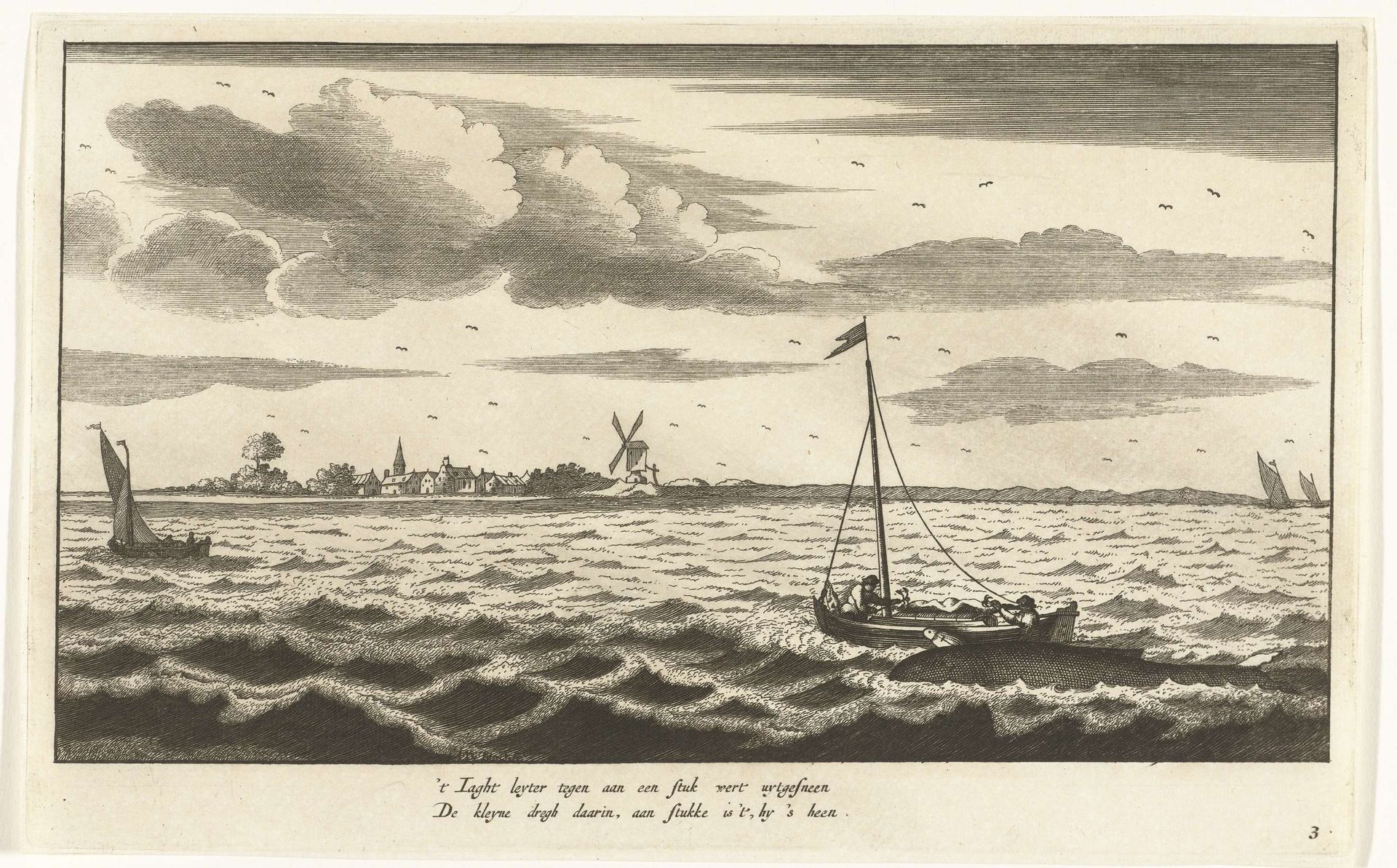
De walvis wordt gevangen, 1682

Abraham de Blois
1679 - 1717Location
RijksmuseumListen to curator's interpretation
Curatorial notes
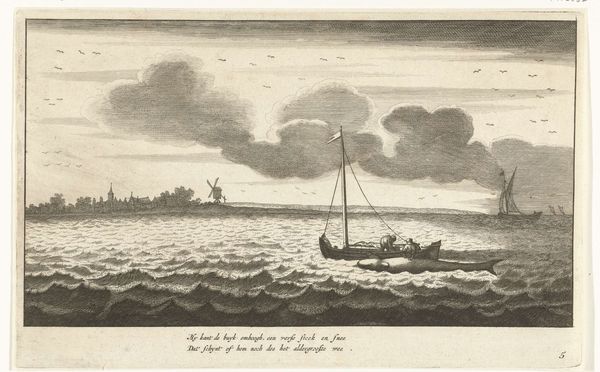
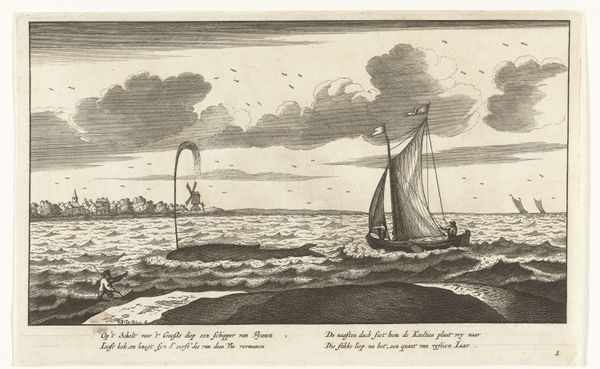
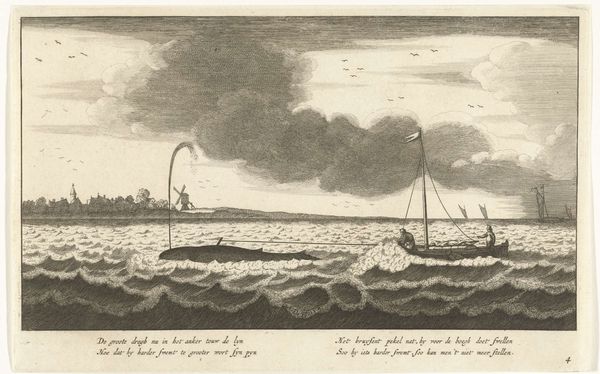
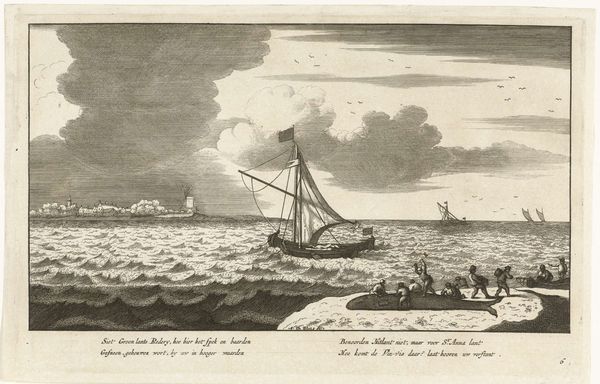
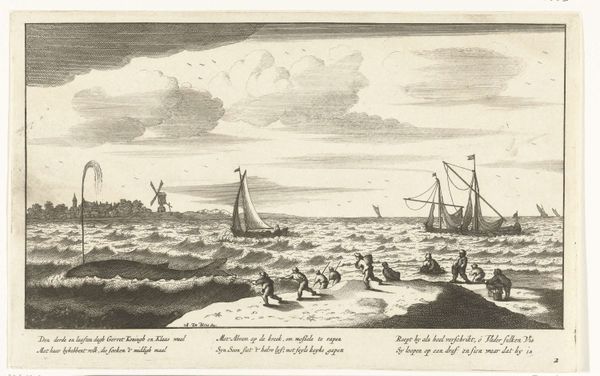
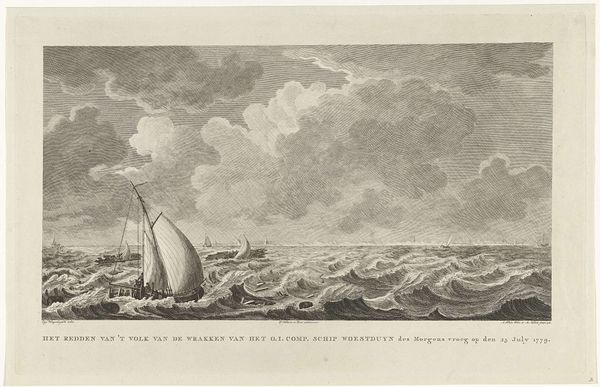
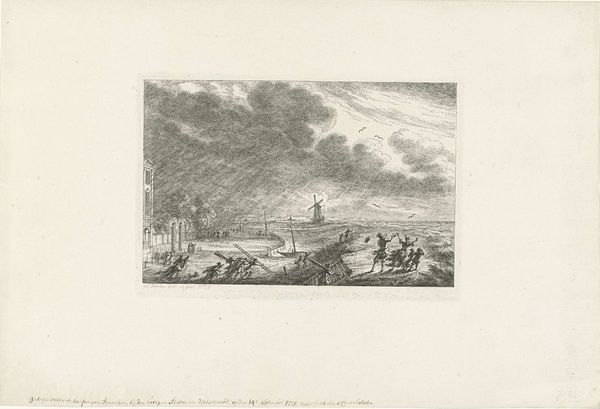
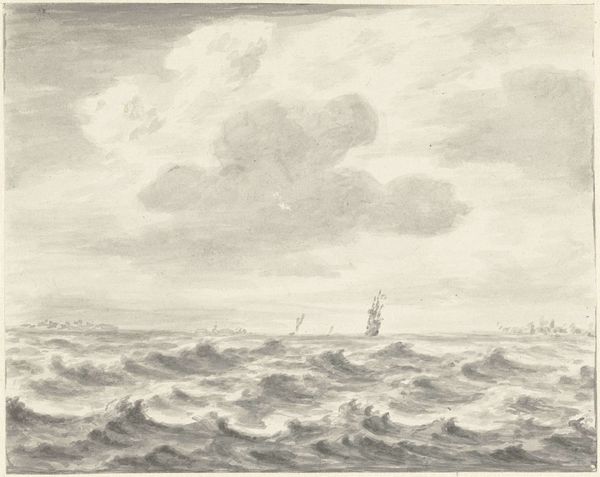
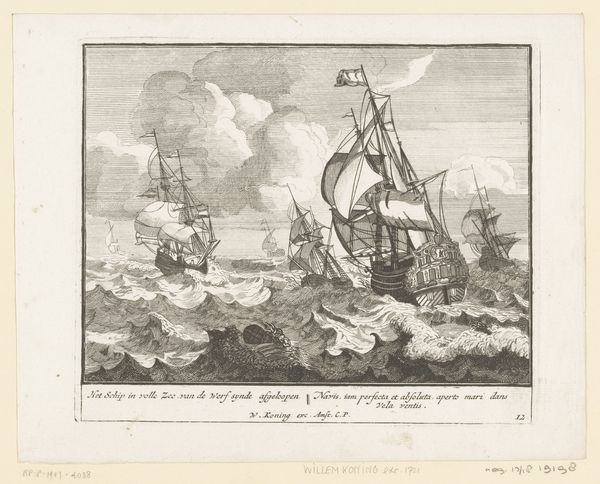
Abraham de Blois created this etching, "De walvis wordt gevangen," in 1682. The composition balances the immediate foreground, filled with rough, textural waves, against a distant, serene landscape. The use of line, particularly in the water and clouds, creates a sense of movement and depth. The semiotic structure of the print reveals a tension between the micro and macro. The chaotic sea, rendered with dense crosshatching, contrasts with the calm depiction of the town, complete with a windmill that looks almost like a toy. The small boat, dwarfed by the seascape, becomes a signifier of human presence. The whale is not visible. Consider how de Blois employs scale to destabilize traditional notions of maritime power. The small vessel and absence of the whale, challenge any heroic narrative and suggest a more vulnerable, perhaps even ironic, relationship between humanity and nature. This functions not merely as an aesthetic choice but as a subtle commentary on shifting cultural values and the human condition.