About this artwork
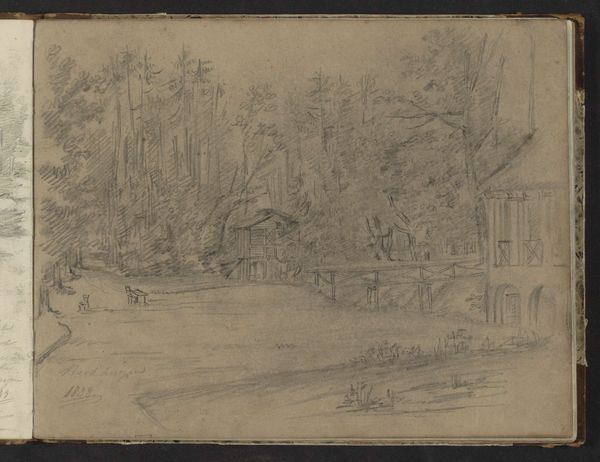
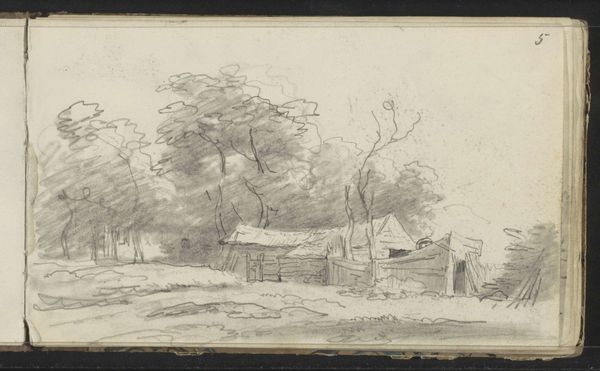
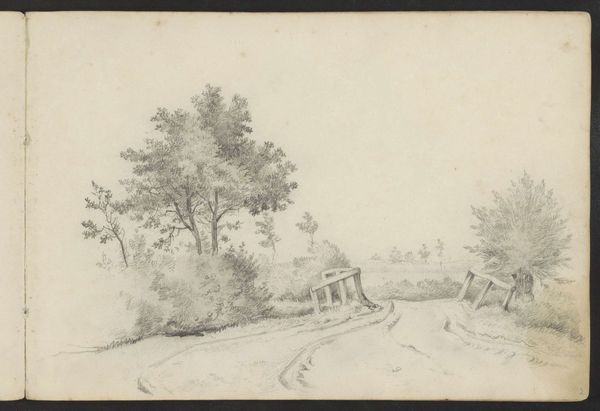
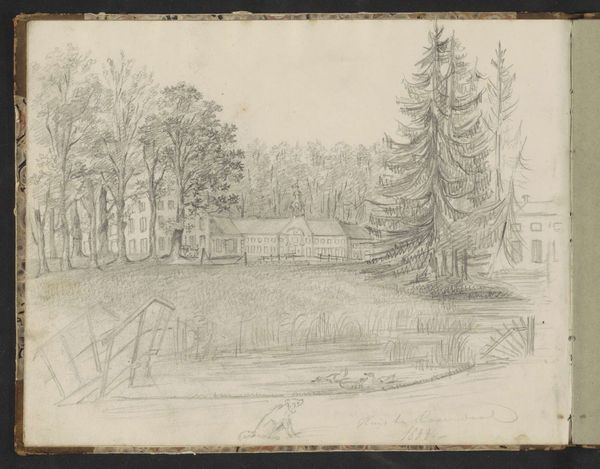
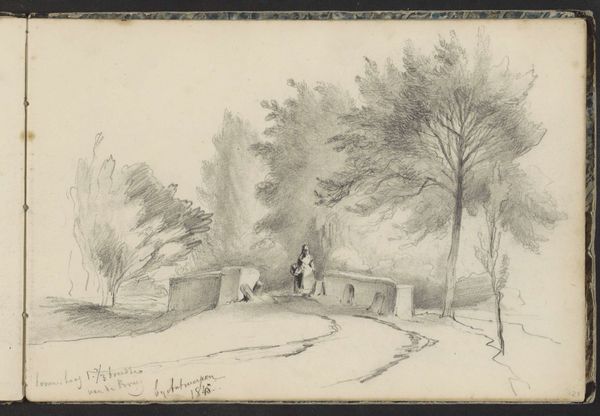
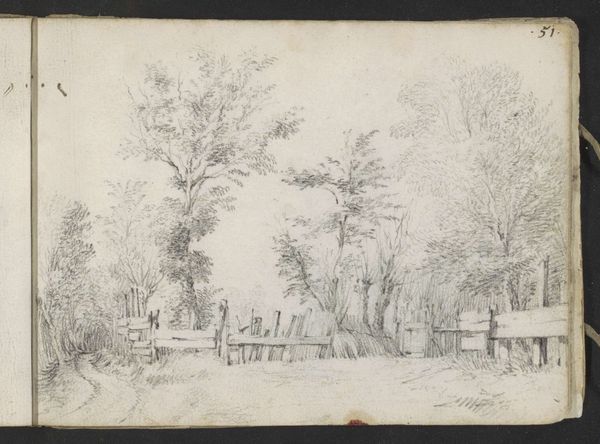
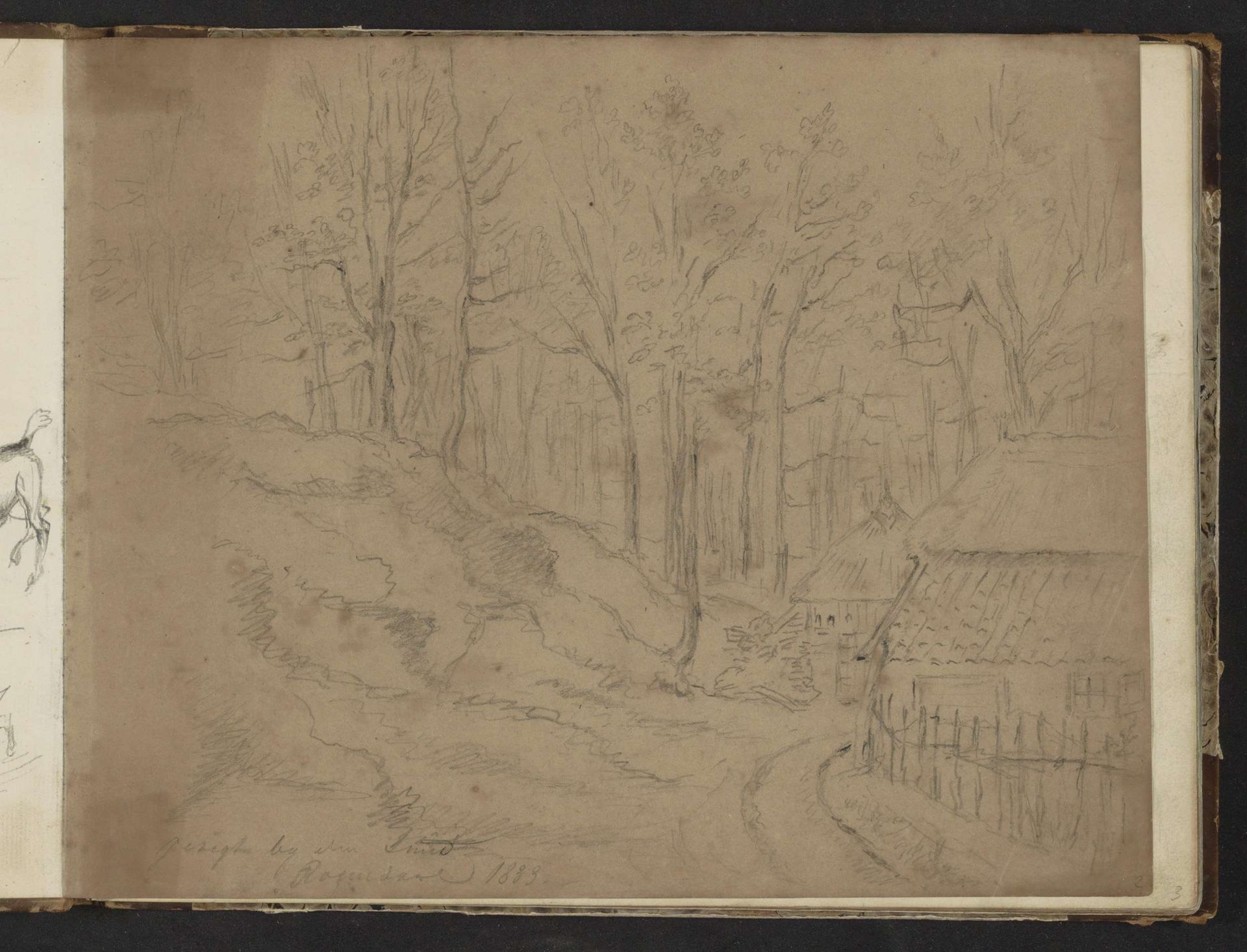
Johannes Tavenraat created this sketch of a smithy in the woods of Rozendaal with graphite on paper. Notice how the composition, primarily achieved through line, guides our eye. Tavenraat uses vertical lines of the trees to establish a sense of depth. The contrast between the densely packed trees and the open space where the path leads creates a focal point, inviting the viewer into the scene. The diagonal lines of the path and hillside lead the eye towards the smithy, which is nestled among the trees, connecting human activity with nature. The sketch challenges traditional landscape art, where nature is often depicted as grand and untouched. Here, the human element, represented by the smithy, is integrated into the landscape. This integration reflects a broader artistic and philosophical interest of the time, in the relationship between humanity and nature. Consider how the artist's choice of graphite and the linearity of the sketch emphasise the structured, underlying framework of the natural world. This artwork acts as a site where nature and human presence are not in opposition, but co-exist within a delicate balance.
Huis van een smid in het bos van Rozendaal 1833

Johannes Tavenraat
1809 - 1881Location
RijksmuseumArtwork details
- Medium
- drawing, pencil
- Location
- Rijksmuseum
- Copyright
- Rijks Museum: Open Domain
Tags
drawing
landscape
forest
romanticism
pencil
realism
Comments
No comments
About this artwork
Johannes Tavenraat created this sketch of a smithy in the woods of Rozendaal with graphite on paper. Notice how the composition, primarily achieved through line, guides our eye. Tavenraat uses vertical lines of the trees to establish a sense of depth. The contrast between the densely packed trees and the open space where the path leads creates a focal point, inviting the viewer into the scene. The diagonal lines of the path and hillside lead the eye towards the smithy, which is nestled among the trees, connecting human activity with nature. The sketch challenges traditional landscape art, where nature is often depicted as grand and untouched. Here, the human element, represented by the smithy, is integrated into the landscape. This integration reflects a broader artistic and philosophical interest of the time, in the relationship between humanity and nature. Consider how the artist's choice of graphite and the linearity of the sketch emphasise the structured, underlying framework of the natural world. This artwork acts as a site where nature and human presence are not in opposition, but co-exist within a delicate balance.
Comments
No comments