About this artwork
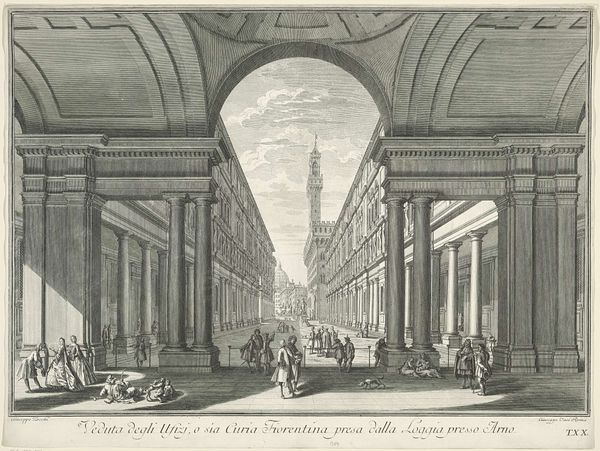
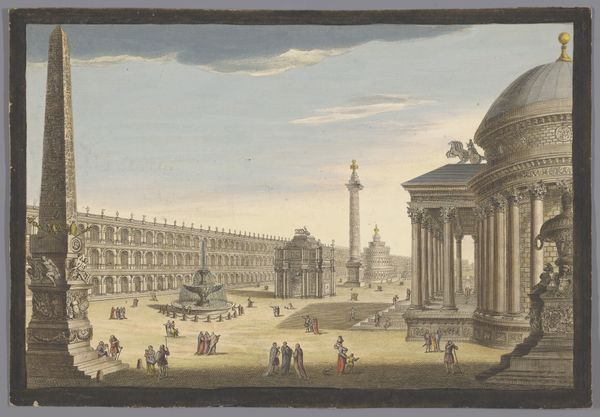
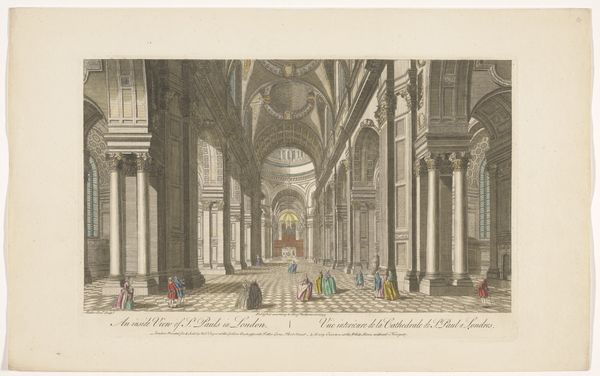
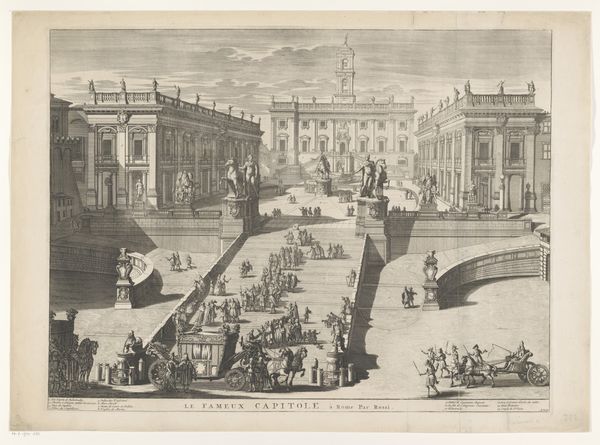
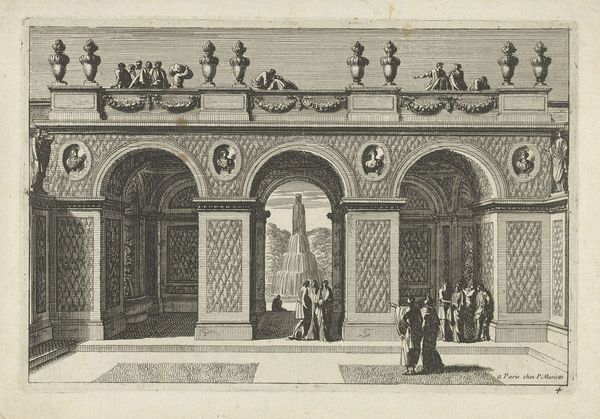
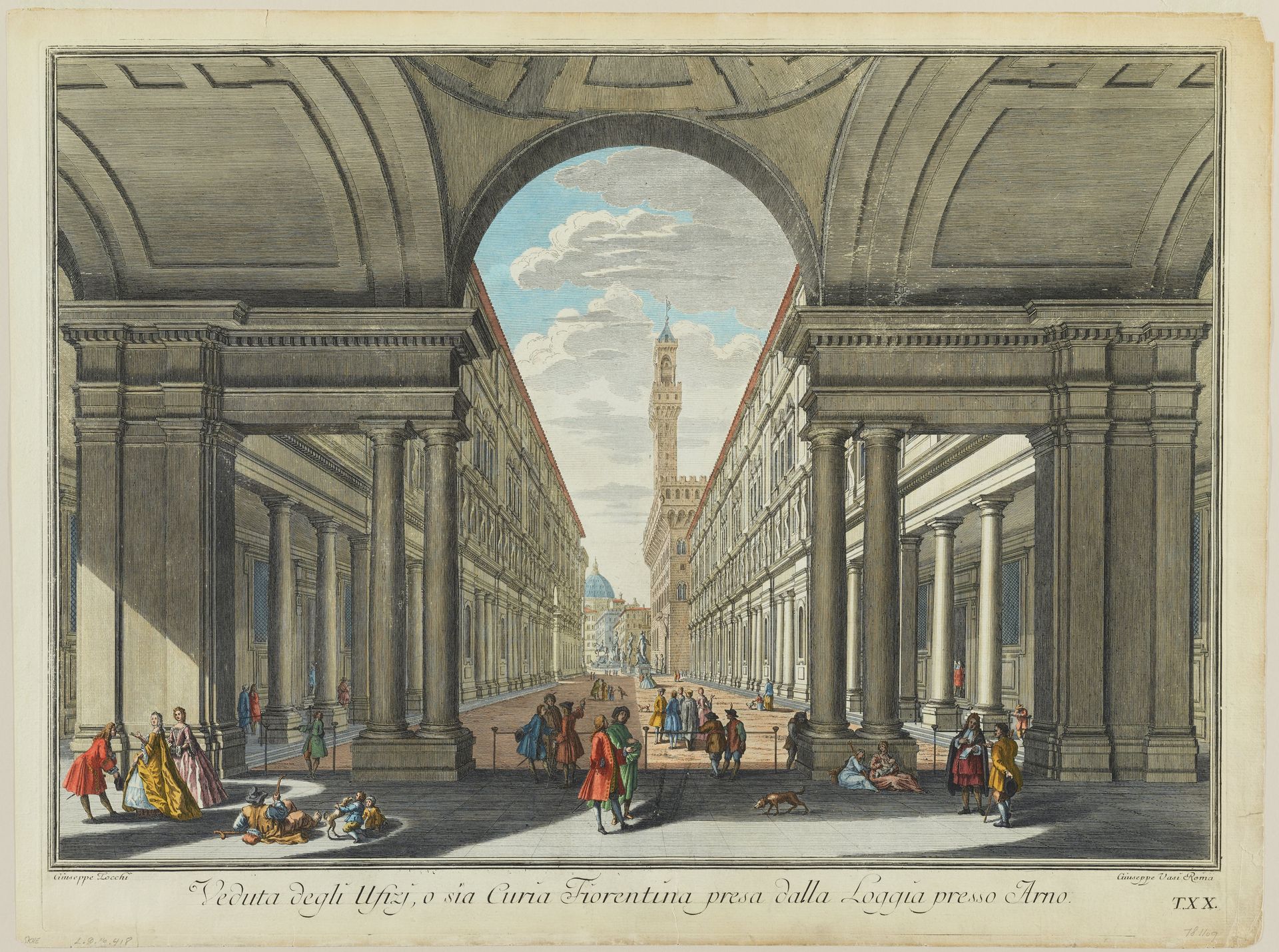
Giuseppe Vasi created this print of the Uffizi in Florence, Italy, sometime in the mid-18th century. Vasi worked in the tradition of the *vedute*, or "view picture," which catered to the fashion for detailed, yet picturesque, cityscapes among wealthy tourists on the Grand Tour. The image presents a highly ordered view through the colonnades of the Uffizi, framing the Palazzo Vecchio in the distance. The strict perspective emphasizes the rational order of the city, but it's also populated with vignettes of everyday life that add a sense of authenticity. We see finely dressed figures strolling and conversing, while beggars and dogs populate the foreground, hinting at the city’s social realities. Prints like this one were commodities in a burgeoning tourist market, which was itself shaped by institutions like museums and academies. By studying the imagery that was popular at any given time, along with the historical record, the art historian can better understand the complex relationship between art, commerce, and society.
Veduta degli Uffizi 1735


Artwork details
- Medium
- drawing, print, etching
- Dimensions
- 20 1/8 x 26 5/8 in. (51.12 x 67.63 cm) (plate)
- Location
- Minneapolis Institute of Art
- Copyright
- Public Domain
Tags
drawing
baroque
etching
cityscape
italian-renaissance
italy
Comments
No comments
About this artwork
Giuseppe Vasi created this print of the Uffizi in Florence, Italy, sometime in the mid-18th century. Vasi worked in the tradition of the *vedute*, or "view picture," which catered to the fashion for detailed, yet picturesque, cityscapes among wealthy tourists on the Grand Tour. The image presents a highly ordered view through the colonnades of the Uffizi, framing the Palazzo Vecchio in the distance. The strict perspective emphasizes the rational order of the city, but it's also populated with vignettes of everyday life that add a sense of authenticity. We see finely dressed figures strolling and conversing, while beggars and dogs populate the foreground, hinting at the city’s social realities. Prints like this one were commodities in a burgeoning tourist market, which was itself shaped by institutions like museums and academies. By studying the imagery that was popular at any given time, along with the historical record, the art historian can better understand the complex relationship between art, commerce, and society.
Comments
No comments