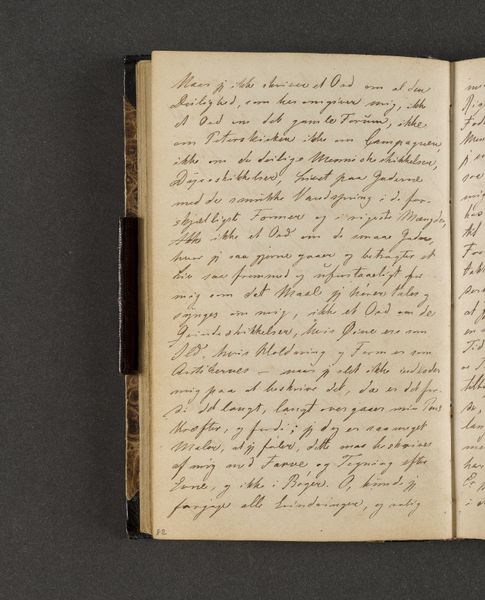
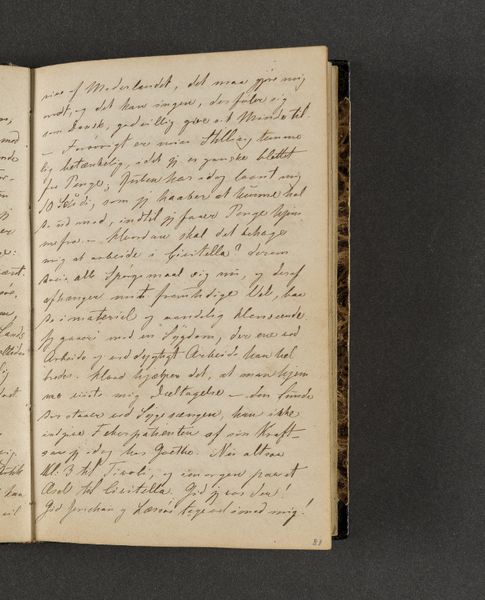
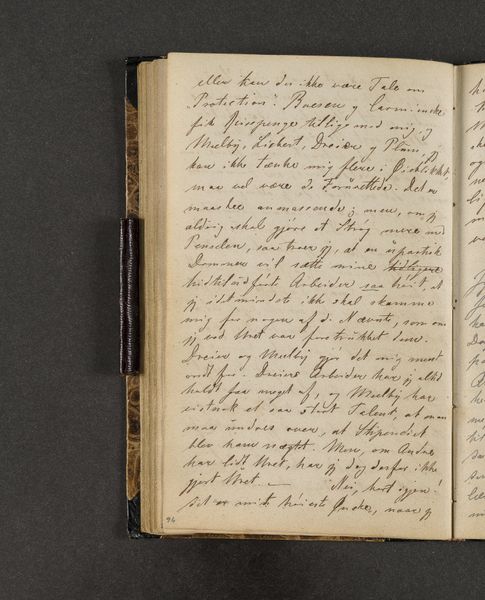
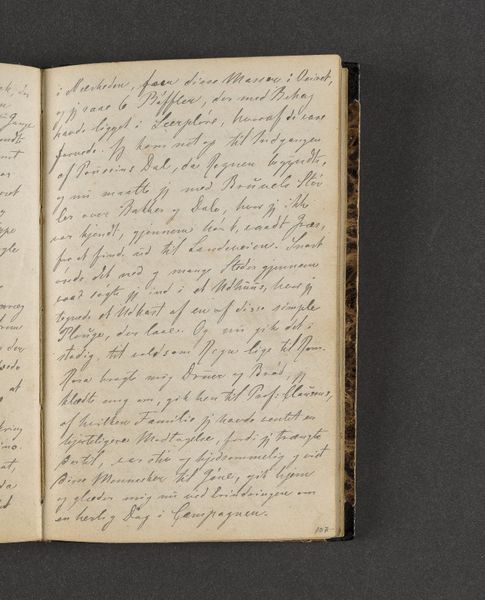
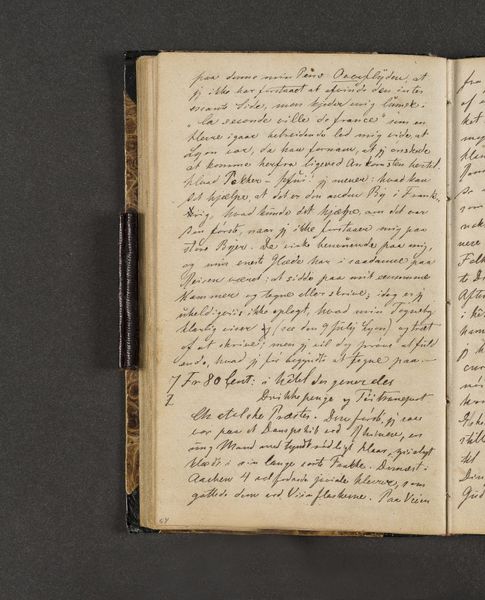
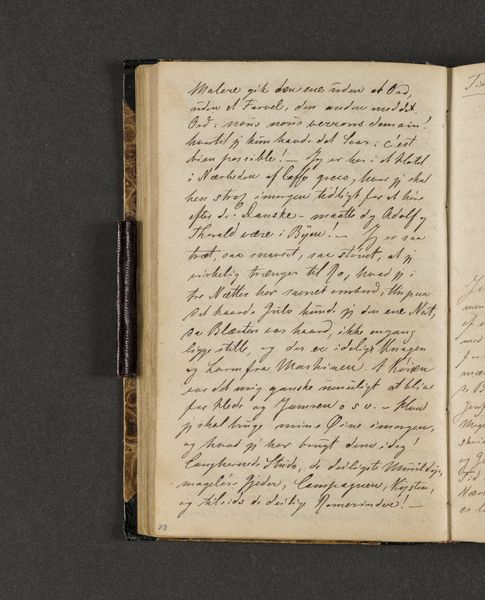
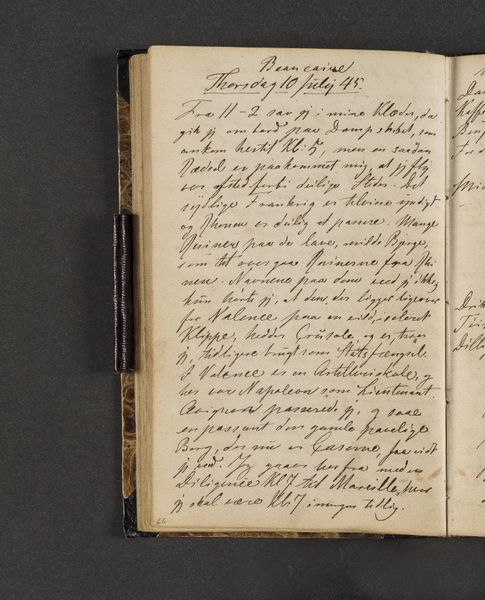
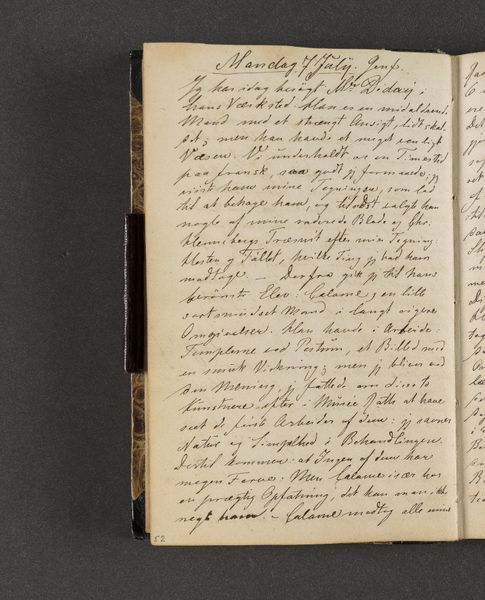
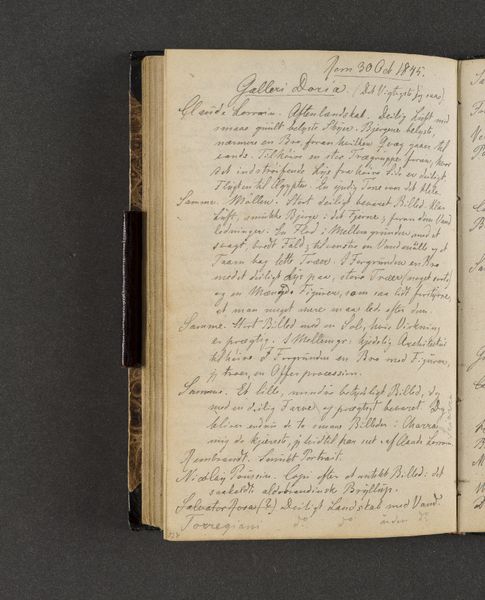
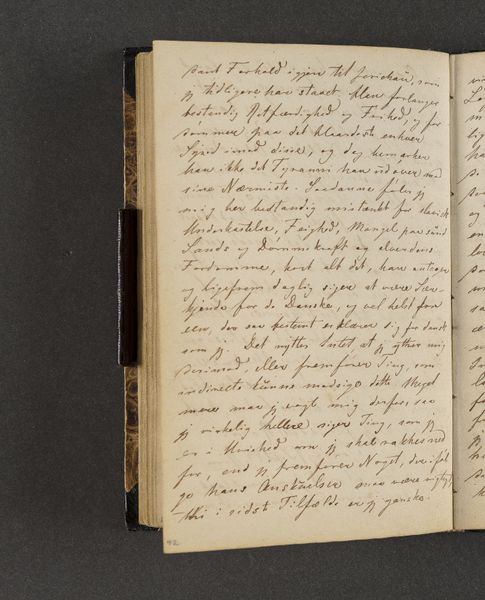
drawing, paper, ink
#
portrait
#
drawing
#
aged paper
#
book binding
#
narrative-art
#
paperlike
#
sketch book
#
personal journal design
#
paper texture
#
paper
#
personal sketchbook
#
ink
#
intimism
#
journal
#
romanticism
#
folded paper
#
design on paper
Dimensions: 161 mm (height) x 103 mm (width) x 11 mm (depth) (monteringsmaal)
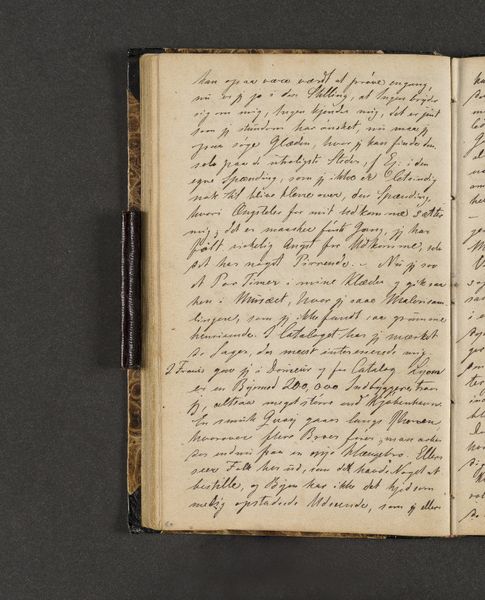
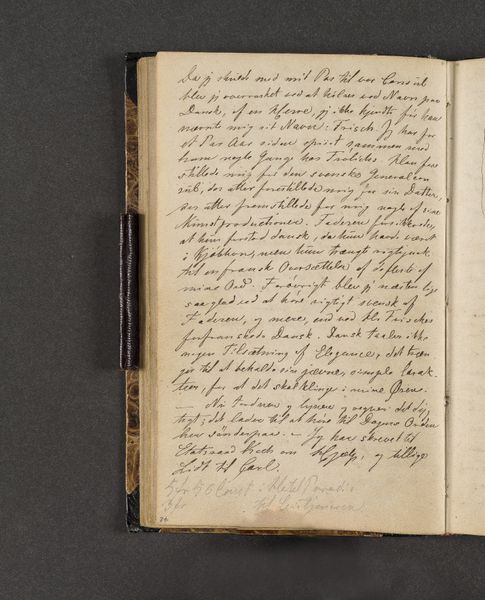
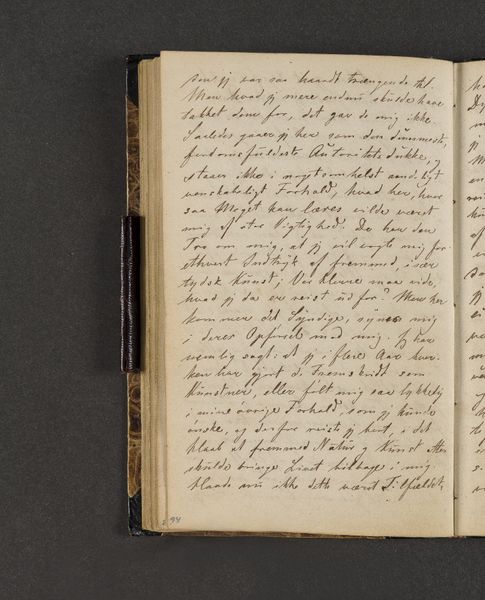
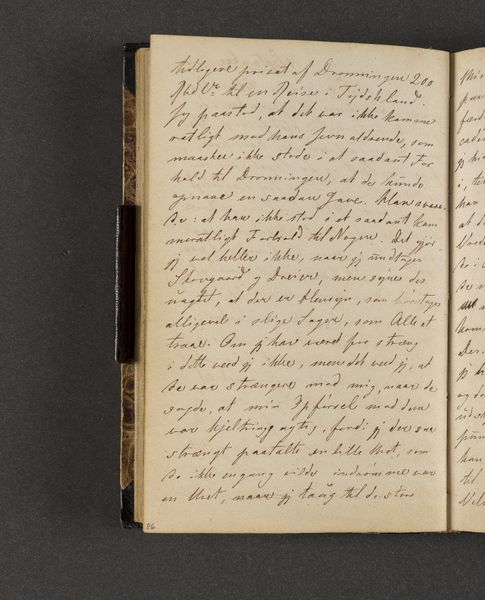
Curator: Here we have "Rejsedagbog" from 1845, a drawing in ink by Johan Thomas Lundbye. What's your initial impression? Editor: It looks like a page from a travel journal. It's got that aged paper look, with the close-up showing a lot of handwritten text and what looks like a simple book binding. What kind of stories do you think an image like this is meant to tell? Curator: I see this not merely as a record of travels, but as a window into Lundbye’s internal world. The journal, the very act of committing thoughts and observations to paper, has a long and loaded history. Think of the tradition of the "Grand Tour" and its role in shaping artistic sensibilities. How do you feel this image connects to memory? Editor: It feels very personal, almost intimate. I guess the act of journaling itself is about creating a personal archive. Curator: Precisely. Note how the handwriting, while neat, has a distinct character. The choice to record observations, dreams, sketches - it is all laden with symbolic meaning. Editor: So it's more than just a snapshot of a place, it is like visual thinking? Curator: It's Lundbye’s consciousness unfolding. It's cultural memory being shaped, filtered through a personal lens. What might this reveal about artistic identity in the Romantic period? Editor: That they were searching for a true self? Trying to reconcile their experiences with art? Curator: The journal as a mirror reflects the artist and the world around them. What I learned exploring this work, and discussing it with you, has solidified for me the connection between symbol, memory, and the making of art history. Editor: Me too! Seeing how something so personal can also be so culturally rich has totally shifted my perspective.
Comments
No comments
Be the first to comment and join the conversation on the ultimate creative platform.
 Collect
 React
React Comment
More like this