About this artwork
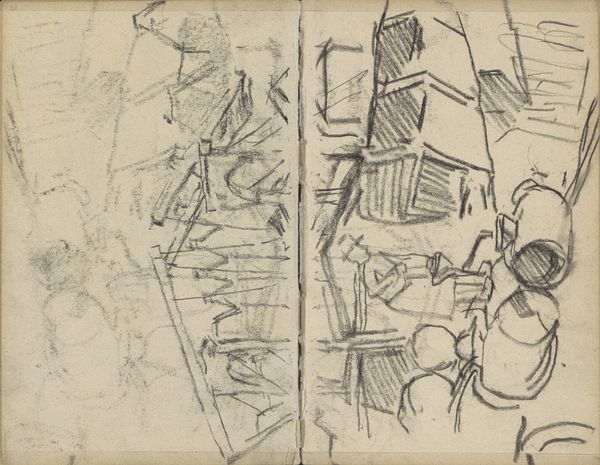
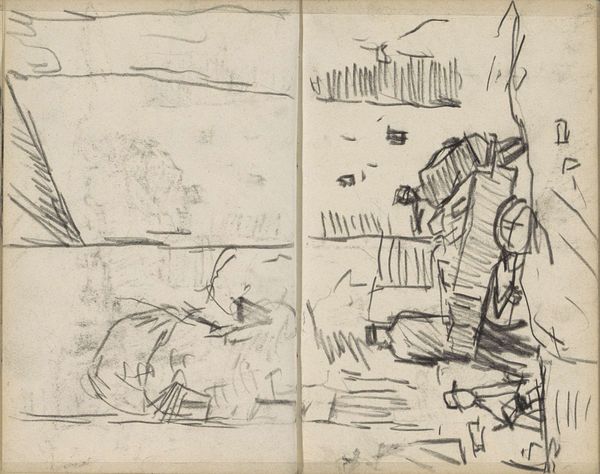
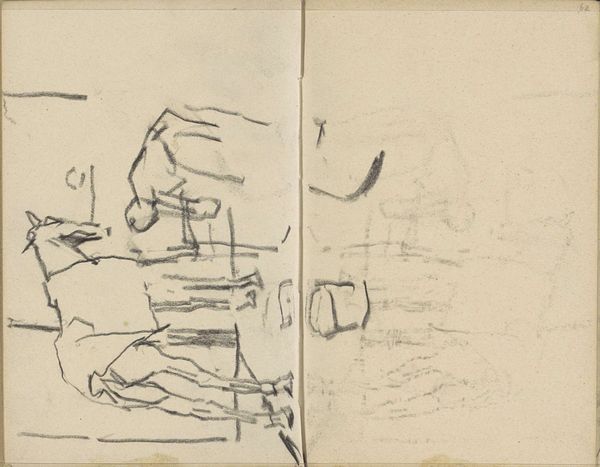
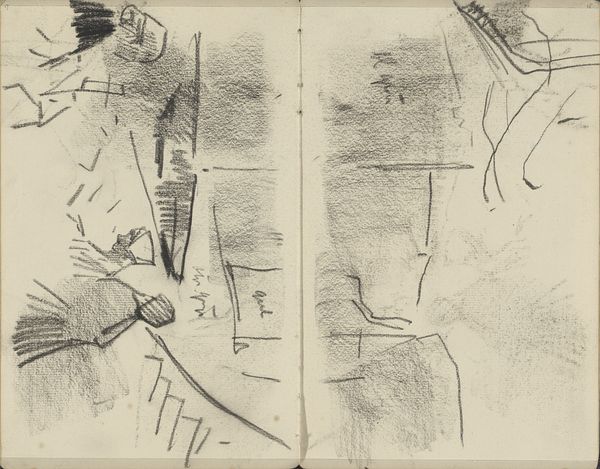
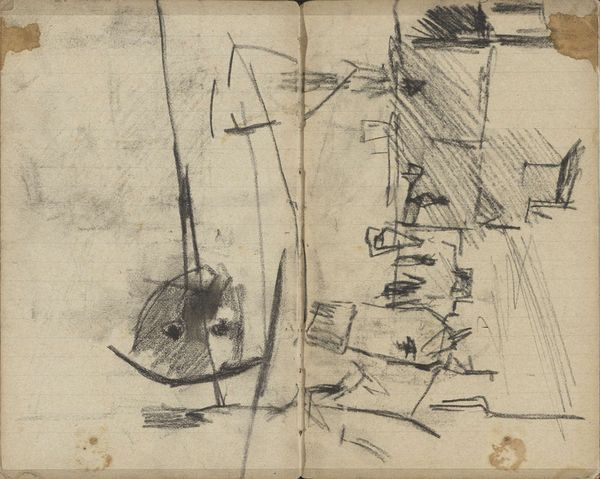
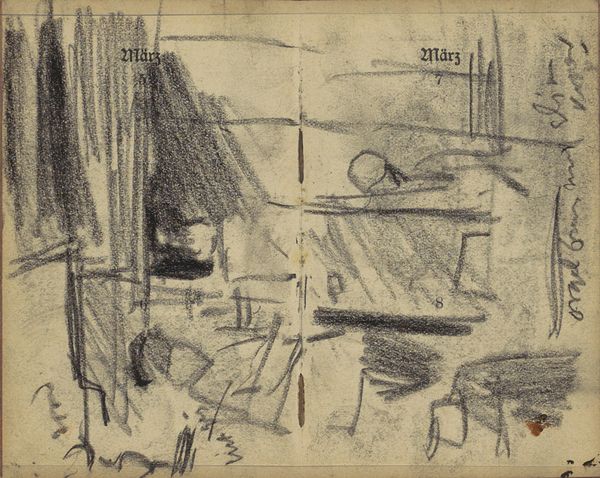
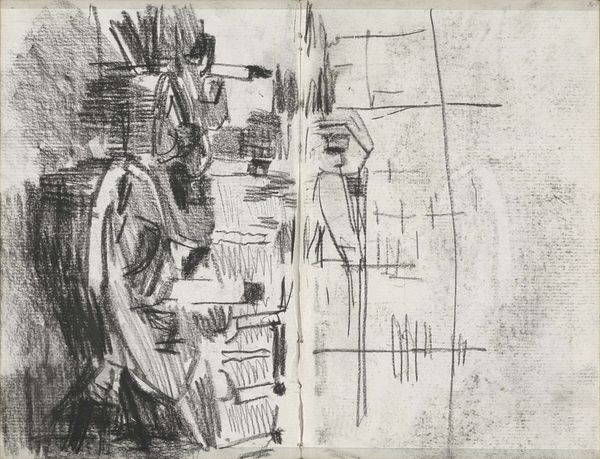
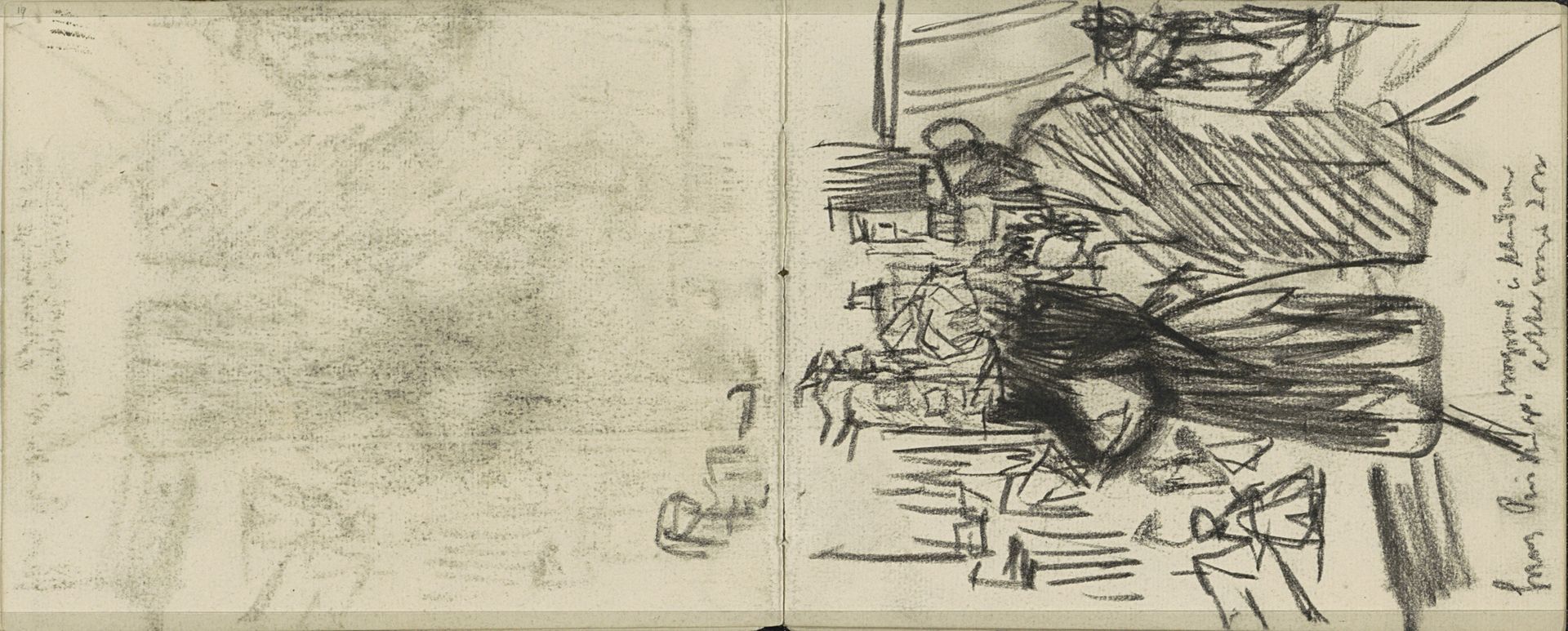
This graphite drawing, "Twee vrouwen bij de brug over de Prinsengracht te Amsterdam," was sketched by George Hendrik Breitner. The composition, split across two pages, creates a fascinating tension between the implied space and the flatness of the page. On the right we see a flurry of lines quickly defining figures and the architecture around the bridge, which contrasts sharply with the left page, where only the faintest trace of a matching architectural feature is visible. The sketch captures not just a scene but also a moment. Breitner’s quick marks are less about replicating reality and more about exploring the act of seeing itself. The formal structure here, the interplay between depiction and erasure, reflects a modern preoccupation with capturing the ephemeral and the fragmentary nature of experience. It is in this tension between the seen and the unseen that the artwork's conceptual power lies.
Twee vrouwen bij de brug over de Prinsengracht te Amsterdam, ter hoogte van de Reestraat
c. 1893s - 1903s

George Hendrik Breitner
1857 - 1923Location
RijksmuseumArtwork details
- Location
- Rijksmuseum
- Copyright
- Rijks Museum: Open Domain
Tags
Comments
Share your thoughts
About this artwork
This graphite drawing, "Twee vrouwen bij de brug over de Prinsengracht te Amsterdam," was sketched by George Hendrik Breitner. The composition, split across two pages, creates a fascinating tension between the implied space and the flatness of the page. On the right we see a flurry of lines quickly defining figures and the architecture around the bridge, which contrasts sharply with the left page, where only the faintest trace of a matching architectural feature is visible. The sketch captures not just a scene but also a moment. Breitner’s quick marks are less about replicating reality and more about exploring the act of seeing itself. The formal structure here, the interplay between depiction and erasure, reflects a modern preoccupation with capturing the ephemeral and the fragmentary nature of experience. It is in this tension between the seen and the unseen that the artwork's conceptual power lies.
Comments
Share your thoughts