painting, oil-paint
#
narrative-art
#
baroque
#
painting
#
oil-paint
#
figuration
#
11_renaissance
#
oil painting
#
genre-painting
#
history-painting
#
portrait art
Copyright: Public domain
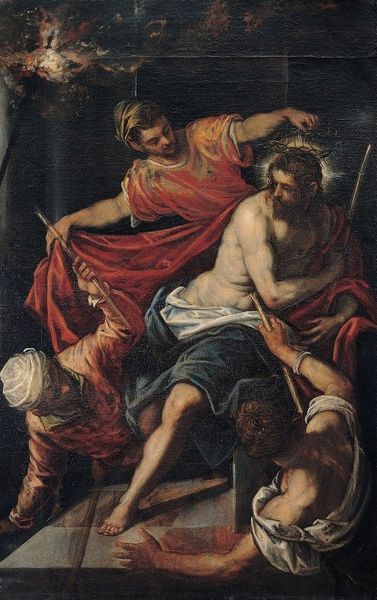
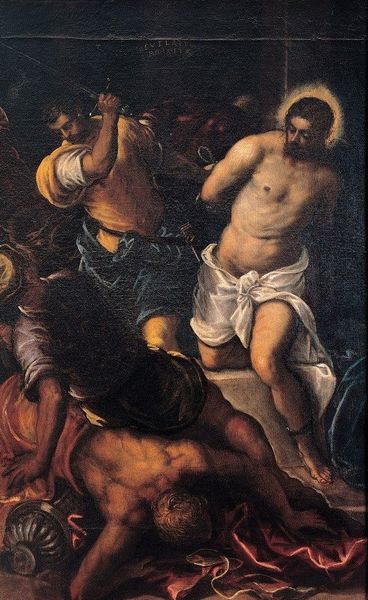
Curator: Let’s turn our attention now to "A Flagelação de Cristo", or "The Flagellation of Christ", attributed to Mestre Ataíde. Editor: My first impression is one of forced passivity. Christ's weary pose contrasts with the brutal energy of his tormentors; it's almost unbearably tense. Curator: Ataíde, a prominent figure in Brazilian Baroque art, employed oil paint, a significant import at the time, and utilized local pigments. We can also see Roman attire to emphasize its setting, and look at the tools the Roman figures possess to commit violence, and compare those to Brazilian tool making at the time. Editor: The painting is so compelling with its careful rendering of Christ’s subdued posture. It communicates submission, almost acquiescence. Note how Ataíde uses color to highlight the sacred, draping Jesus in cool blues, which contrast sharply with the reds worn by some of his tormentors. This reinforces his power and innocence despite the impending physical violence. Curator: And how were those reds and blues produced, what labor was involved in gathering and processing pigments in the colonial context of Brazil at the time? Those aren’t just aesthetic choices but reflect material realities. Who had access to those pigments and under what conditions? Consider, too, how Ataíde adapted European Baroque conventions within a colonial society dependent on slave labor for both resources and processing. The canvas itself – where was it woven? By whom? Every part tells the tale. Editor: But aren’t these color choices also profoundly symbolic? Red is a color representing violence, rage, danger; whereas blue is linked to spirituality and divine calm? Those associations must have been deeply impactful for the audience. And, of course, the scene itself recalls the themes of suffering, sacrifice, and redemption—themes central to Christian doctrine. I see this not merely as historical painting but rather as a vehicle for communicating these timeless narratives of the Gospels. Curator: Absolutely, but without considering the labor of its making, its display, or the political circumstances surrounding both the artist and its patron, its meaning will necessarily remain only partial, and ahistorical. Even the act of display served a function. Art rarely floats free from context. Editor: You're right, and our analysis will need to be equally aware of both of those things if it’s going to be a fully comprehensive and nuanced assessment of Ataíde’s Flagellation.
Comments
No comments
Be the first to comment and join the conversation on the ultimate creative platform.
 Collect
 React
React Comment
More like this