1710s
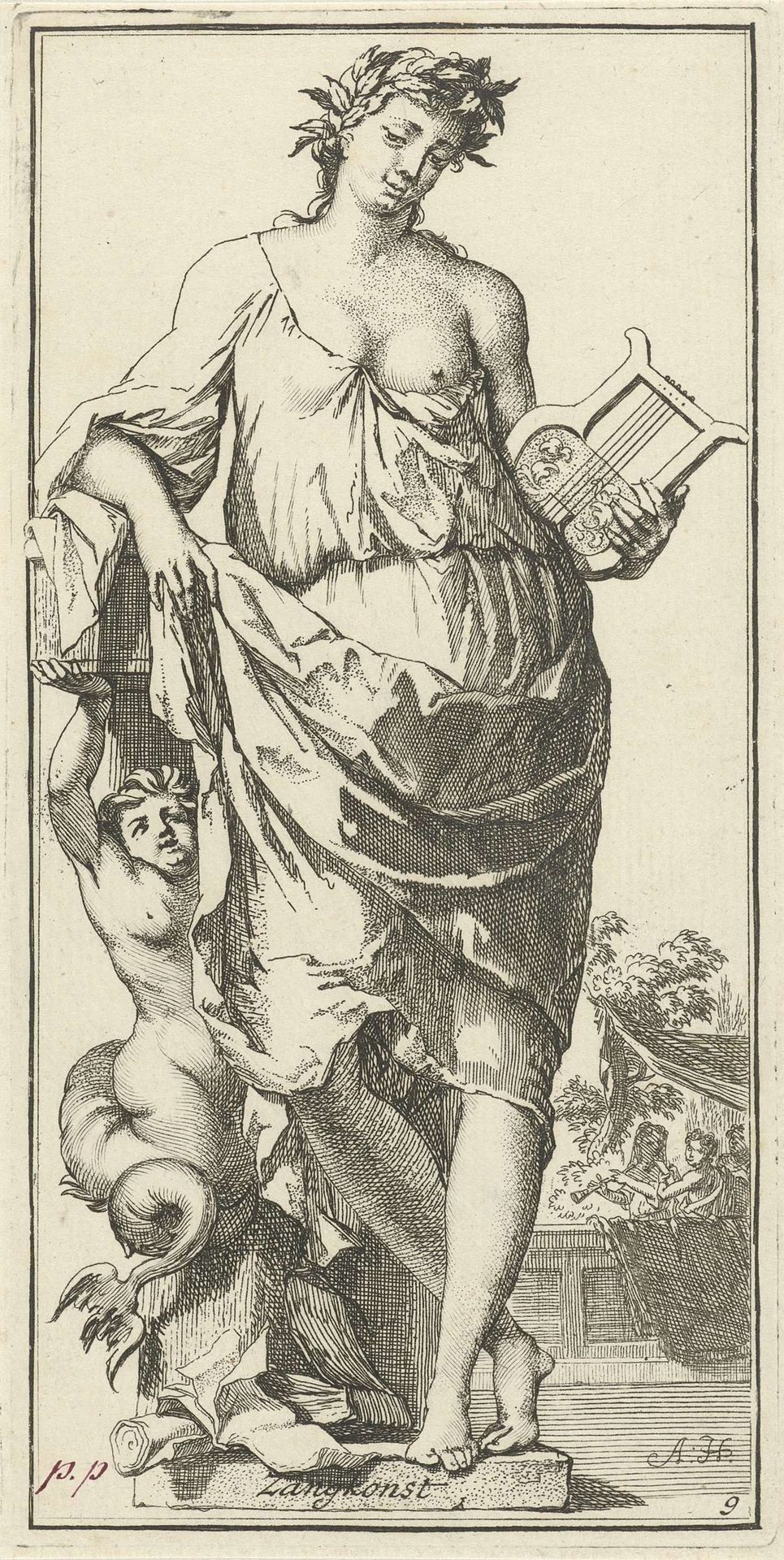
Personificatie van de zangkunst

Arnold Houbraken
1660 - 1719Location
RijksmuseumListen to curator's interpretation
Curatorial notes
This print, Personification of Music, was created by Arnold Houbraken, likely in the early 1700s. It's made with etching, a printmaking process where lines are incised into a metal plate with acid, and then inked and printed. The lines create a figure of a woman, the allegorical representation of Music. She holds a lyre and is adorned with a laurel wreath, symbols of artistic achievement. Note the care with which the etcher has rendered the textures of her draped clothing, and the smooth, pale skin. But consider how the print medium itself plays into the meaning of the artwork. Etching allowed for the relatively quick reproduction of images, making art and ideas more accessible to a wider audience. This aligns with the democratizing potential of music itself, a form of expression that can transcend social barriers. The production of prints like these relied on skilled labor, connecting the world of art with the broader economy of craft and manufacturing. So, next time you listen to a piece of music, think about the materials, making, and context that bring art to life.