About this artwork
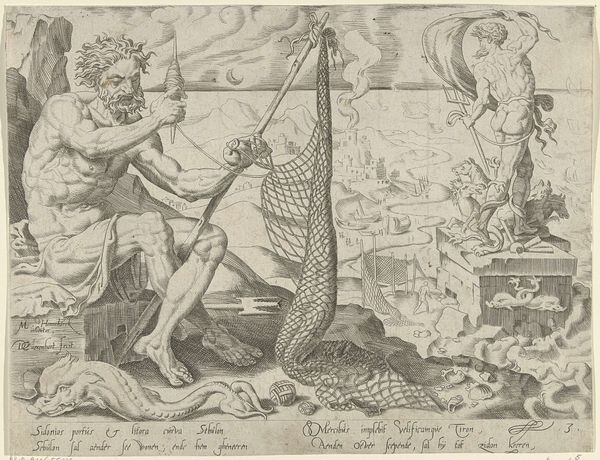
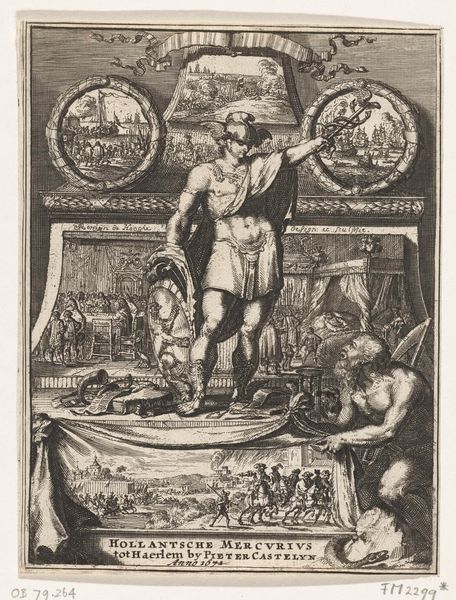
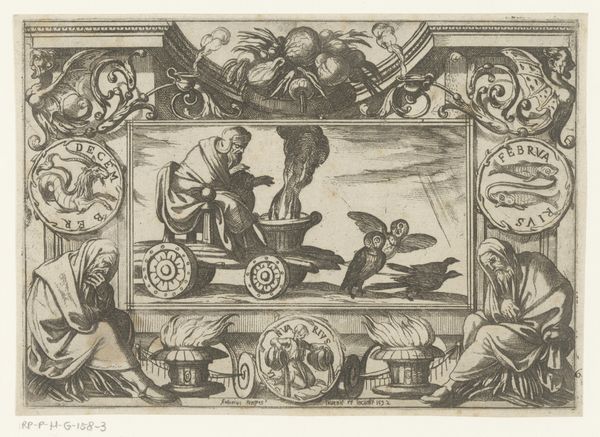
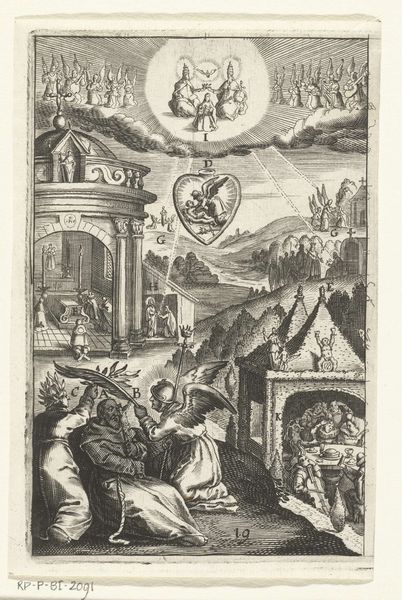
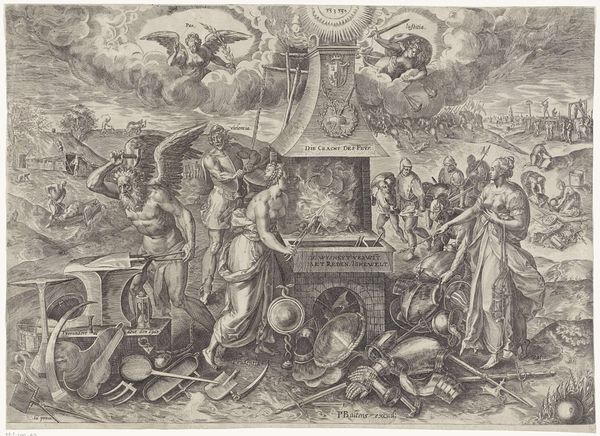
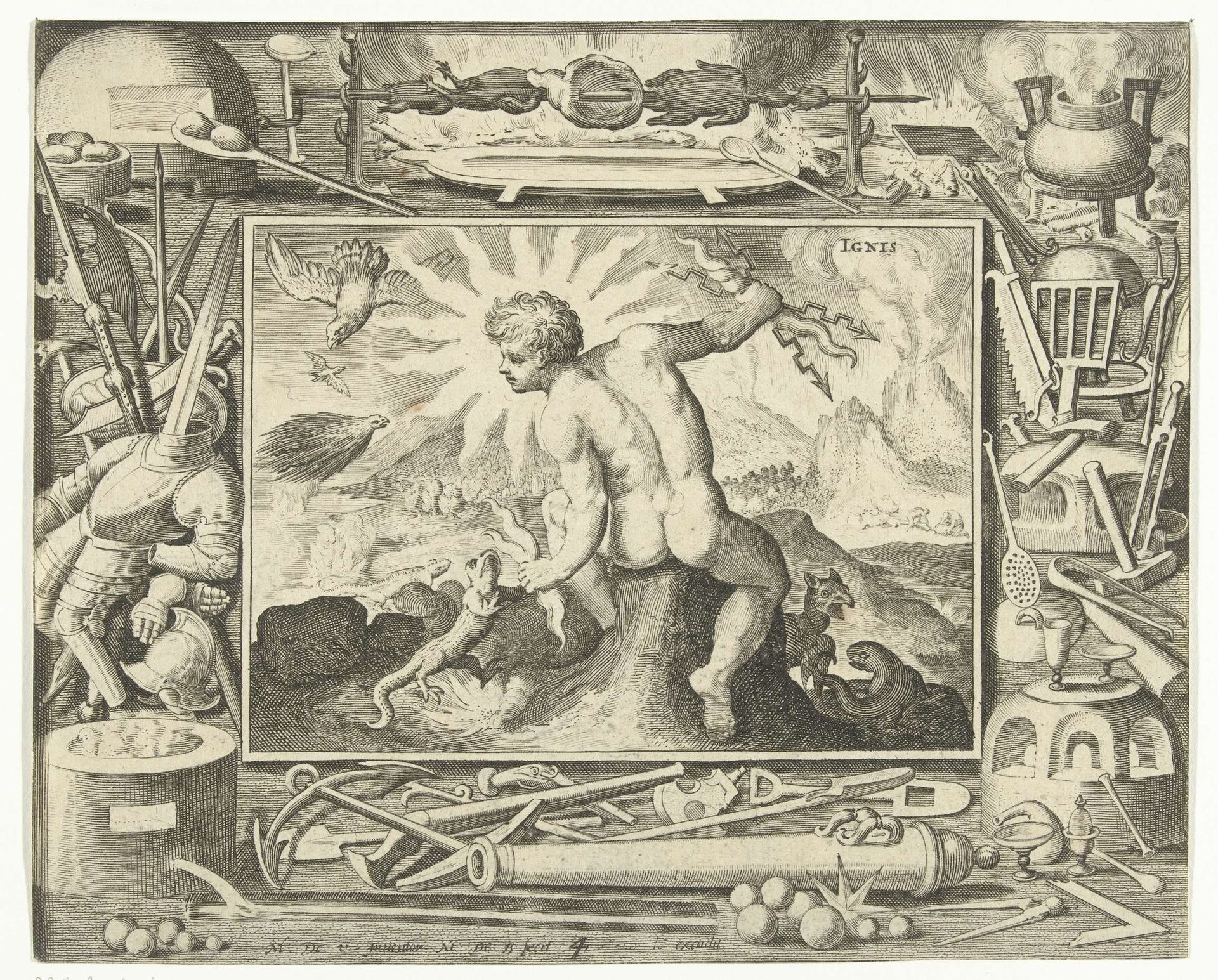
Nicolaes de Bruyn made this engraving of "Element Fire as a Young Man with Lightning Bolts" sometime before his death in 1656. De Bruyn was a prominent printmaker in Rotterdam during the Dutch Golden Age, a time of great economic and cultural growth for the Netherlands. This print is an allegory, representing the element of fire as a muscular young man wielding lightning. The image is framed by objects associated with fire: cooking implements, weaponry, and tools for metalworking, suggesting the transformative power of fire in both domestic and military contexts. We might consider this print in relation to the rising merchant class of the Netherlands, who depended on these technologies for trade and defense. The image celebrates human ingenuity and control over nature. To understand this print better, we might research the emblem books and scientific treatises that were popular in the 17th century. By situating the image within its historical context, we can gain insight into the social and cultural values of the Dutch Golden Age.
Element vuur als jonge man met bliksemschichten
1581 - 1656

Nicolaes de Bruyn
1571 - 1656Location
RijksmuseumArtwork details
- Medium
- drawing, print, engraving
- Dimensions
- height 174 mm, width 212 mm
- Location
- Rijksmuseum
- Copyright
- Rijks Museum: Open Domain
Tags
Comments
Share your thoughts
About this artwork
Nicolaes de Bruyn made this engraving of "Element Fire as a Young Man with Lightning Bolts" sometime before his death in 1656. De Bruyn was a prominent printmaker in Rotterdam during the Dutch Golden Age, a time of great economic and cultural growth for the Netherlands. This print is an allegory, representing the element of fire as a muscular young man wielding lightning. The image is framed by objects associated with fire: cooking implements, weaponry, and tools for metalworking, suggesting the transformative power of fire in both domestic and military contexts. We might consider this print in relation to the rising merchant class of the Netherlands, who depended on these technologies for trade and defense. The image celebrates human ingenuity and control over nature. To understand this print better, we might research the emblem books and scientific treatises that were popular in the 17th century. By situating the image within its historical context, we can gain insight into the social and cultural values of the Dutch Golden Age.
Comments
Share your thoughts