About this artwork
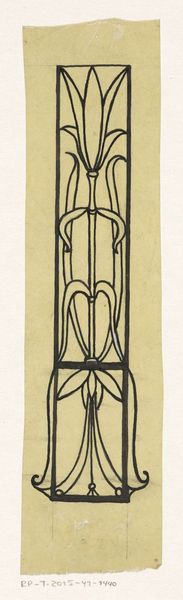
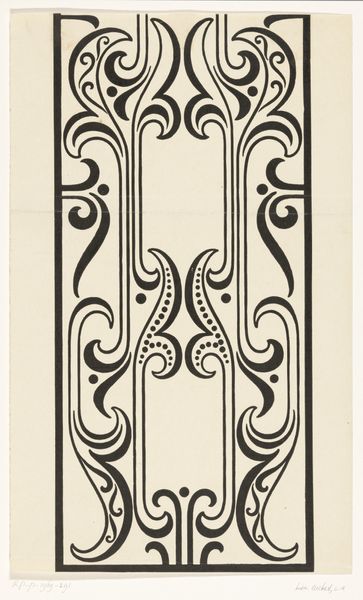
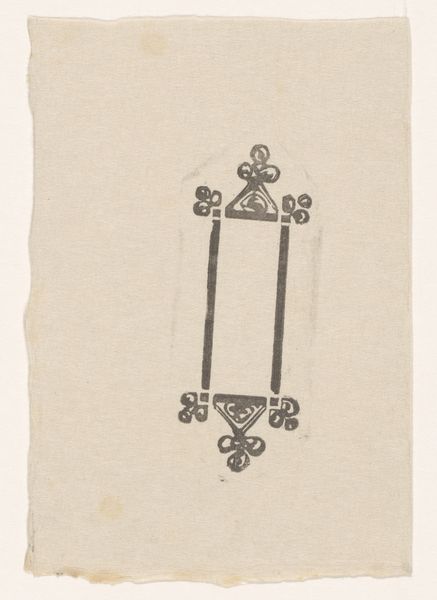
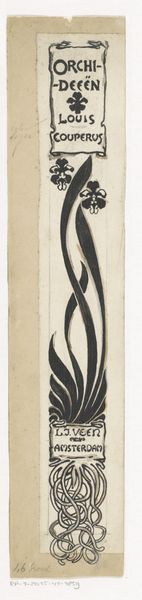
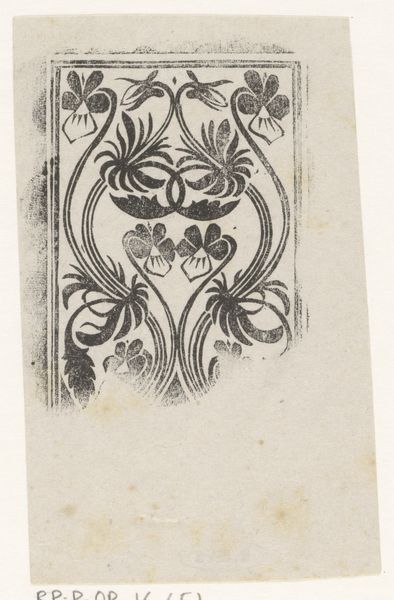
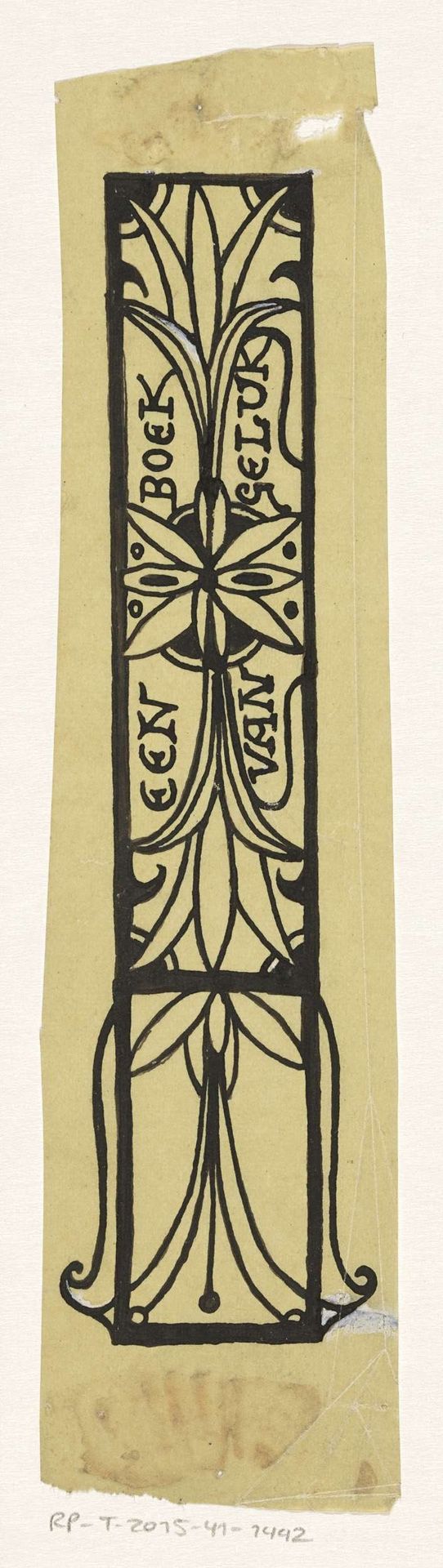
Richard Nicolaüs Roland Holst designed this book cover in 1894 for Louis Couperus' novel "Extaze: een boek van geluk". The design's verticality is immediately striking, emphasized by stylized, organic forms rendered in stark black lines against a muted background. The composition suggests a rigid structure infused with naturalistic elements. Note how Holst uses symmetry, arranging floral and geometric motifs along a central axis. The title, bisecting the design, integrates text as a visual component, reinforcing the artwork's structural integrity. The choice of line is critical here. The bold, unwavering strokes delineate shapes and create a sense of depth, while the stylized botanical elements echo the Art Nouveau movement's fascination with nature. This interplay of form and text reflects the broader artistic and philosophical concerns of the time, as artists sought to challenge fixed meanings. It invites ongoing interpretation of the relationship between ecstasy, nature, and the written word.
Bandontwerp voor: Louis Couperus, Extaze: een boek van geluk, 1894
before 1894

Richard Nicolaüs Roland Holst
1868 - 1938Location
RijksmuseumArtwork details
- Medium
- drawing, graphic-art, paper, ink
- Dimensions
- height 169 mm, width 41 mm
- Location
- Rijksmuseum
- Copyright
- Rijks Museum: Open Domain
Tags
Comments
Share your thoughts
About this artwork
Richard Nicolaüs Roland Holst designed this book cover in 1894 for Louis Couperus' novel "Extaze: een boek van geluk". The design's verticality is immediately striking, emphasized by stylized, organic forms rendered in stark black lines against a muted background. The composition suggests a rigid structure infused with naturalistic elements. Note how Holst uses symmetry, arranging floral and geometric motifs along a central axis. The title, bisecting the design, integrates text as a visual component, reinforcing the artwork's structural integrity. The choice of line is critical here. The bold, unwavering strokes delineate shapes and create a sense of depth, while the stylized botanical elements echo the Art Nouveau movement's fascination with nature. This interplay of form and text reflects the broader artistic and philosophical concerns of the time, as artists sought to challenge fixed meanings. It invites ongoing interpretation of the relationship between ecstasy, nature, and the written word.
Comments
Share your thoughts