lithograph, print
#
dutch-golden-age
#
lithograph
# print
#
landscape
#
orientalism
#
genre-painting
Dimensions: height 379 mm, width 459 mm
Copyright: Rijks Museum: Open Domain
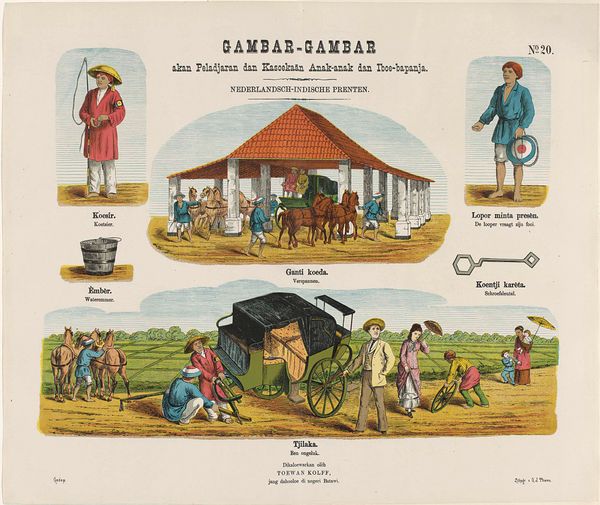
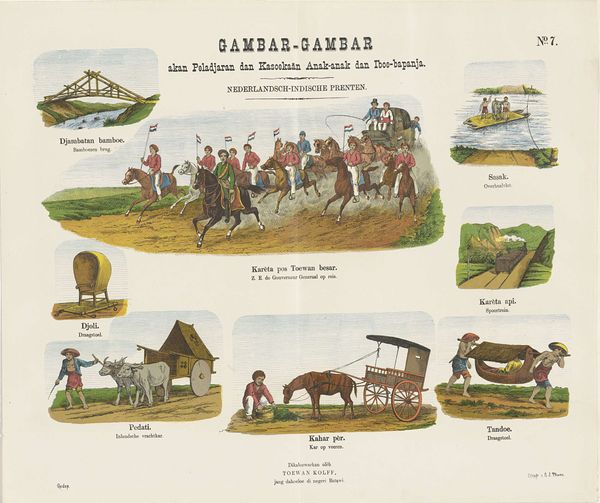
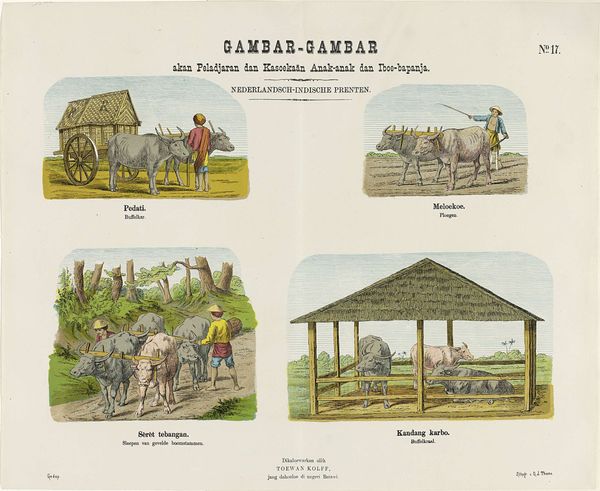
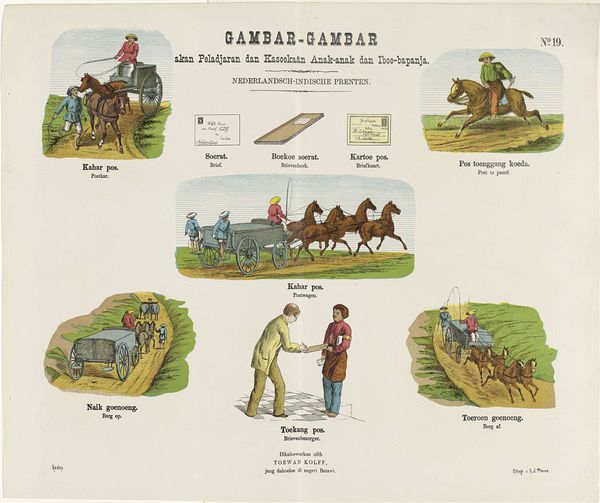
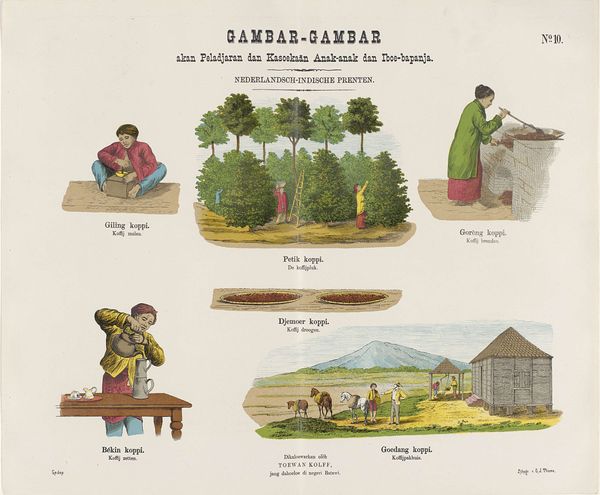
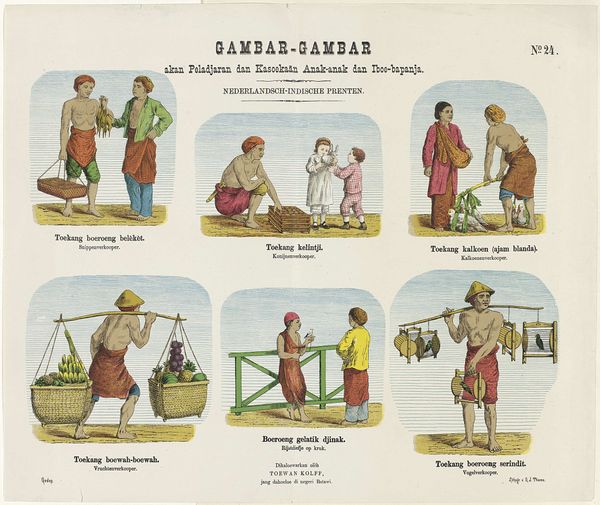
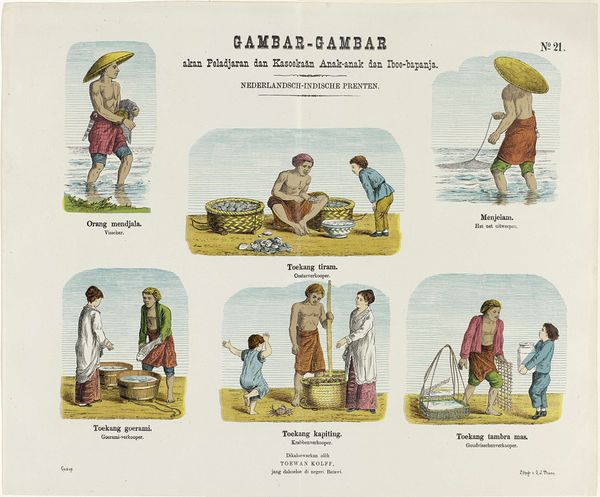
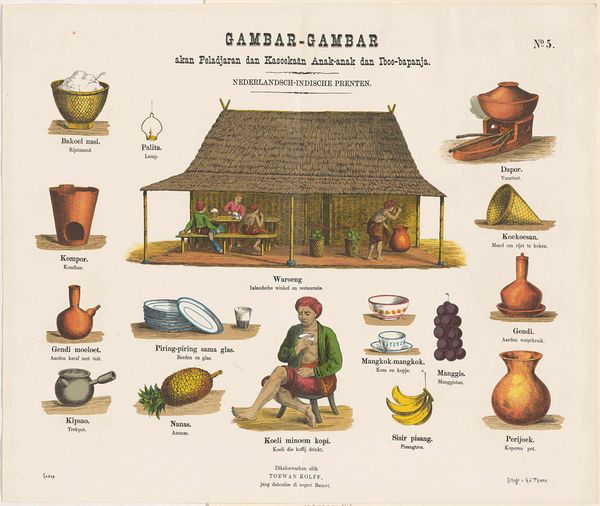
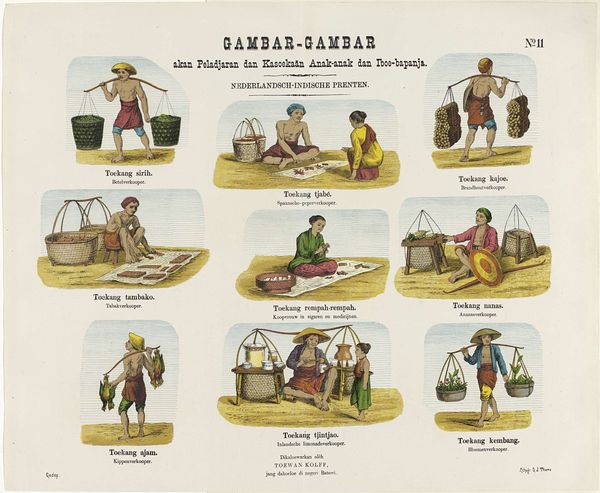
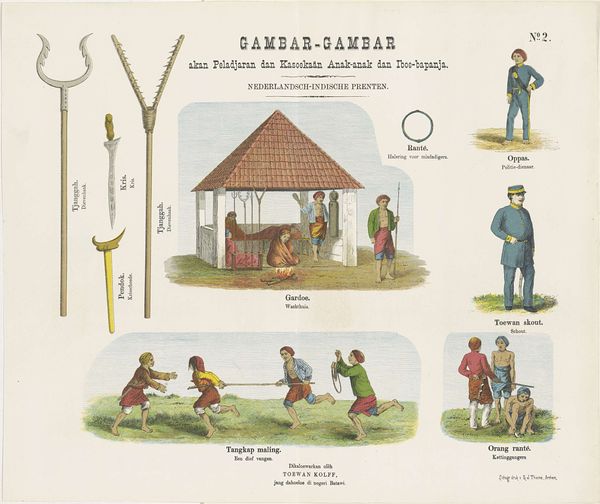
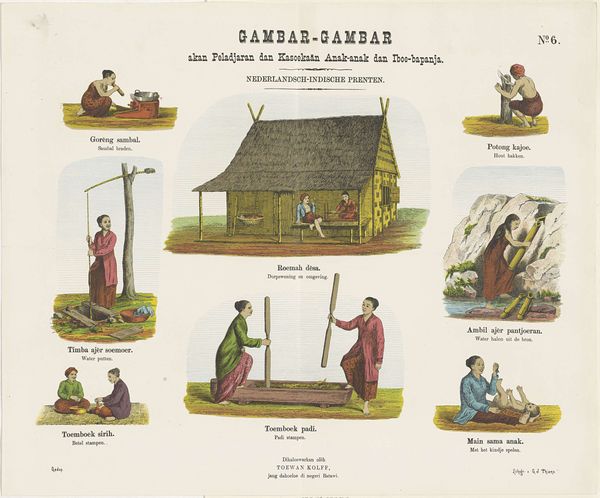
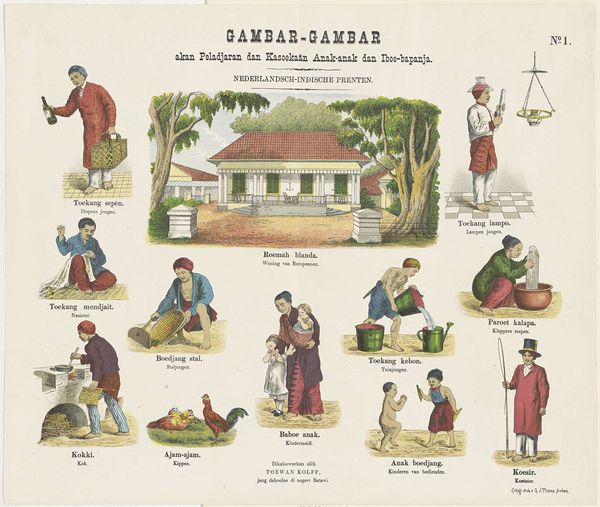
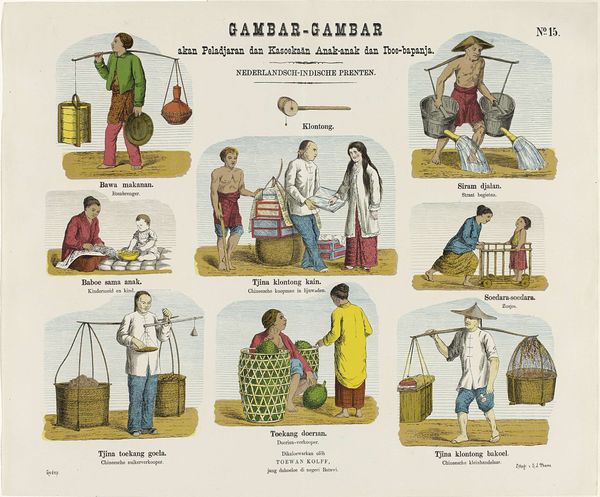
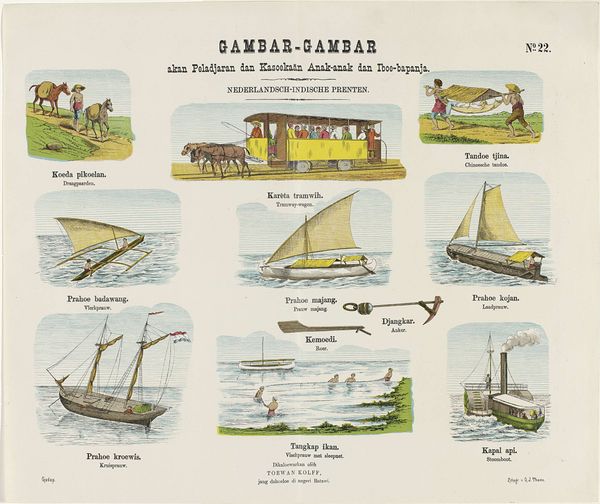
Editor: Here we have Gualtherus Kolff’s “Rijstproductie,” dating from somewhere between 1868 and 1881. It's a lithograph print showing the process of rice production. It almost looks like a diagram. What catches your eye in this piece? Curator: I'm drawn to the rigorous structure and organization. Notice the careful arrangement of the scenes, each a contained unit, almost like cells in a larger organism. This deliberate composition speaks to the artist's intent to not only depict, but also to categorize and present a system. The formal arrangement is reminiscent of scientific illustrations. Editor: So, it's almost less about the specific subject, and more about how it's presented as a whole? Curator: Precisely. Consider the color palette: muted, earth-toned, contributing to a sense of ordered observation rather than emotional engagement. Observe the lines: precise, delineating each form distinctly. This lithograph achieves its meaning not through expressive brushstrokes or subjective interpretation, but through the interplay of clearly defined elements. What impact do you feel this structure has? Editor: I think it does give it that detached, objective feel you mentioned, like you're viewing something under a microscope. It makes you step back and analyze each individual section, how they contrast and correspond. I can see how a different medium choice could have changed the feeling of it completely. Curator: Exactly. It is by examining the structural relationships between these elements – line, color, composition – that we can truly appreciate the artistic intent and intellectual underpinnings of Kolff’s work. Editor: This focus on the structure has definitely opened my eyes to a different way of looking at it; it's more than just a picture of rice production.
Comments
No comments
Be the first to comment and join the conversation on the ultimate creative platform.
 Collect
 React
React Comment
More like this