540 BC
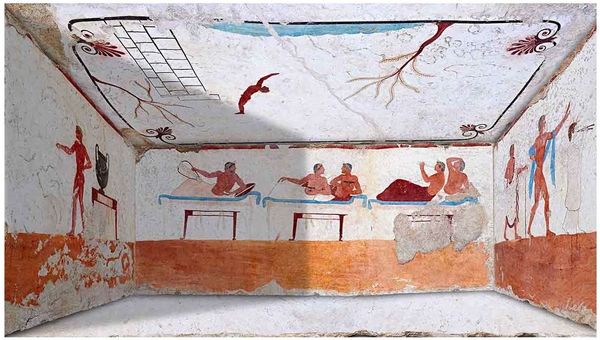
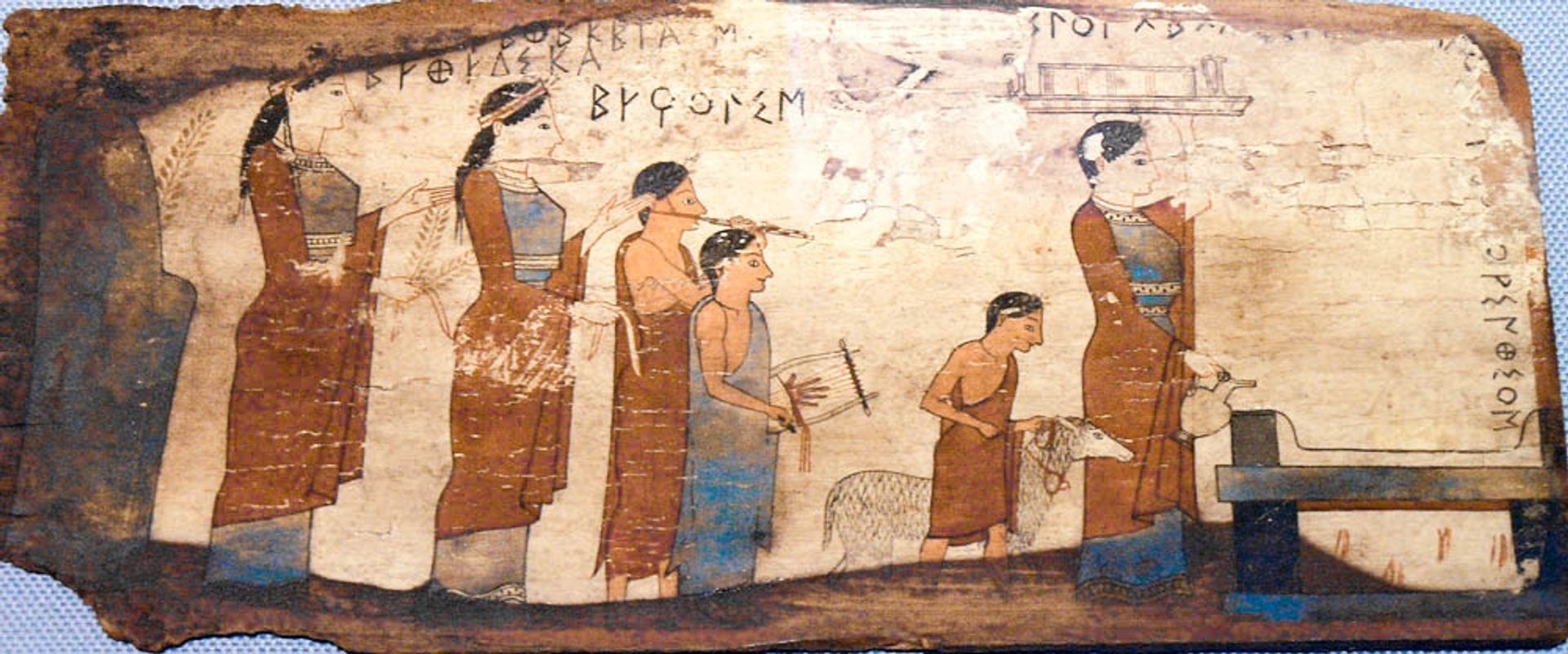
Pitsa Panel, Corinthia, Greece

Ancient Greek Painting and Sculpture
@ancientgreekpaintingandsculptureLocation
National Archaeological Museum, Athens, GreeceListen to curator's interpretation
Curatorial notes
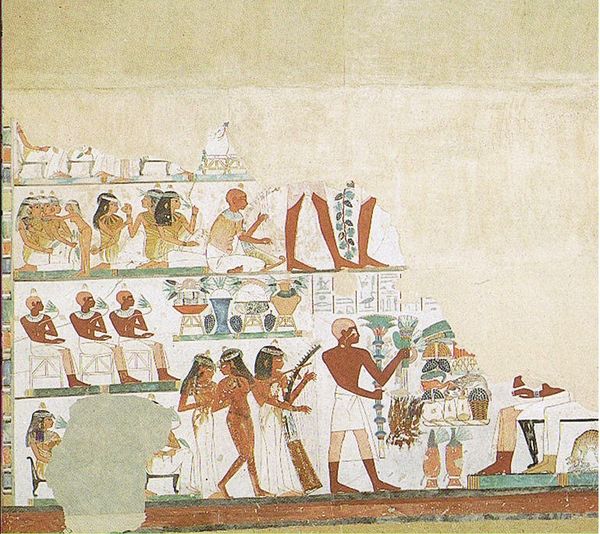
Editor: Here we have the Pitsa Panel from Corinthia, Greece, dating back to 540 BC. It's a tempera painting on wood. It seems almost like a snapshot of everyday life, but the figures are so stylized. What draws your eye when you look at this piece? Curator: The most compelling aspect is its articulation of space through a structured organization of figures. Notice how the overlapping and the subtle variations in scale create a sense of depth, despite the relative flatness of the figures themselves. The formal qualities of the Pitsa panel reflect an attempt to represent a procession or a series of events. Observe the palette used here: how does the earth-toned background contribute to the structure? Editor: It seems to create a sense of unity. So, it is almost like color helps hold together a composition that might otherwise feel disjointed because it’s a depiction of successive events? Curator: Precisely. Moreover, consider how the linear quality of the figures—created through bold, unwavering outlines—provides definition and emphasis within the picture plane. What about the geometric arrangement of forms - do you believe the combination creates an organized presentation of subject and content, or does it take away from that effect? Editor: I see what you mean. Initially, the rigid outlines felt a bit simplistic. But focusing on the spatial arrangement, the subtle variations become clearer. You have certainly shown me a new way to view ancient works! Curator: It highlights the essence of form, reminding us to see beyond representational likeness and appreciate the internal logic and formal architecture of art itself.