About this artwork
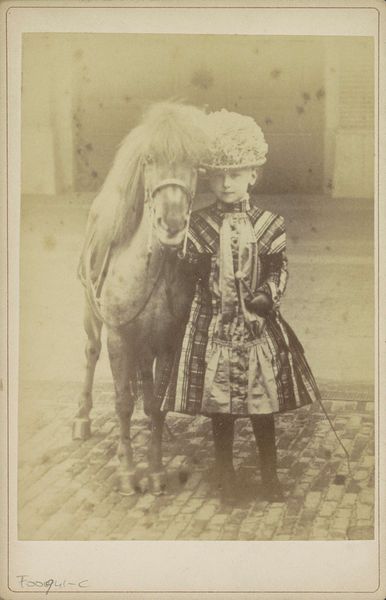
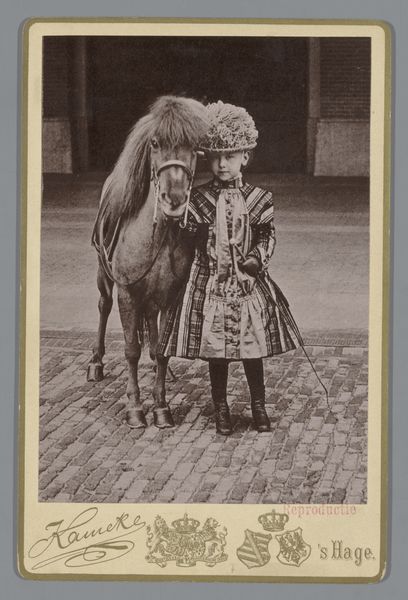
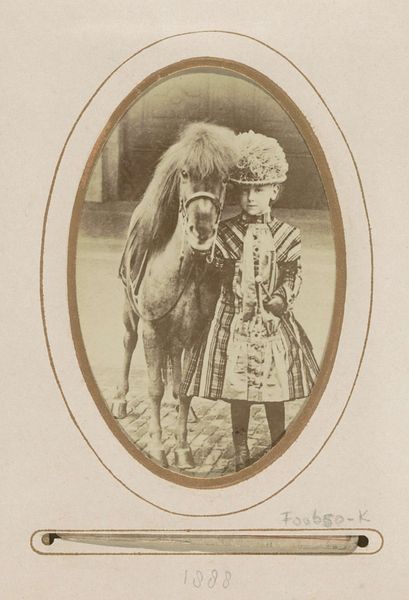
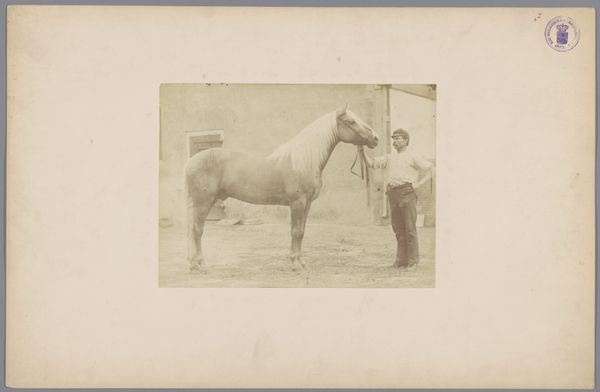
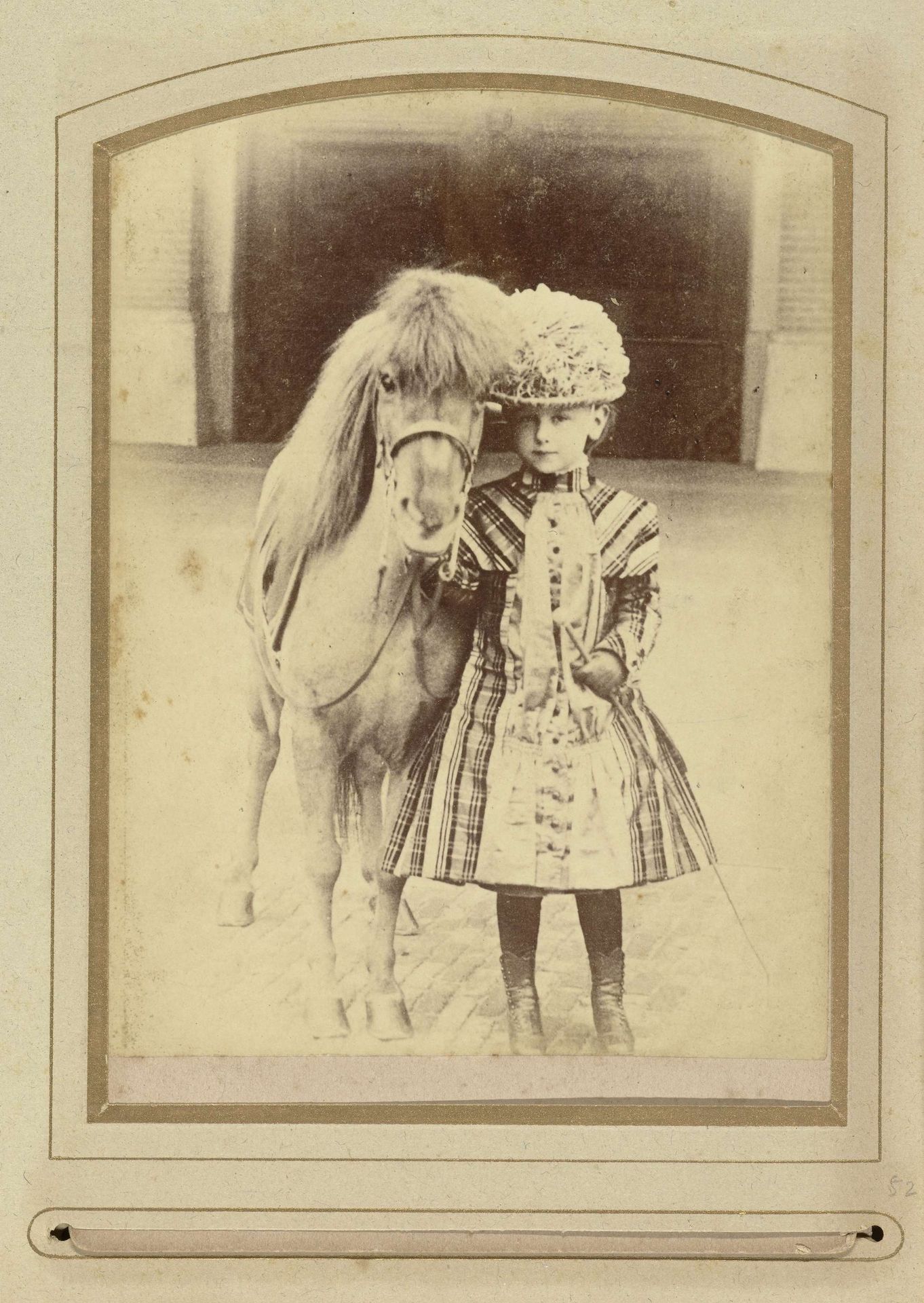
Curator: What a compelling image. This photograph, likely taken in 1887 by Richard Kameke, is entitled "Portret van prinses Wilhelmina met een pony" or "Portrait of Princess Wilhelmina with a Pony." It resides here at the Rijksmuseum. Editor: Immediately, I'm struck by its subdued, almost melancholy tone. The soft focus lends it a dreamlike quality, but also obscures details, making the moment feel strangely distant and lost in time. Curator: The Realism style is apparent in Kameke's attention to capturing the physical likenesses. Look at the textures – the pony’s shaggy mane, the pleats in Wilhelmina's dress, even the floral decoration atop her head. The composition leads us to an interpretation based on its symbolic meaning. Editor: The choice to depict the young princess with a pony carries potent symbolic weight, doesn’t it? Ponies were often associated with childhood, innocence, but also status. A powerful future queen juxtaposed with an emblem of youthful play. And the plaid of her dress—its visual pattern echoes a rigid order, mirroring expectations placed on royalty, right? Curator: Exactly. Consider also the spatial relationship: both child and animal seem confined within a tightly framed space, and neither appears entirely at ease. The framing limits our understanding of the relationship depicted. The emotional state seems ambivalent to me. Editor: Indeed. The slightly averted gaze of Wilhelmina, coupled with the pony's own quiet stillness, creates a mood of subdued introspection. Children, animals...often, such representation can speak to national hopes for the future vested in this young ruler, though tempered by an awareness of impending responsibility. Curator: So, beyond mere depiction, it functions almost as a commentary on duty versus personal freedom, played out through formal arrangements of line, tone, and texture. Thank you for these insights! Editor: And thank you for the structure and details that brought them into focus for me. It is rewarding to connect form and content in that way.
Portret van prinses Wilhelmina met een pony
Possibly 1887

Richard Kameke
1947 - 1898Location
RijksmuseumArtwork details
- Medium
- photography
- Dimensions
- height 135 mm, width 105 mm, height 302 mm, width 146 mm
- Location
- Rijksmuseum
- Copyright
- Rijks Museum: Open Domain
Tags
Comments
Share your thoughts
About this artwork
Curator: What a compelling image. This photograph, likely taken in 1887 by Richard Kameke, is entitled "Portret van prinses Wilhelmina met een pony" or "Portrait of Princess Wilhelmina with a Pony." It resides here at the Rijksmuseum. Editor: Immediately, I'm struck by its subdued, almost melancholy tone. The soft focus lends it a dreamlike quality, but also obscures details, making the moment feel strangely distant and lost in time. Curator: The Realism style is apparent in Kameke's attention to capturing the physical likenesses. Look at the textures – the pony’s shaggy mane, the pleats in Wilhelmina's dress, even the floral decoration atop her head. The composition leads us to an interpretation based on its symbolic meaning. Editor: The choice to depict the young princess with a pony carries potent symbolic weight, doesn’t it? Ponies were often associated with childhood, innocence, but also status. A powerful future queen juxtaposed with an emblem of youthful play. And the plaid of her dress—its visual pattern echoes a rigid order, mirroring expectations placed on royalty, right? Curator: Exactly. Consider also the spatial relationship: both child and animal seem confined within a tightly framed space, and neither appears entirely at ease. The framing limits our understanding of the relationship depicted. The emotional state seems ambivalent to me. Editor: Indeed. The slightly averted gaze of Wilhelmina, coupled with the pony's own quiet stillness, creates a mood of subdued introspection. Children, animals...often, such representation can speak to national hopes for the future vested in this young ruler, though tempered by an awareness of impending responsibility. Curator: So, beyond mere depiction, it functions almost as a commentary on duty versus personal freedom, played out through formal arrangements of line, tone, and texture. Thank you for these insights! Editor: And thank you for the structure and details that brought them into focus for me. It is rewarding to connect form and content in that way.
Comments
Share your thoughts