c. 1650
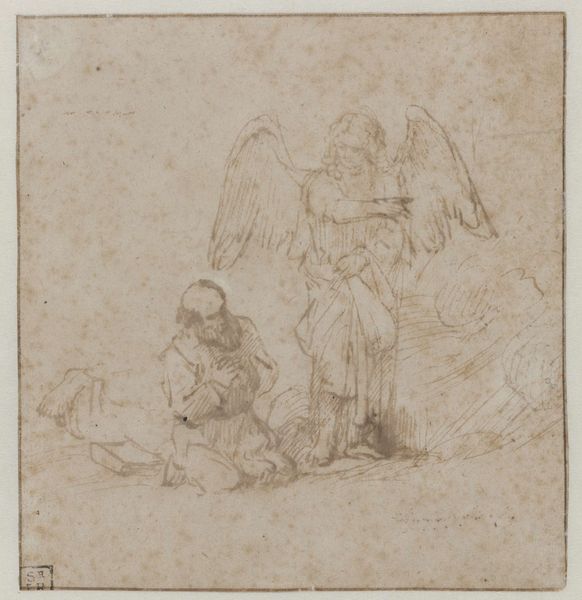
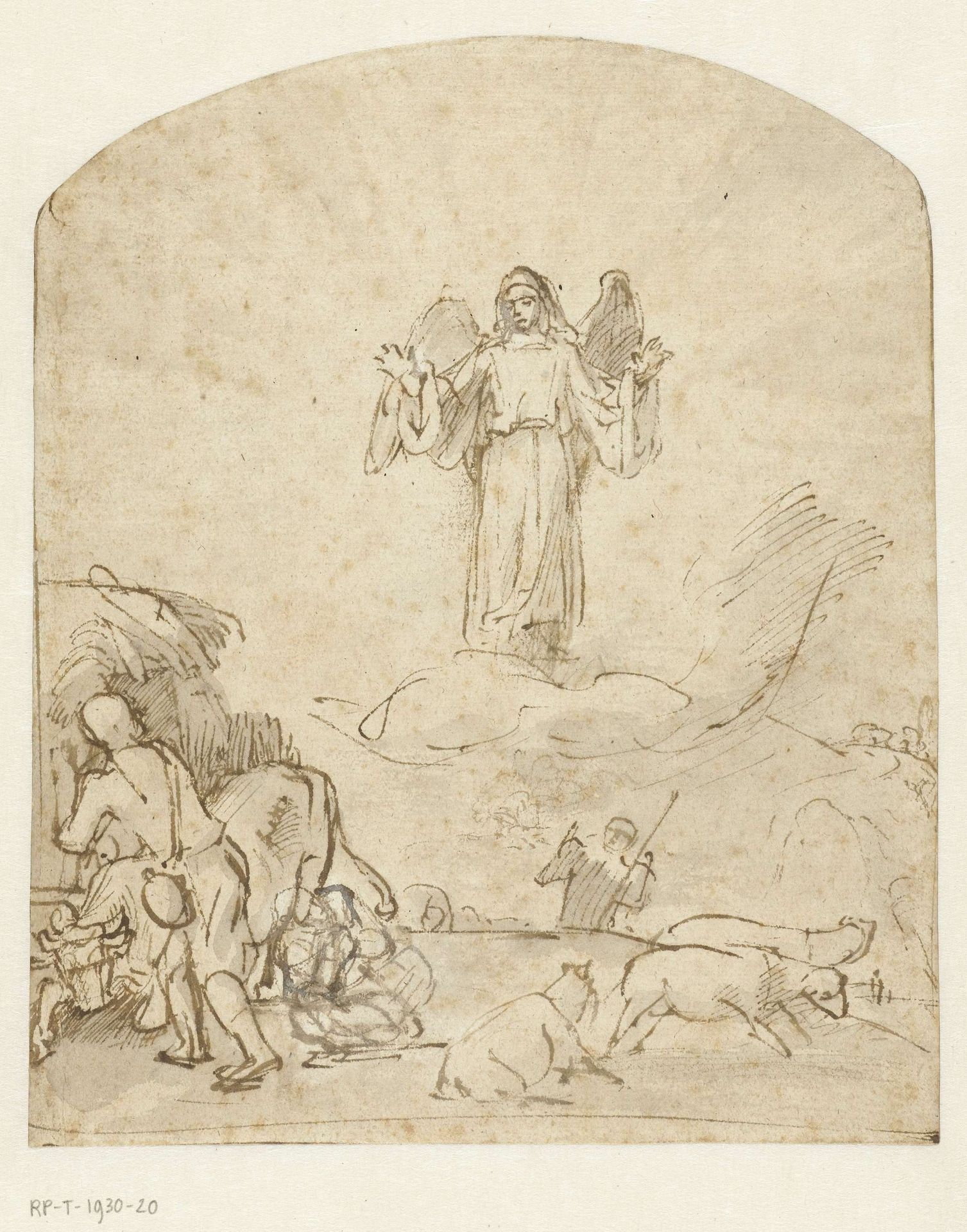
The Annunciation to the Shepherds

Rembrandt van Rijn
1606 - 1669Location
RijksmuseumListen to curator's interpretation
Curatorial notes
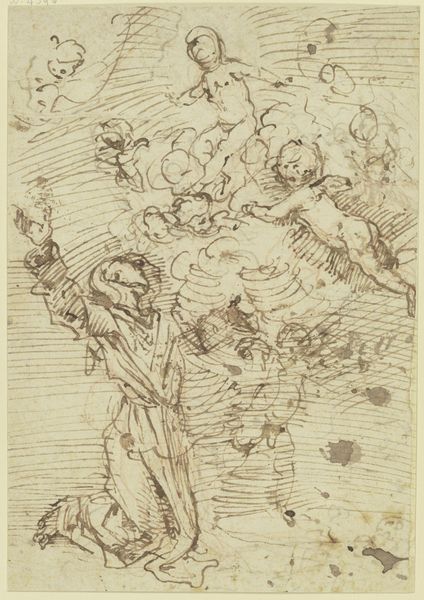
Rembrandt van Rijn rendered "The Annunciation to the Shepherds" using pen and brown ink. The scene illustrates a key moment from the Gospel of Luke, but it also reflects the social and cultural context of 17th-century Netherlands. The artist, deeply engaged with the humanity of biblical narratives, depicts the angel's arrival not to kings or priests, but to humble shepherds. This choice emphasizes the importance of those often overlooked or marginalized in society. Rembrandt, grappling with his own position in a rapidly changing art world, seemed to identify with these figures. The work is characterized by dramatic contrasts in light and shadow, heightening the emotional impact of the divine revelation. The shepherds' expressions and poses convey a sense of awe, fear, and wonder. Rembrandt invites us to consider the intersection of the divine and the everyday. Here, in their mundane existence, the shepherds are chosen to be the first witnesses to the birth of Christ.