1957
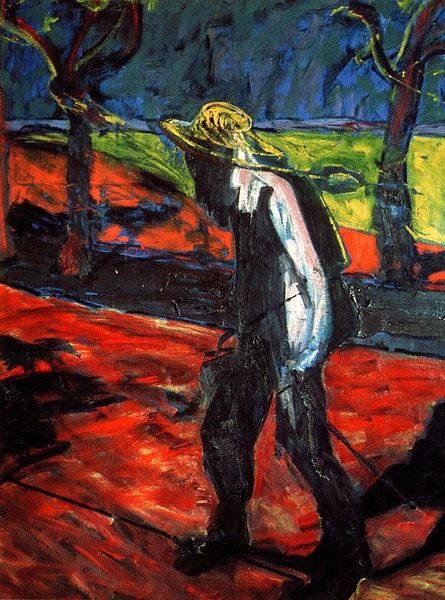
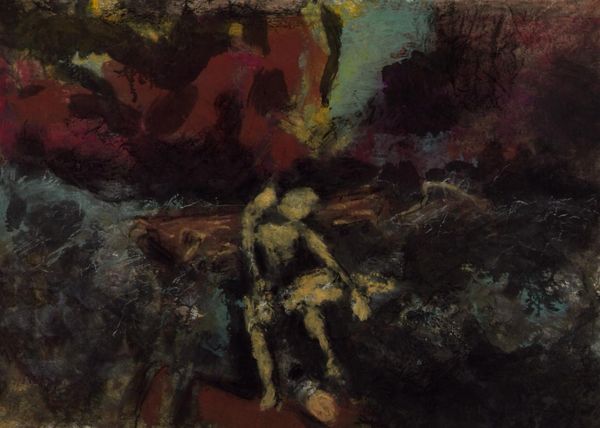
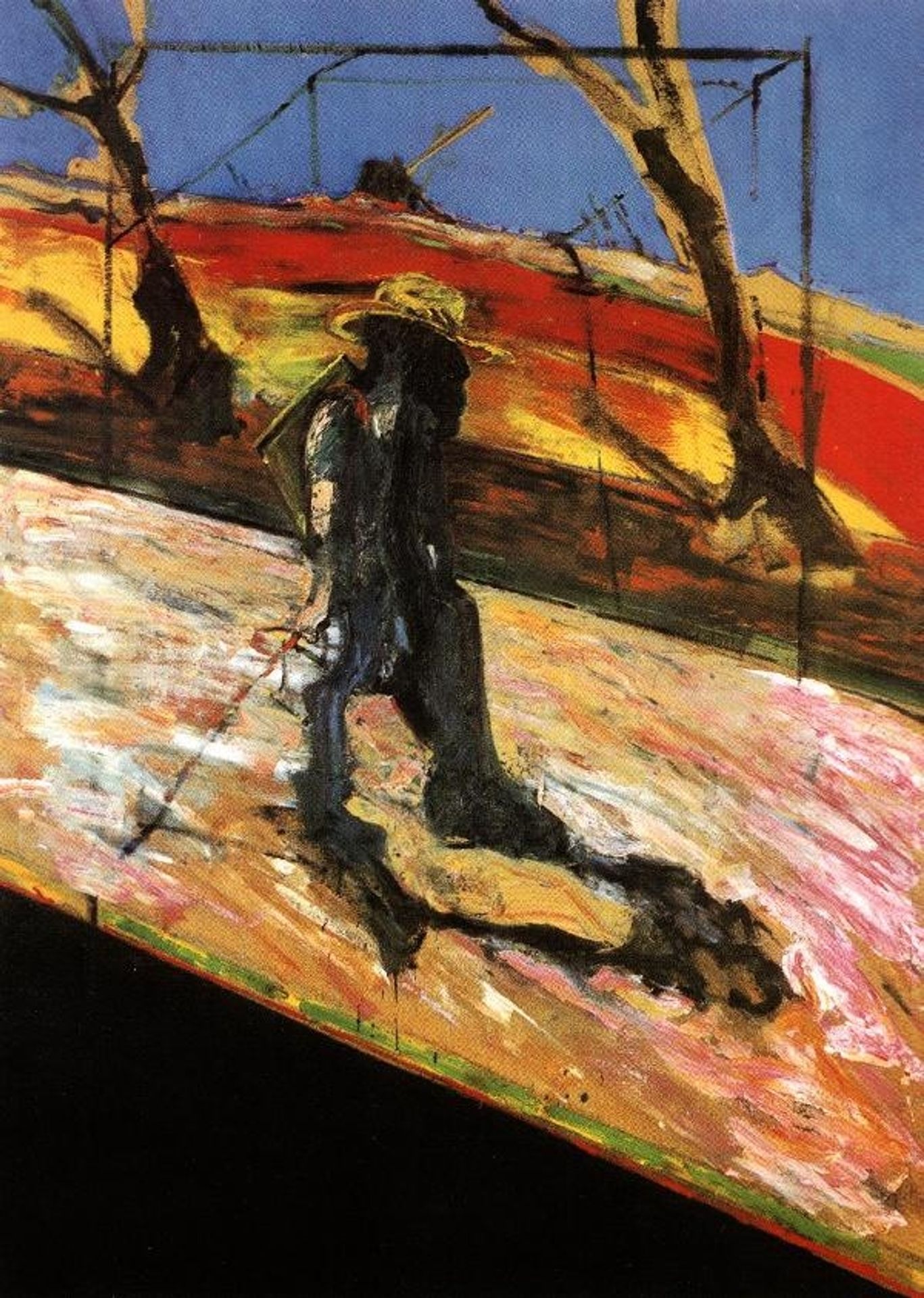
Study for a Portrait of Van Gogh II

Listen to curator's interpretation
Curatorial notes
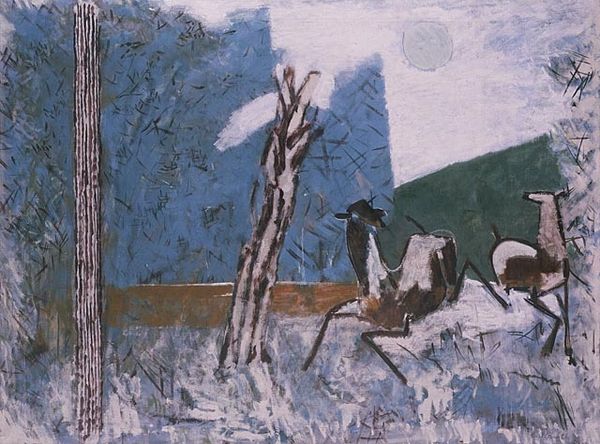
Curator: At first glance, it appears unsettling, but somehow viscerally captivating. There is an unkempt feel with all the brushstrokes. Editor: We are looking at Francis Bacon’s, “Study for a Portrait of Van Gogh II,” painted in 1957 using oil on canvas. Though ostensibly a portrait, it feels… distorted. Curator: Distorted yes, and loaded with a symbolic weight. I mean, there are the vibrant landscape hues that give way to shadowy figure— it evokes that familiar, post-impressionist Dutch sunniness, yet it is warped, haunted almost. The straw hat immediately cues "Van Gogh." Editor: That warped element is precisely where the work excavates powerful narratives, the mental and societal pressures. Bacon never explicitly stated a focus on mental health, but how can we ignore that the piece seems to allude to the way society treats those on its margins? We cannot look past how both were outsiders: one a gay man in mid-century England, and the other a mentally unstable artist during an era of intense stigmatization around mental health. Curator: I am stuck by the symbol of the open road... but it gives the figure almost no place to actually go. There is an intensity, amplified by the contrast in colours in what might have been an optimistic setting. Red juxtaposed with somber greys, layered meanings perhaps. The landscape genre then shifts to express something different here. Editor: Exactly. Bacon, influenced by philosophers like Nietzsche and the absurdism of the post-war period, captures that angst, those fractured identities, and it’s impossible to separate this aesthetic from the larger social context: McCarthyism, Cold War anxieties, a rapidly changing social fabric. And the canvas itself, leaning into neo-expressionism, conveys urgency, resistance against traditional forms of representation. Curator: To consider art of displacement within culture brings another dimension. To portray displacement psychologically is another fascinating nuance. These psychological symbols endure through time. Editor: Ultimately, it's a deeply complex image. What initially feels like a stylistic choice, I think, transforms into a powerful socio-political statement about alienation, about the human condition, inviting us to reflect on visibility, acceptance, and the ongoing struggle to destigmatize what has been marginalized. Curator: Agreed.