
Curatorial notes
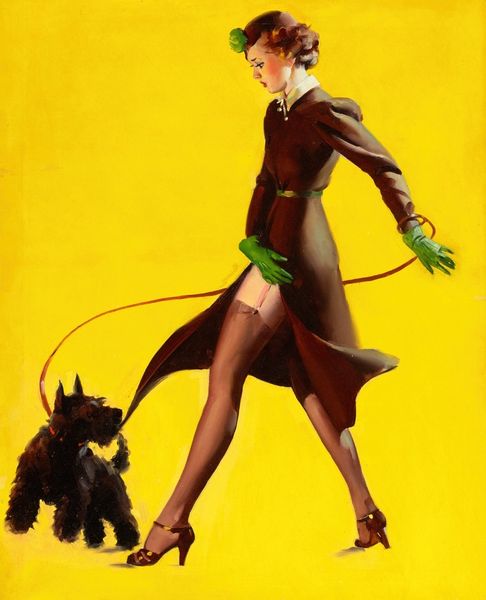
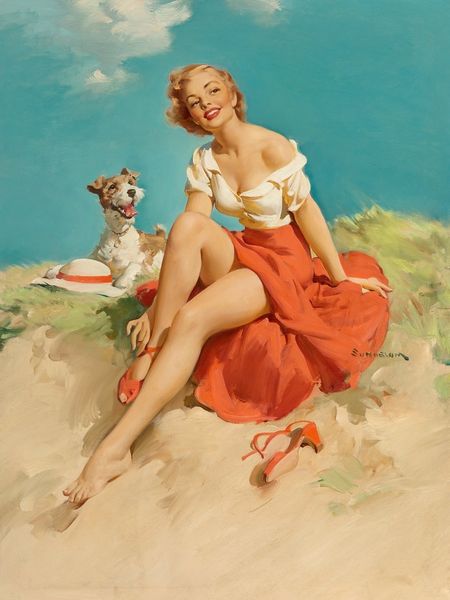
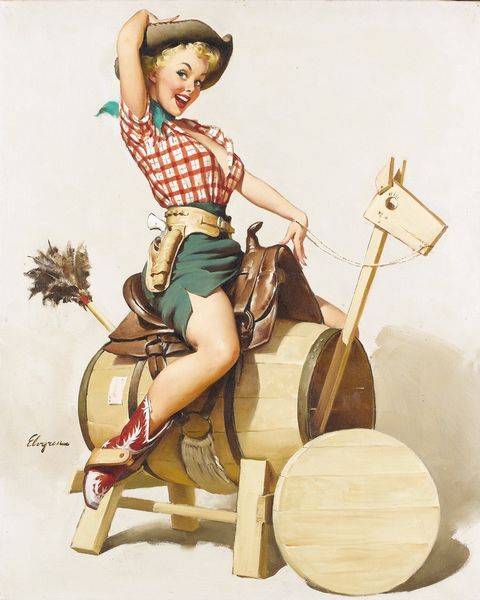
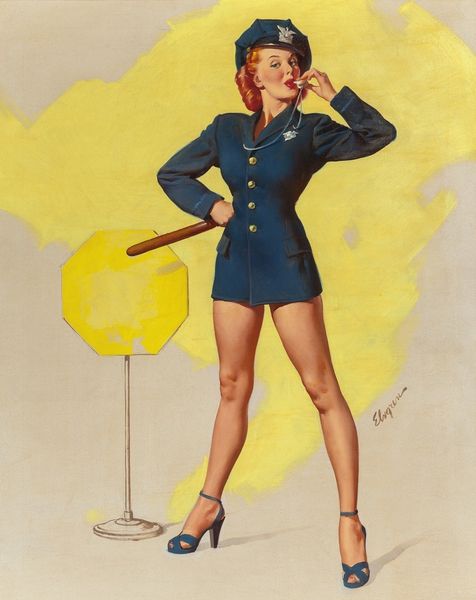
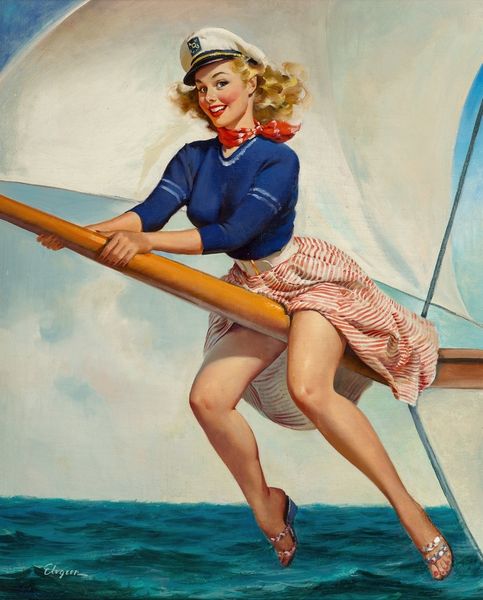
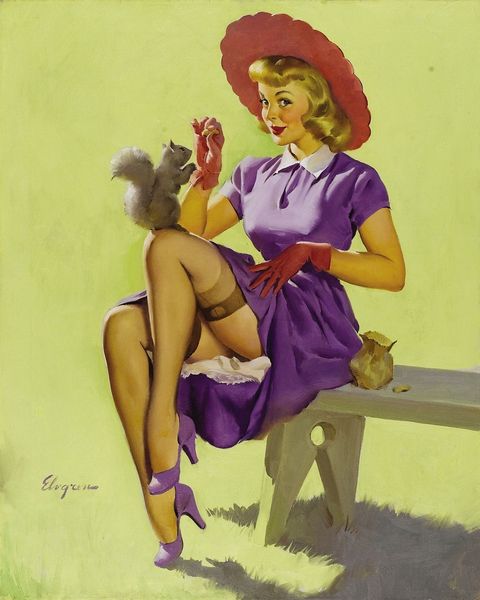
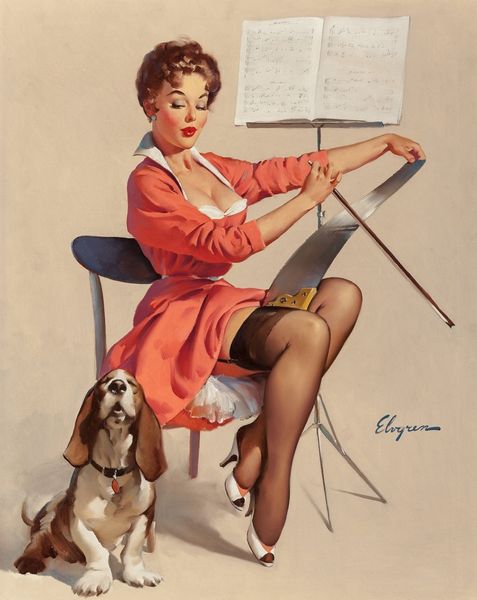
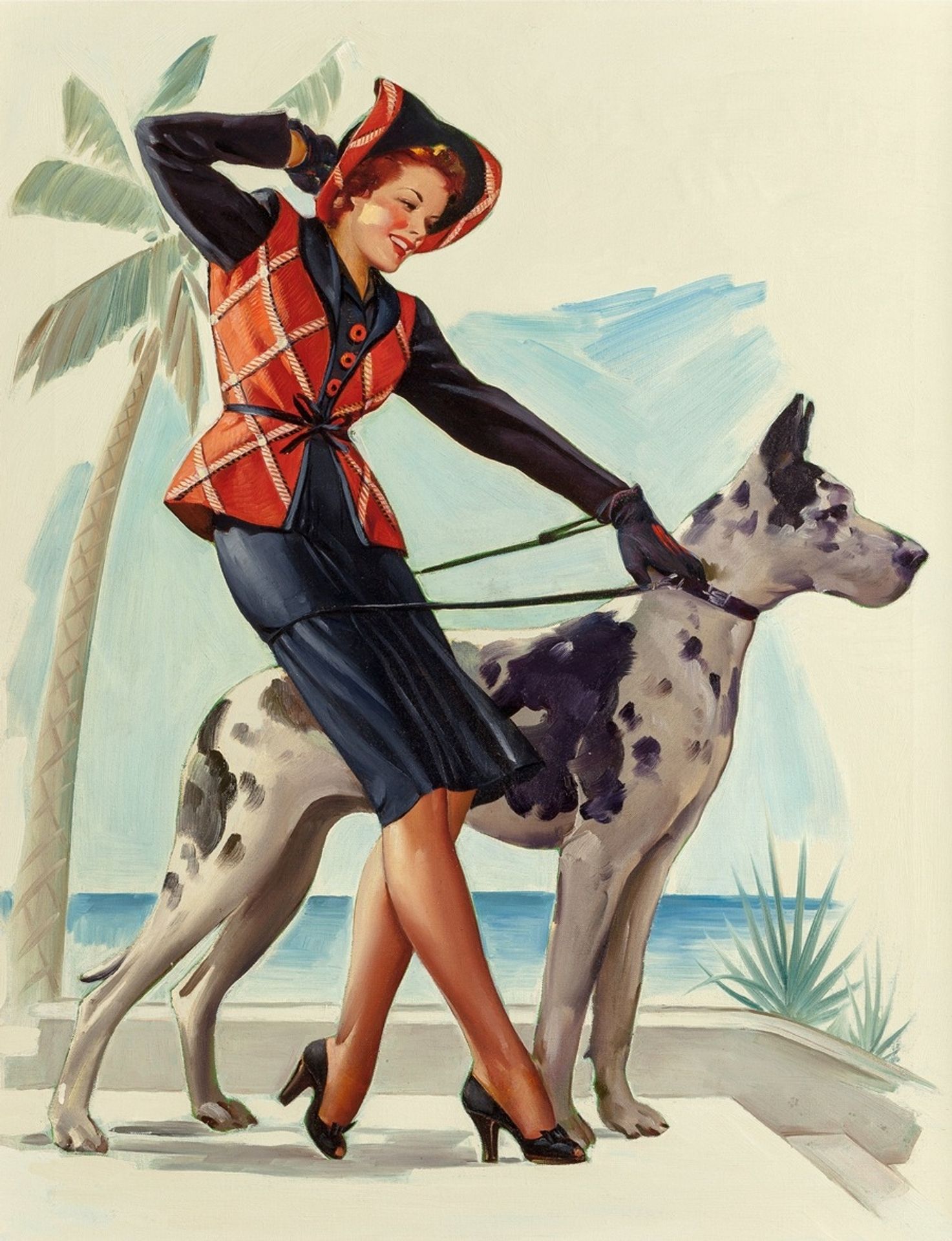
Curator: Allow me to introduce Gil Elvgren's 1941 piece, "Great Dame." Editor: Well, isn't she something? All rouge and sunshine… And that dog! What a hulking… creation. Immediately, I wonder about aspirational advertisement versus the day-to-day realities of wartime rationing. Curator: That juxtaposition you mention is precisely the core paradox, isn't it? The painting utilizes oil on canvas to showcase an image designed for mass appeal through pin-up culture. Yet, one gets this powerful tension between escapism and the material hardships that defined the era for so many. Editor: The whole image feels utterly constructed. Consider that fitted suit—tailored, buttoned tight, even in what looks like a balmy locale. The labor, the very textile itself, whispers of carefully sourced, rationed material, meticulously crafted, designed for this illusion of upper-class leisure. But there she is in high heels. It is a lot. Curator: True! It is all tightly, rigidly controlled, really. Perhaps Elvgren captures both the beauty and fragility of dreams. You could get swept away, but look closer and it's almost a bit like taxidermy, or as carefully arranged as the materials for some elaborate home craft project—almost too picture perfect. Editor: It even gets down to that leash. Notice how it is looped perfectly. Nothing is left to chance here. What a contrast between the realities of war manufacturing demands, the cost of the material, and the leisure classes—all flattened to this idealized… fantasy? It even looks more than a little performative, the entire ensemble… as crafted and consumed as any wartime good. Curator: So, "Great Dame," more a loaded, carefully produced dream object. Elvgren’s piece invites us to think about where aspirations are manufactured and, perhaps more importantly, who gets to indulge in them. Editor: Exactly. Let’s think less of idyllic scenes and consider the unseen work involved in creating these icons—then as well as now.