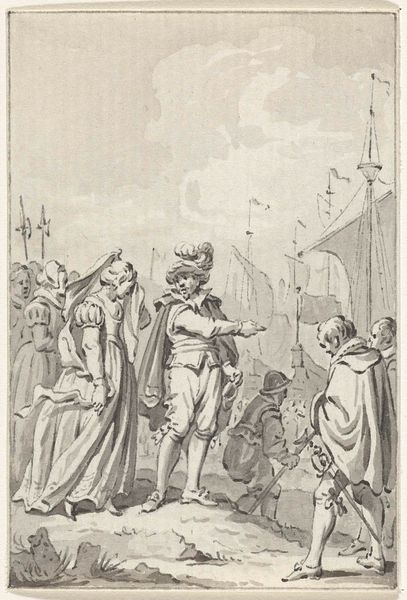
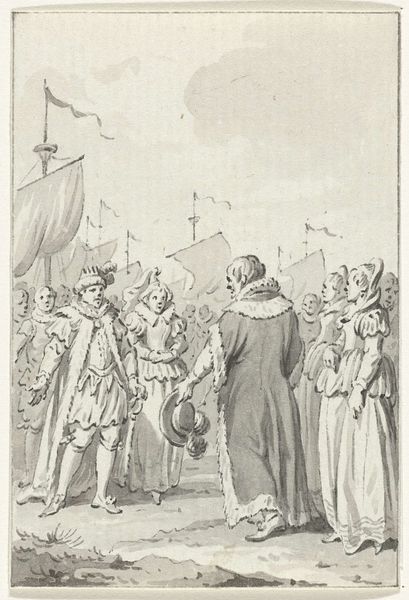
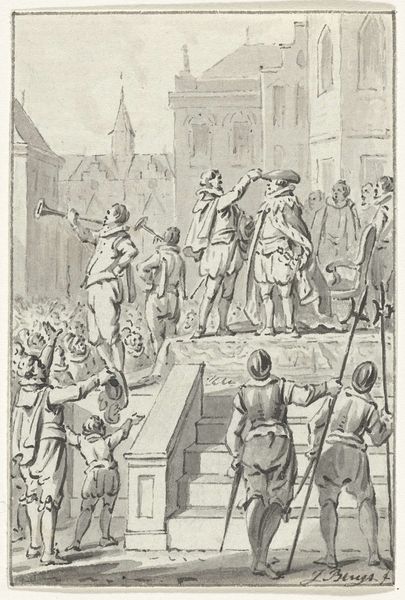
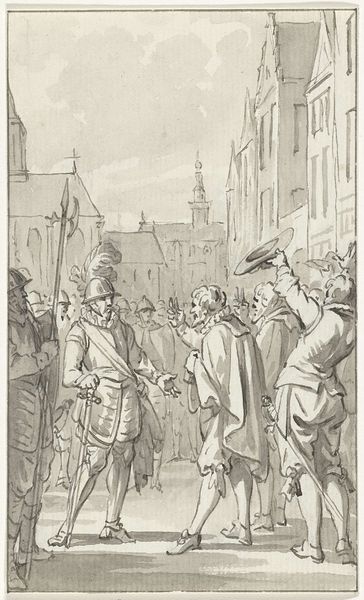
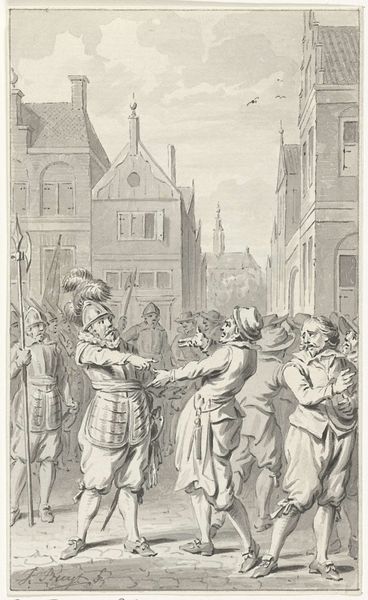
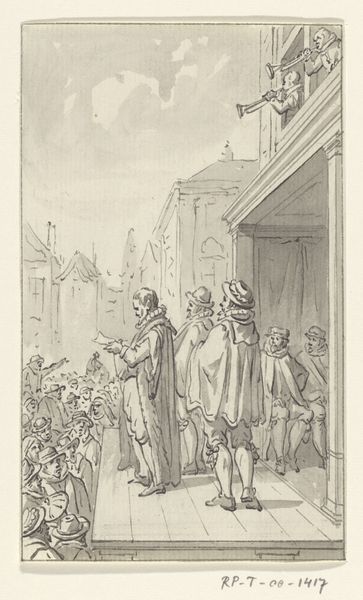
Aankomst van Filips II in Brussel voor de troonsafstand van zijn vader, Karel V, 1555 1780 - 1795
0:00
0:00

jacobusbuys
Rijksmuseum
drawing, paper, ink
#
portrait
#
drawing
#
neoclacissism
#
paper
#
ink
#
cityscape
#
history-painting
Dimensions: height 82 mm, width 56 mm
Copyright: Rijks Museum: Open Domain
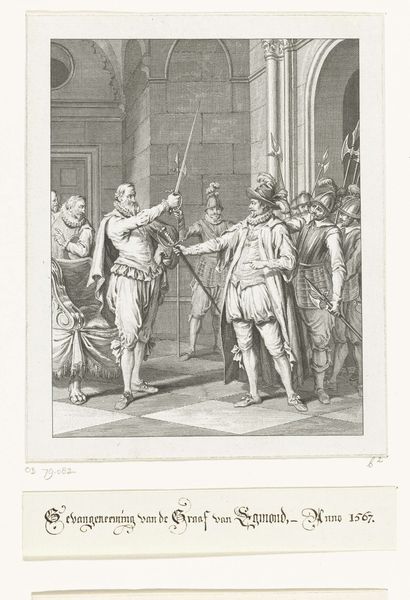
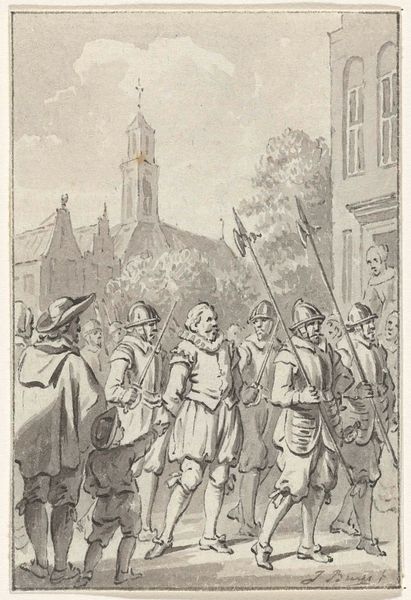
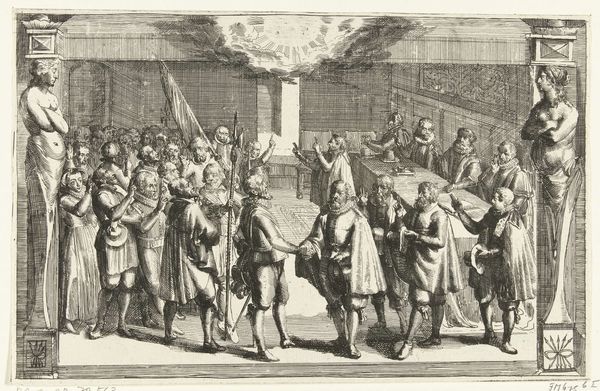
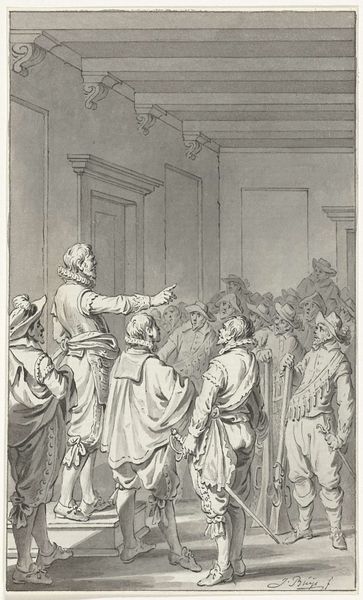
Editor: This is Jacobus Buys's "Arrival of Philip II in Brussels for the Abdication of his Father, Charles V, 1555," a drawing in ink on paper, made sometime between 1780 and 1795. There's almost a staged quality to the scene, everyone seems to be looking, and caught up in the event. What stands out to you about this piece? Curator: I am immediately struck by the power dynamics inherent in the depiction of this historical event. It presents a pivotal moment of transition but it's not just a transfer of power, but a construction of power. Consider how Buys, looking back centuries later, is deliberately crafting a narrative. Editor: How so? Curator: Look at the way Philip is framed; not as someone inheriting power organically, but as performing it. His clothes, the positioning within a staged city scape… they are communicating a carefully orchestrated dominance. Doesn’t this representation, created so much later during a period of political and social upheaval, seem to reflect anxieties about inherited power and the illusion of legitimacy? Editor: That's interesting, I hadn't considered it that way. I was really just looking at the aesthetic. So you're saying it isn’t simply a historical record, but an active argument? Curator: Precisely. Think about who Buys was painting for. Was he commenting on the contemporary struggles for self-determination? Who is complicit and benefits in continuing the subjugation of marginalized people, and what tools do they utilize to achieve this? The grandeur on display masks a system potentially built on exploitation and injustice. And then think about whose story isn’t being told in this supposedly triumphant arrival. Editor: That gives me a lot to think about when considering history paintings going forward. It's really all about deconstructing the power narrative, right? Curator: Exactly. Question whose voices are amplified and, crucially, whose are silenced. We can gain insights from the margins that the established voices wish to erase.
Comments
No comments
Be the first to comment and join the conversation on the ultimate creative platform.
 Collect
 React
React Comment
More like this