drawing, ink
#
portrait
#
drawing
#
baroque
#
ink
#
portrait drawing
#
genre-painting
Dimensions: height 196 mm, width 148 mm
Copyright: Rijks Museum: Open Domain
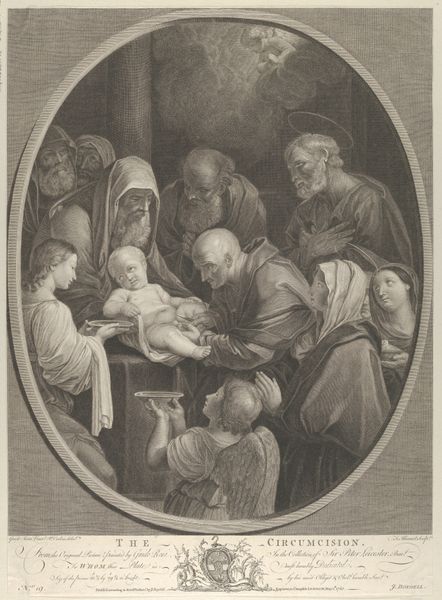
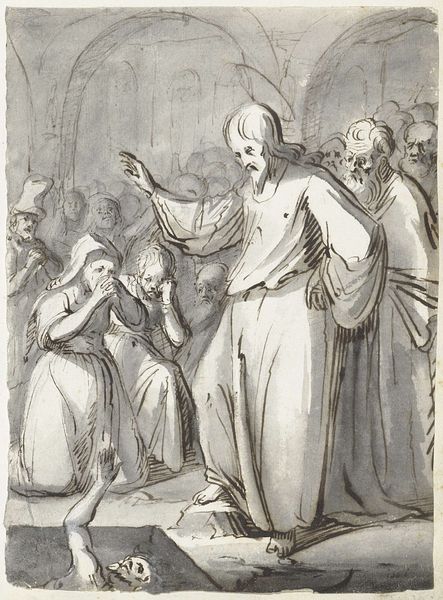
Curator: This ink drawing is titled "Besnijdenis," dating back to 1661, crafted by Moses ter Borch. Editor: My initial reaction is that it has a somber yet dramatic air, rendered almost entirely in grays, with the sole source of light seeming to emanate from behind the figures. Curator: Considering ter Borch's societal positioning, we have to understand that portraying this subject—circumcision—speaks to the intersection of religious practice and identity formation during the Baroque period. This specific act and the group observing signal strong lines of social connection that tell us about group power, familial patriarchy and what it meant to belong. Editor: Symbolically, the act carries multiple layers. The child is clearly central. Notice how the light source casts a pale, almost ghostly, luminescence. One could say it references purity and the sacred transition. Do you think the intensity of the expressions carries cultural implications? Curator: I do. Remember the influence of Rembrandt's dramatic chiaroscuro. Also the relatively sober environment gives way to our interpreting the subject’s experience. It demands we acknowledge a lineage of control in society—specifically male. We see similar control imposed even today on individuals forced to assimilate into heteronormative constructs. Editor: That resonates. Thinking about this piece in a contemporary lens allows a reexamination of what it represents in culture through memory. I also believe there is power here. Religious belief provides spiritual fortification for these groups that we simply cannot dismiss. Curator: Agreed. I find myself appreciating the delicate use of ink wash to depict depth. Borch definitely engaged with not just what the ritual meant at the time, but invites consideration for what power dynamics still linger around the performance of religious practices and social expectations. Editor: It’s compelling to witness how an event of a bygone era still pulses with shared ideas that help inform a conversation about the value in rituals, past and present.
Comments
No comments
Be the first to comment and join the conversation on the ultimate creative platform.
 Collect
 React
React Comment
More like this