etching
#
baroque
#
etching
#
landscape
#
figuration
Dimensions: height 65 mm, width 67 mm
Copyright: Rijks Museum: Open Domain
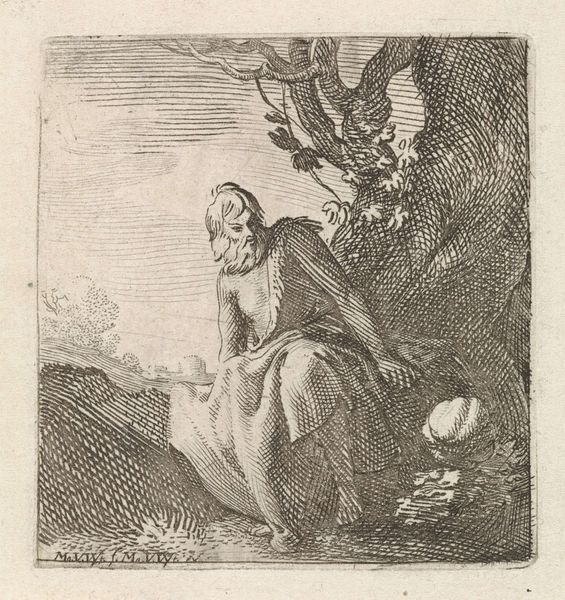
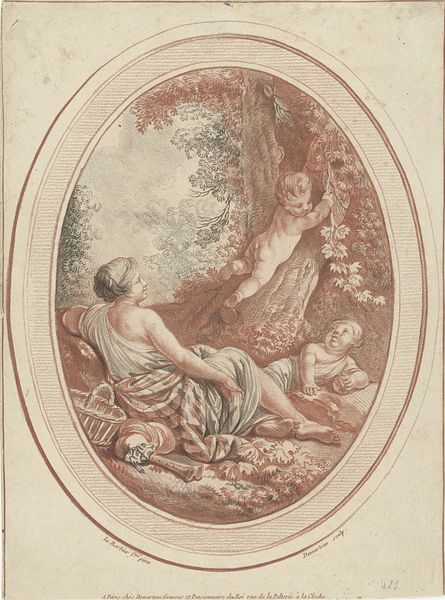
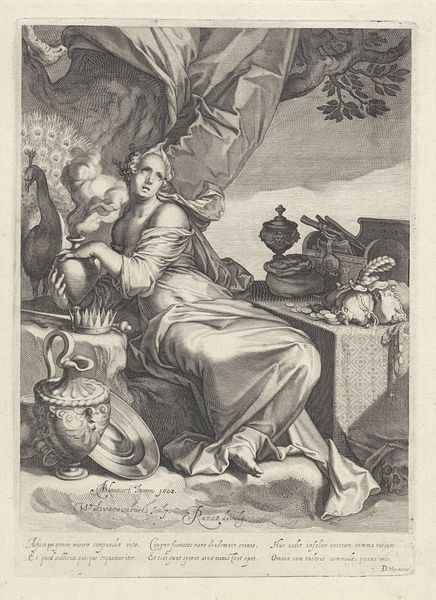
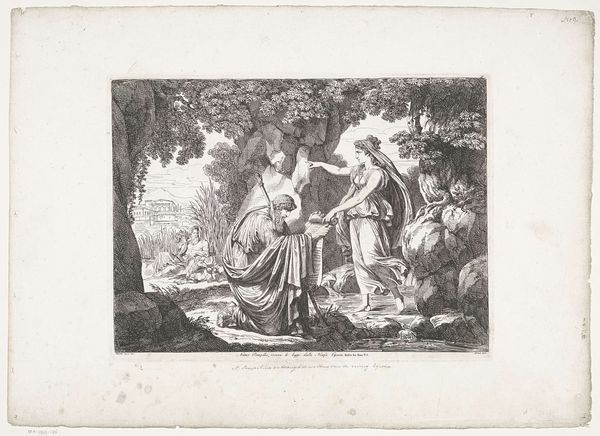
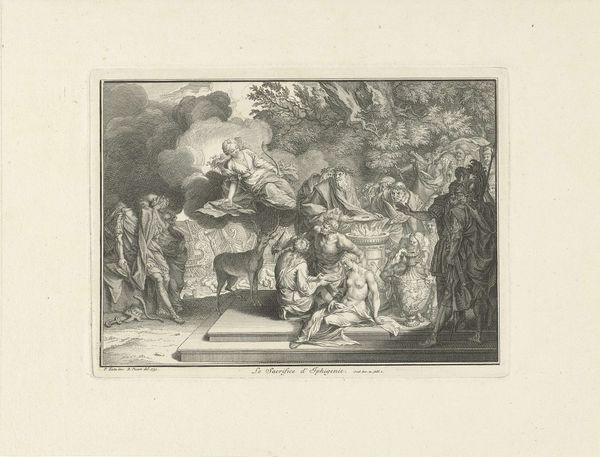
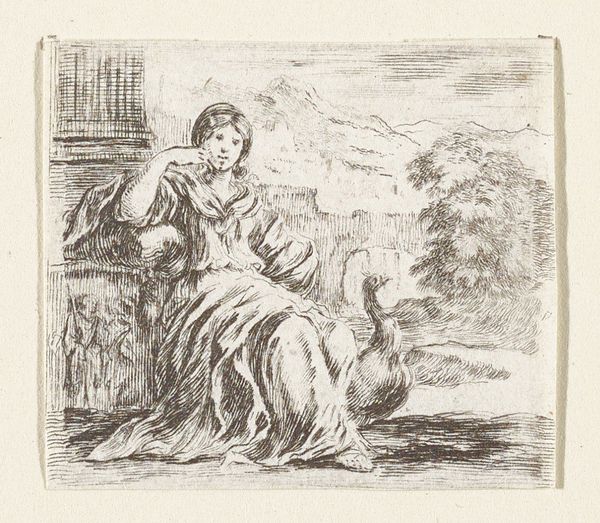
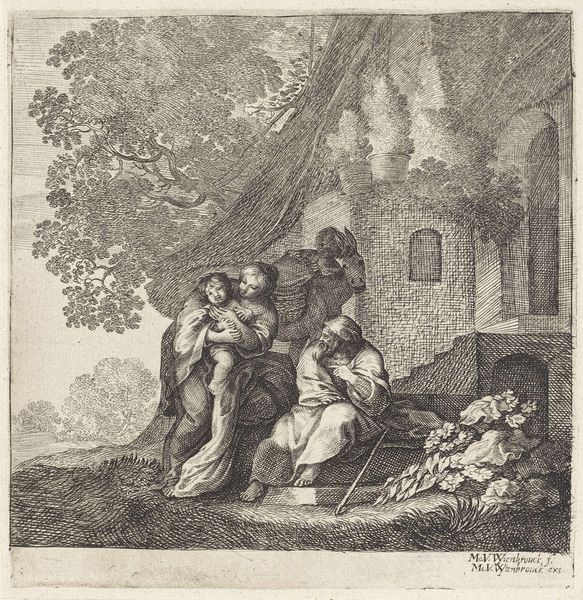
Editor: This etching, "Hagar in the Desert," is attributed to Moyses van Wtenbrouck and was created sometime between 1600 and 1660. The crosshatching feels quite dense and dark. What do you make of the composition and use of line in this work? Curator: Observe how the artist utilizes the etching technique to create varying degrees of light and shadow. The density of line, especially in the area surrounding Hagar, builds an interesting contrast with the openness of the sky. Note the baroque diagonal composition: Hagar’s reclining posture moves dynamically in pictorial space. Consider how this dynamism adds drama to a solitary figure in apparent contemplation. Do you notice the way the vine work balances Hagar in the landscape? Editor: I do, it’s almost as if she's being framed by nature itself, connecting her intimately with the surroundings. It's intriguing how the heavy crosshatching emphasizes her solitude. I suppose without it she may just look relaxed. Curator: Precisely. It underscores a complex play between internal state and external environment. Now, think about the material properties of etching – the incised line, the physical act of mark-making on a plate. Consider how this physicality contributes to the sense of weightiness, imbuing the scene with a profound, somber quality. What is our final reaction to these lines? Editor: I suppose, understanding how the medium itself enhances the narrative certainly reframes my interpretation of the subject matter, from what could just be an image of sadness, into an active contemplation of the landscape around Hagar. Curator: Absolutely. This focused reading brings clarity to our experience.
Comments
No comments
Be the first to comment and join the conversation on the ultimate creative platform.
 Collect
 React
React Comment
More like this