1825 - 1838
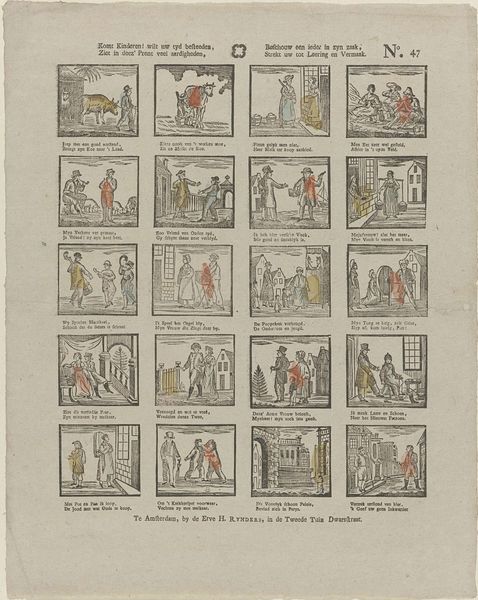
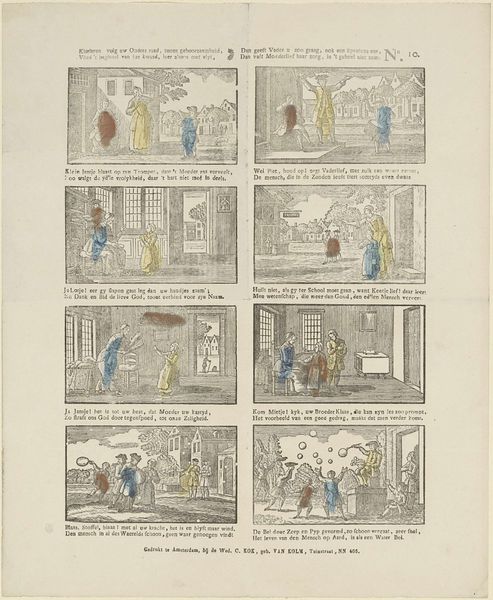
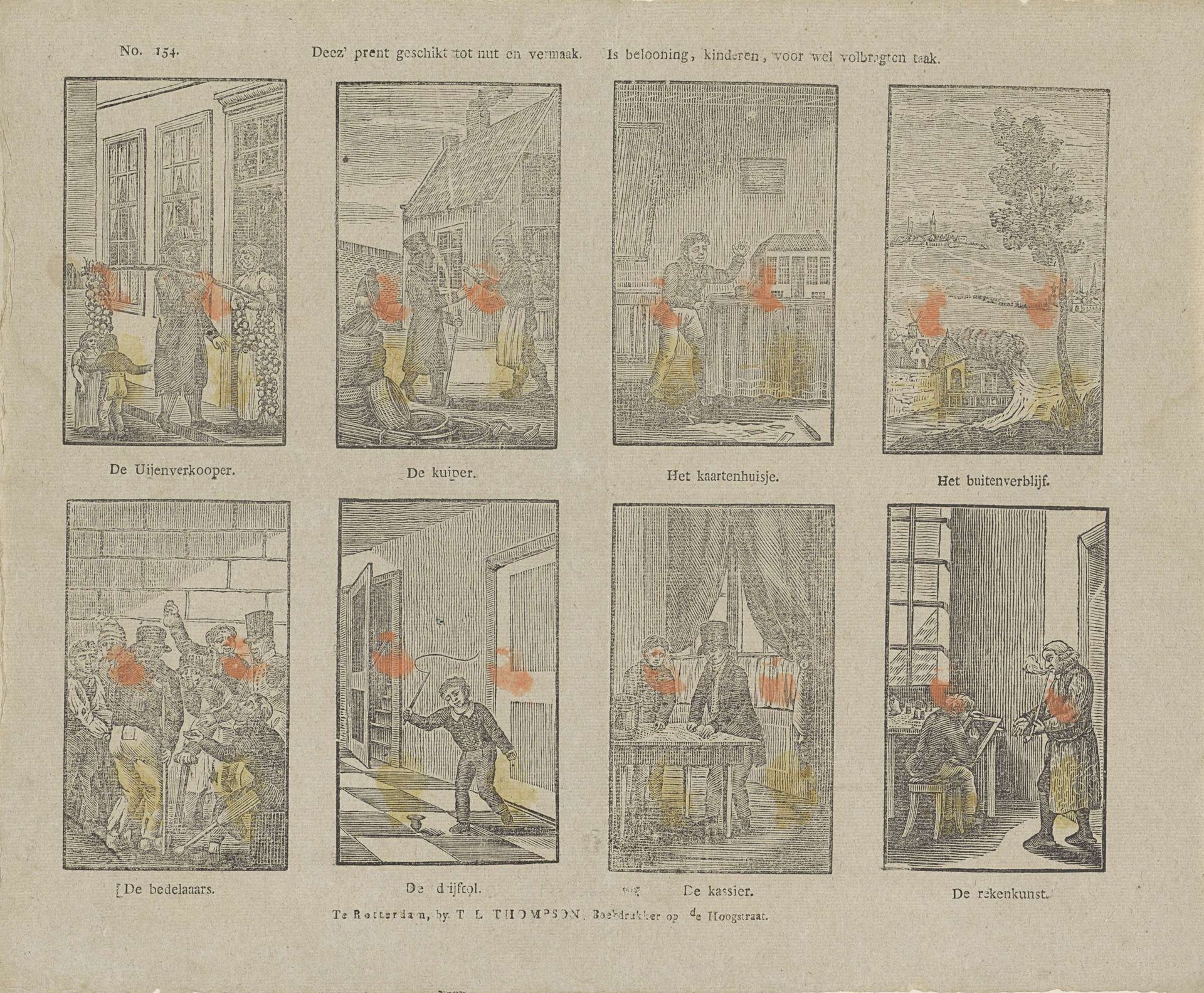
Deez' prent geschikt tot nut en vermaak. / Is belooning, kinderen, voor wel volbragten taak

T.L. Thompson
@tlthompsonLocation
RijksmuseumListen to curator's interpretation
Curatorial notes
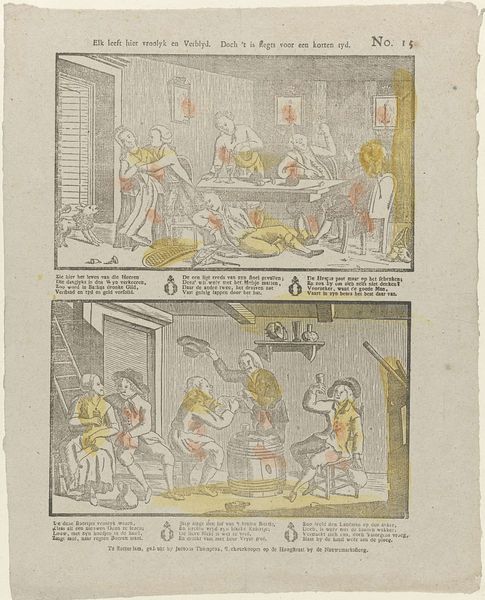
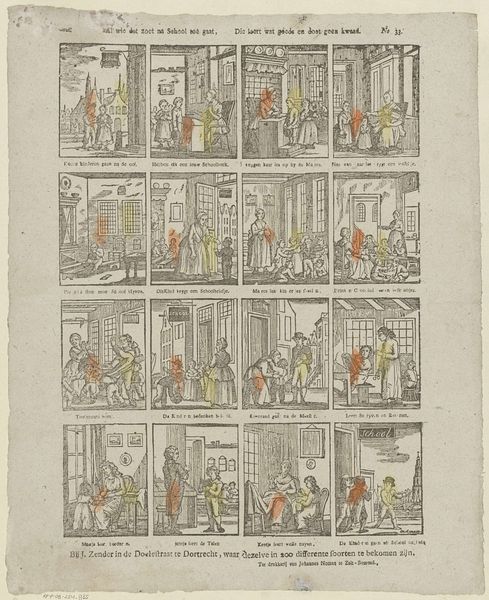
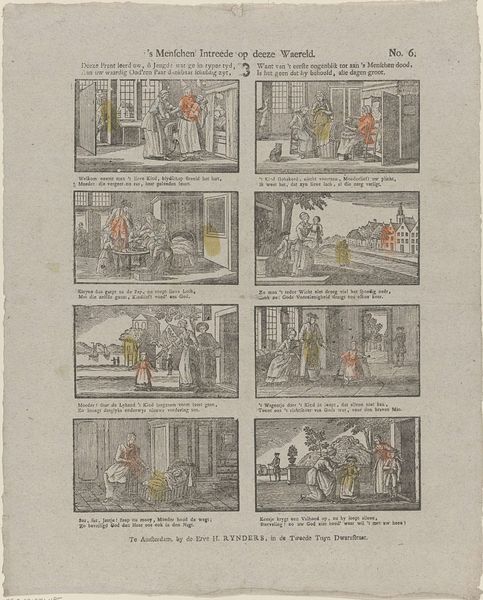
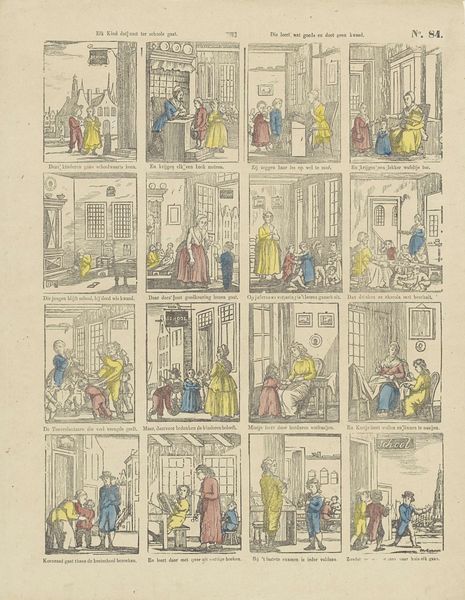
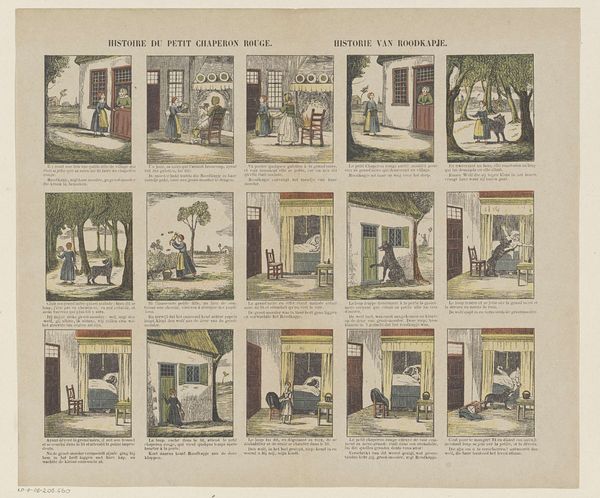
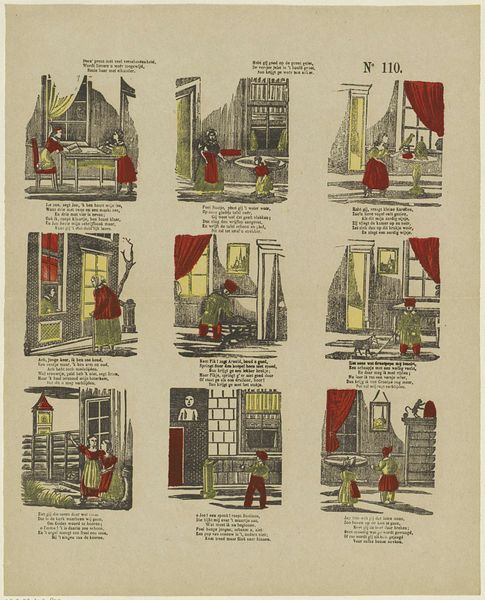
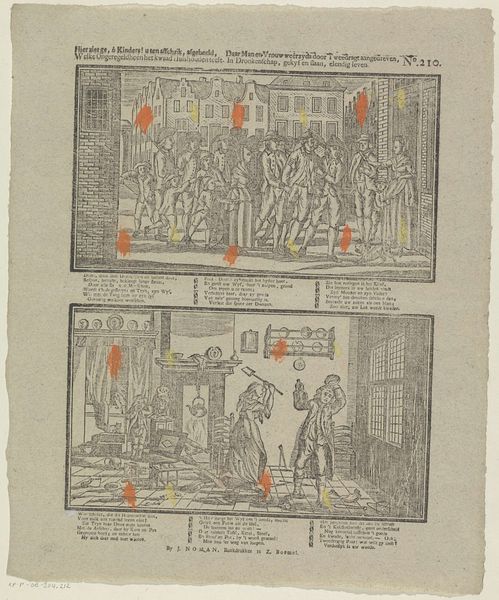
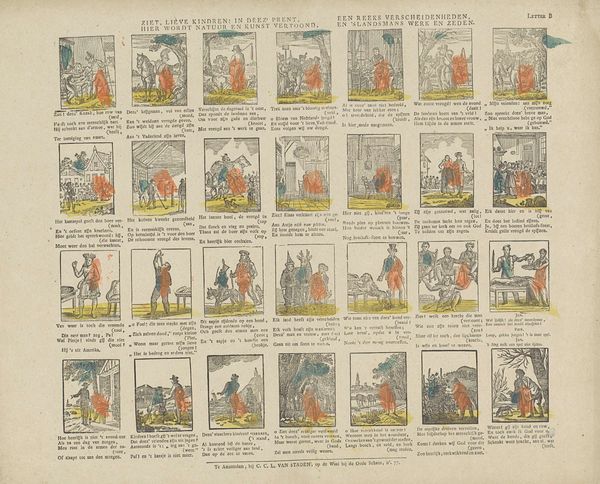
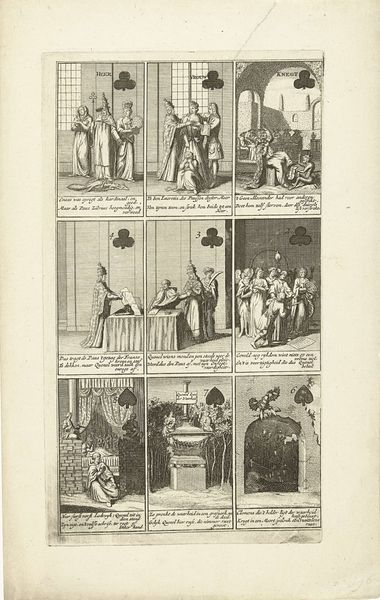
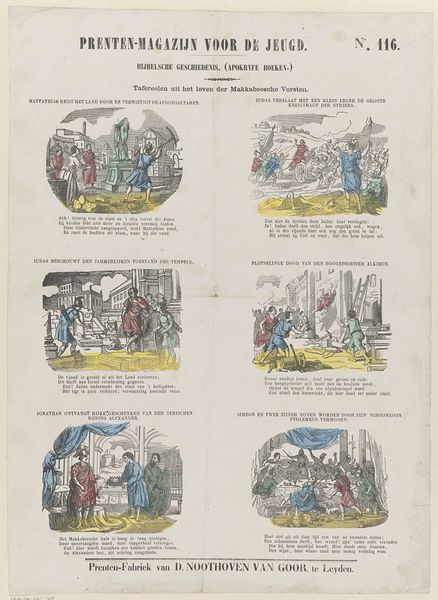
Curator: This print, made between 1825 and 1838 by T.L. Thompson, titled "Deez' prent geschikt tot nut en vermaak. / Is belooning, kinderen, voor wel volbragten taak," presents as a series of vignettes using etching. Its somewhat faded and aged aesthetic gives it a particular charm. I'm curious; what is your initial take on the image? Editor: Well, the comic strip-like layout really grabs my attention. I like how each little scene tells its own story, but I'm wondering what connects them all. What key elements of composition or form do you observe that might offer a deeper insight into its purpose? Curator: Observe the repetition of figures, for instance. Are they rendered with equal detail or importance? Consider the use of line. Does it create depth or flatten the pictorial space? And what about the text? Is its function purely descriptive, or does it contribute to a broader semiotic framework? Editor: The line work is fascinating, especially how it varies in thickness to suggest shadow, although quite subtly. The figures are simpler than the architectural details. It almost creates a tension. But the text, from what I can gather with my limited Dutch, feels instructional. Does the composition then reflect this didactic element? Curator: Precisely. The piece leverages visual organization to underscore its instructional nature. The formal arrangement facilitates understanding and memorability. Think about the serial structure and the contrast of positive and negative space. What theoretical framework does this approach echo? Editor: Perhaps structuralism? Looking at the relationships between the individual components to understand the whole... This perspective definitely gives me a fresh appreciation for what I initially perceived as simply a quaint, old print. Curator: Indeed. By analyzing the intrinsic visual components, we unveil layers of meaning embedded within this historical piece, broadening our appreciation. Editor: Right, I'll remember to look beyond the simple aesthetic to understand how form actually dictates meaning and messaging!