1593 - 1594
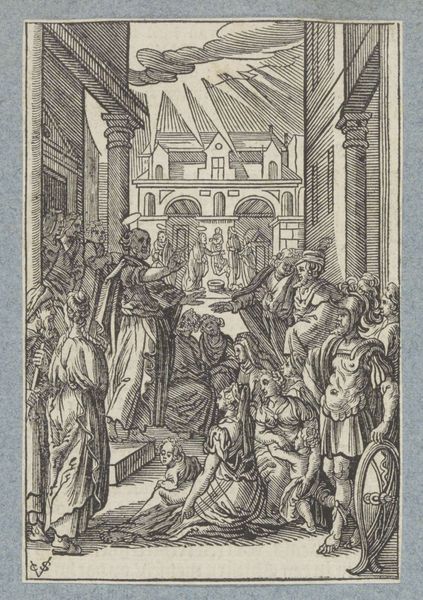
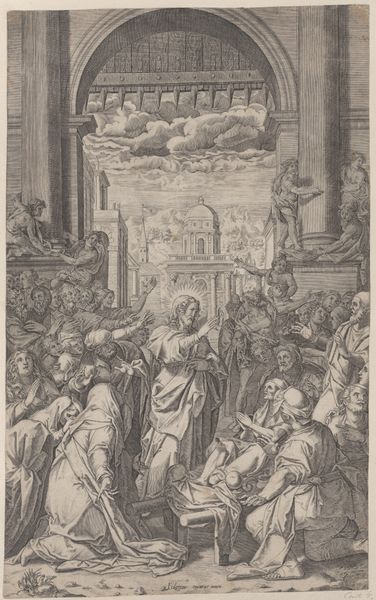
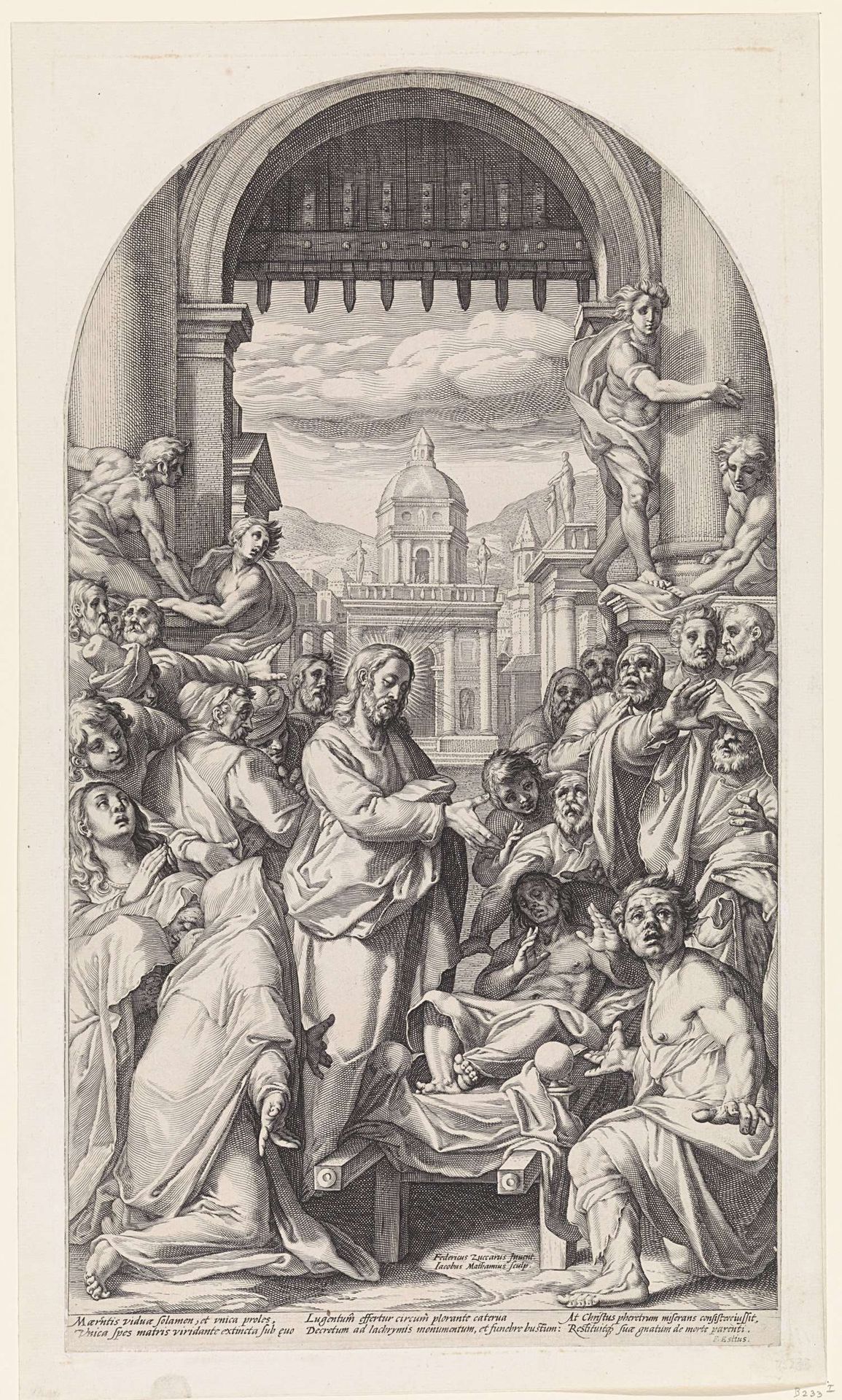
Christus wekt de zoon van de weduwe te Naïn op

Jacob Matham
1571 - 1631Location
RijksmuseumListen to curator's interpretation
Curatorial notes
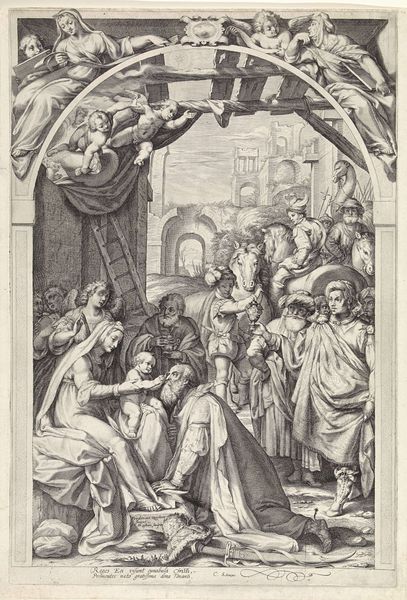
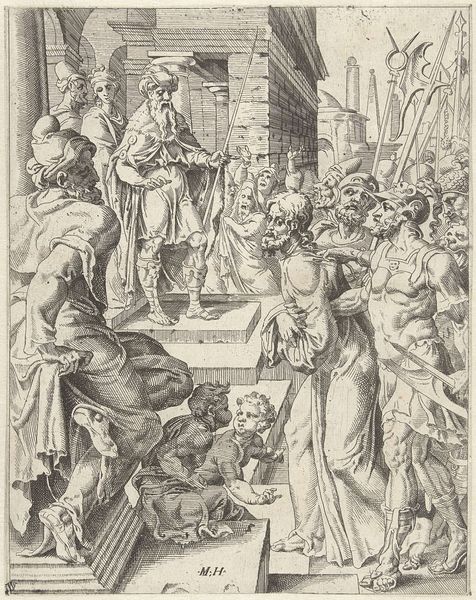
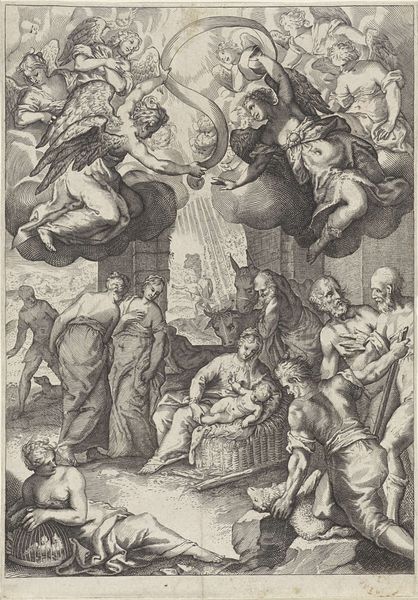
This is Jacob Matham’s engraving ‘Christ Raises the Son of the Widow of Nain,’ made around the late 16th or early 17th century. The composition is dominated by a play of light and shadow, where figures emerge dramatically from the shaded depths. Matham uses dense, parallel lines to sculpt forms, creating a rich, almost palpable texture. The lines aren't just descriptive; they build a structural foundation, directing your eye through the scene. The archway above the figures doesn't simply frame the event, but adds a layer of architectural complexity that integrates the sacred narrative into a broader cultural landscape. The careful arrangement of figures, from the grieving mother to the awestruck onlookers, serves as a semiotic system. Each character's pose and expression functions as a sign, contributing to the overall narrative of divine intervention. This engraving shows Matham’s technique and demonstrates how formal elements intersect with the spiritual themes of the time.