About this artwork
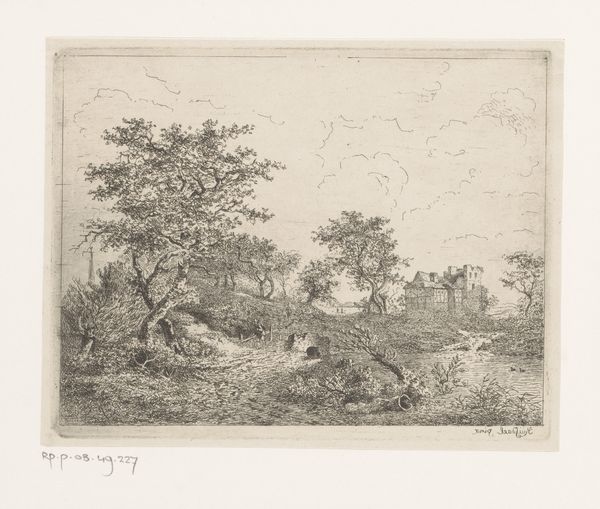
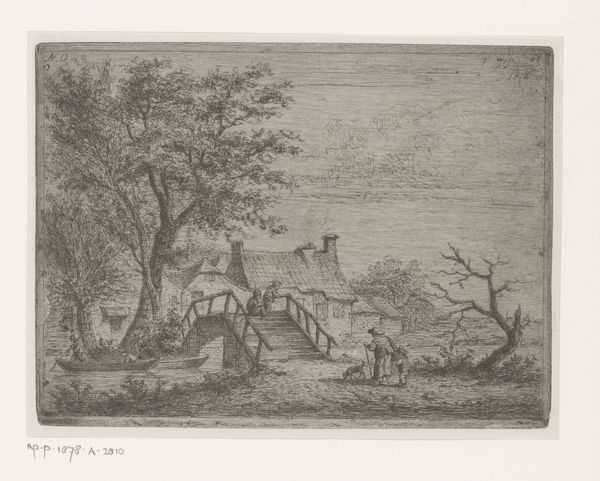
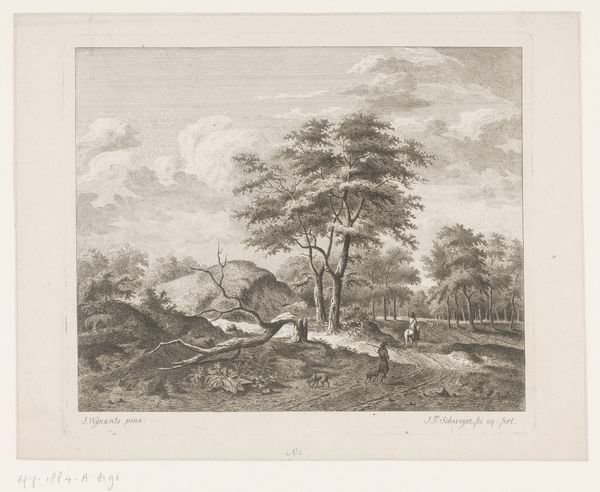
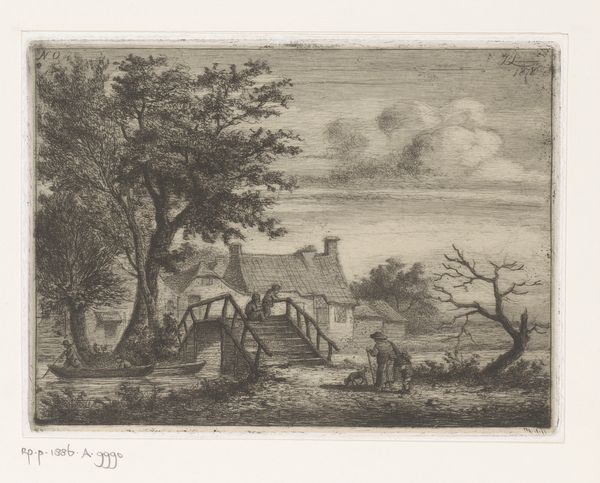
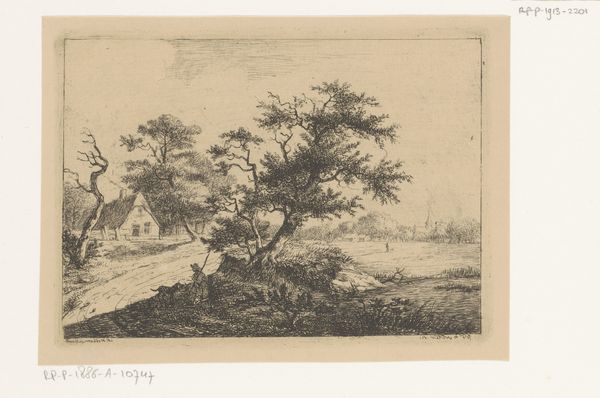
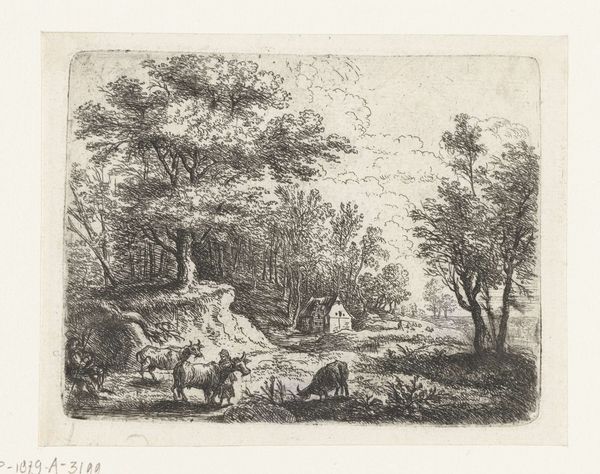
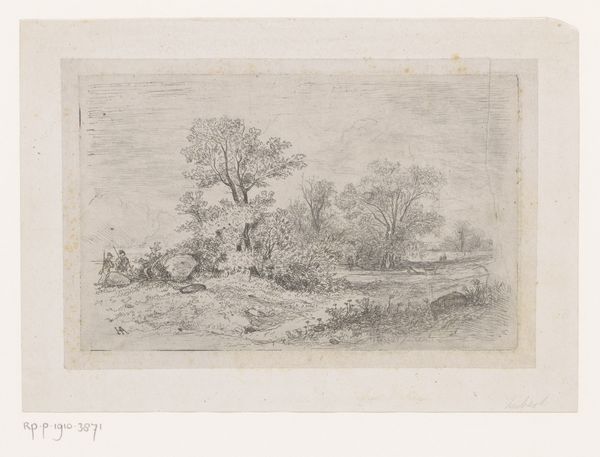
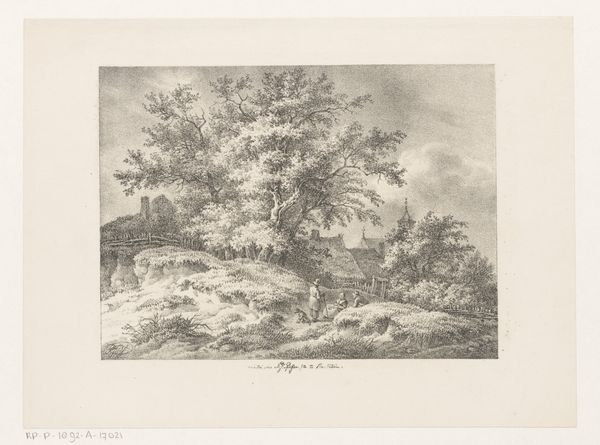
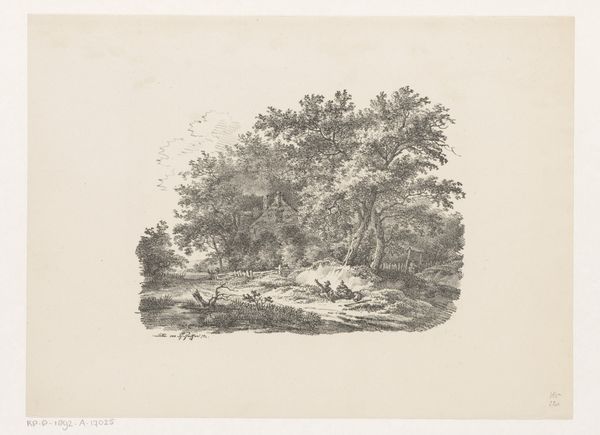
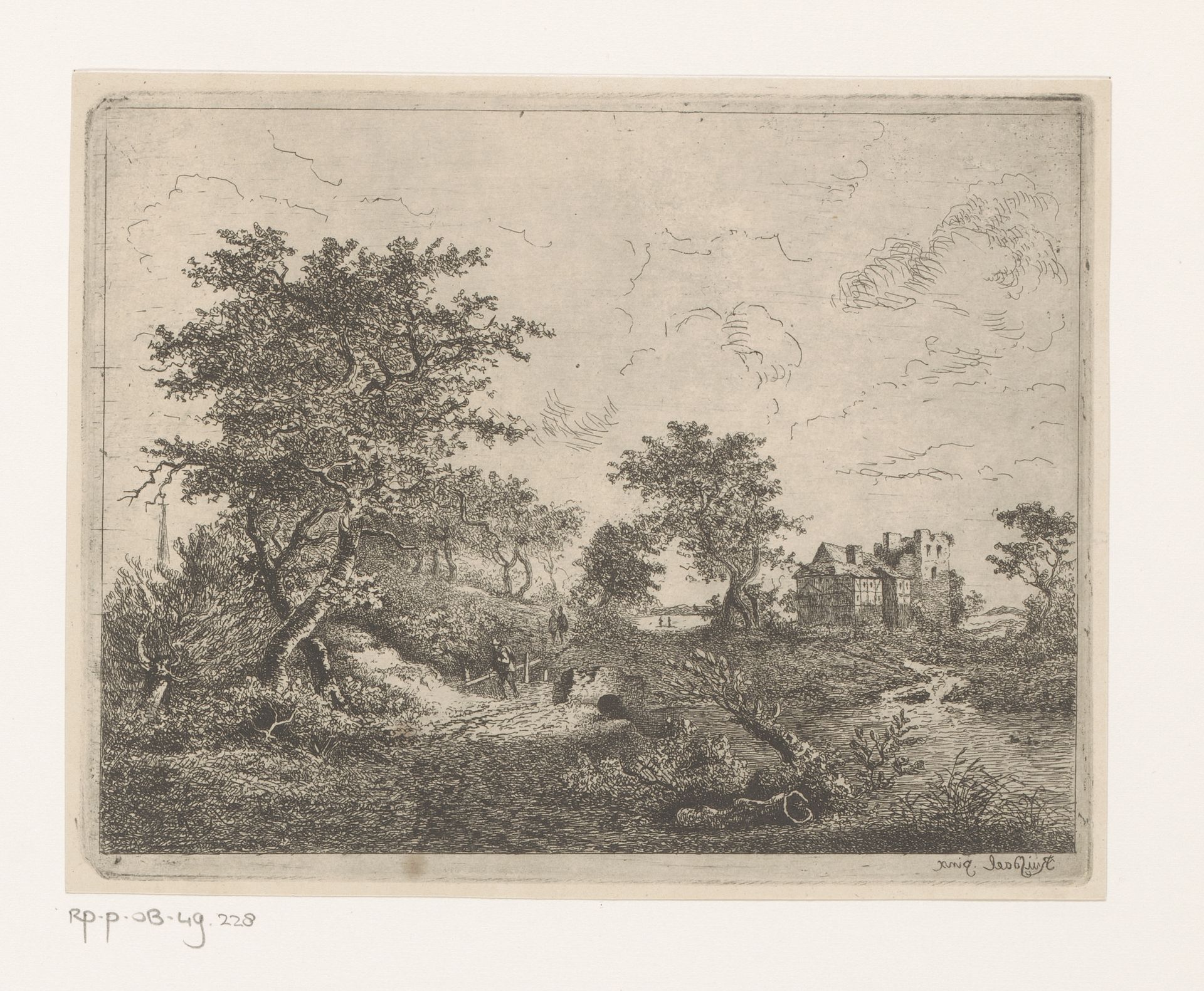
Jean Théodore Joseph Linnig made this landscape showing a low bridge over a stream with a dilapidated country house in the background, using etching techniques. To create the image, the artist would have coated a metal plate with wax, drawn the design, and then submerged the plate in acid. The acid bites into the metal where the wax has been removed, creating recessed lines. Ink is then applied to the plate, filling these lines, and the surface is wiped clean, the image is transferred to paper using a press. The result is a print with a distinctive, slightly rough texture. The etched lines capture the light and shadow of the landscape. The process emphasizes line work over color. Note how Linnig creates depth and texture through the density and direction of these lines. By appreciating Linnig's technical process, and the way he used etching to translate the experience of a specific place, we can develop a richer understanding of the art's historical and cultural significance.
Landschap met lage brug over een stroom en een vervallen landhuis op de achtergrond
1825 - 1891

Artwork details
- Dimensions
- height 146 mm, width 187 mm
- Copyright
- Rijks Museum: Open Domain
Comments
Share your thoughts
About this artwork
Jean Théodore Joseph Linnig made this landscape showing a low bridge over a stream with a dilapidated country house in the background, using etching techniques. To create the image, the artist would have coated a metal plate with wax, drawn the design, and then submerged the plate in acid. The acid bites into the metal where the wax has been removed, creating recessed lines. Ink is then applied to the plate, filling these lines, and the surface is wiped clean, the image is transferred to paper using a press. The result is a print with a distinctive, slightly rough texture. The etched lines capture the light and shadow of the landscape. The process emphasizes line work over color. Note how Linnig creates depth and texture through the density and direction of these lines. By appreciating Linnig's technical process, and the way he used etching to translate the experience of a specific place, we can develop a richer understanding of the art's historical and cultural significance.
Comments
Share your thoughts