canvas
#
solitude
#
black and white photography
#
countryside
#
black and white format
#
nature
#
b w
#
canvas
#
black and white
#
monochrome photography
#
monochrome
#
shadow overcast
Dimensions: 103.7 cm (height) x 146.5 cm (width) (Netto)
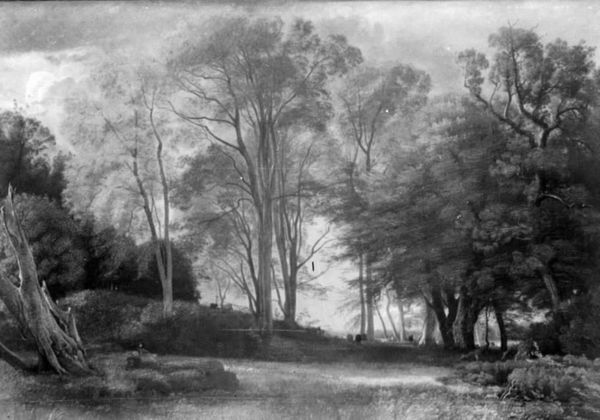
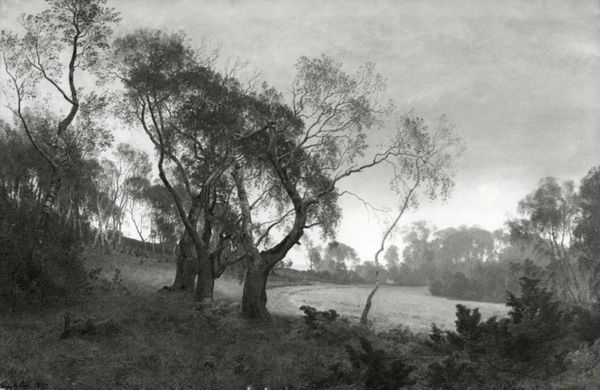
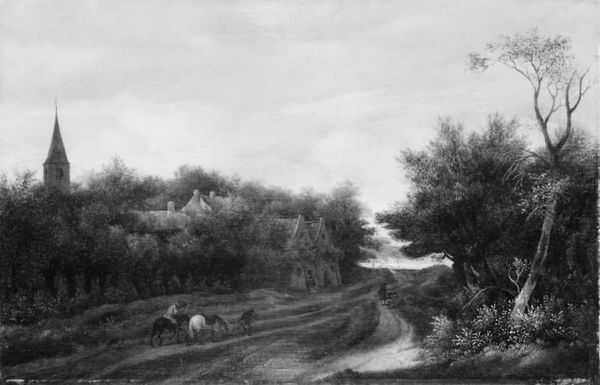
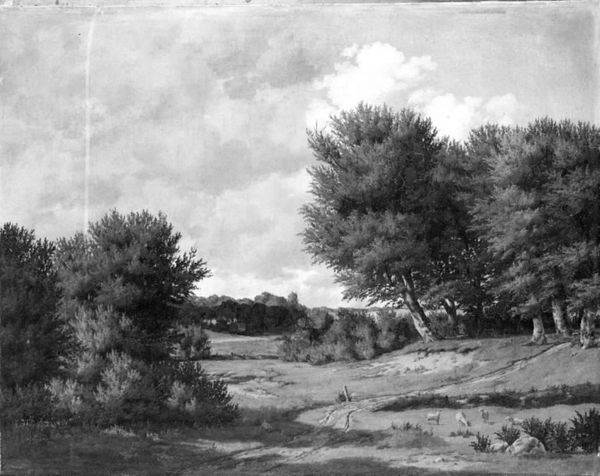
Editor: This is Alfred Wahlberg's "A Moonlit Night by Hallands Väderö," painted in 1889, rendered in oil on canvas. Its monochrome palette evokes a quiet, almost haunting, mood. What draws your eye when you look at it? Curator: The starkness immediately speaks to a northern European sensibility, reminiscent of folklore and the power of the natural world. The moon, almost centered, serves as a beacon, not just literally, but as a symbol. Think of its longstanding connection to the feminine, to cycles, and the unconscious. Editor: The moon feels a bit melancholic, actually. Are there specific artistic movements this connects with? Curator: Absolutely. You see elements of Romanticism, definitely. It yearns for nature and solitude, far from the industrial age. But there's also a hint of Symbolism; nature reflecting deeper truths. Consider the deliberate placement of trees: framing, protecting, maybe even guarding something. What secrets do they whisper under the moon's watchful eye? Editor: So the image is not only what's shown but what it might conceal. That is intriguing. Curator: Exactly. It's about the psychological landscape as much as the physical one. Ask yourself what recurring motifs – like moons or trees – meant to audiences of that time. These natural elements became conduits for universal themes: mortality, spirituality, the search for meaning in a rapidly changing world. Editor: That context makes the artwork much more alive than simply a pretty picture. Thank you. Curator: Indeed. It invites us to look deeper, past the surface and into the layers of cultural memory embedded within.
Comments
No comments
Be the first to comment and join the conversation on the ultimate creative platform.
 Collect
 React
React Comment
More like this