
Curatorial notes
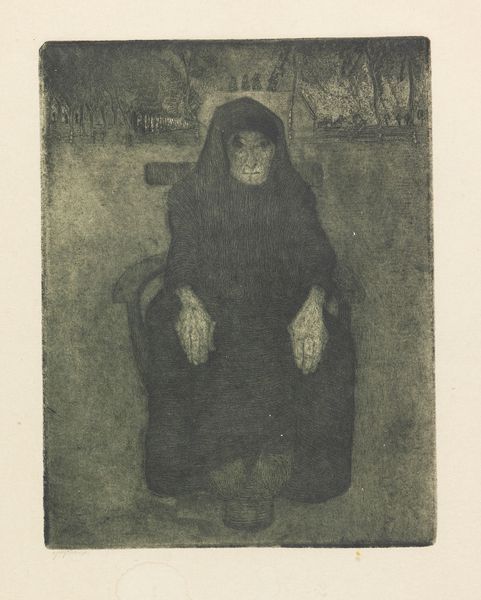
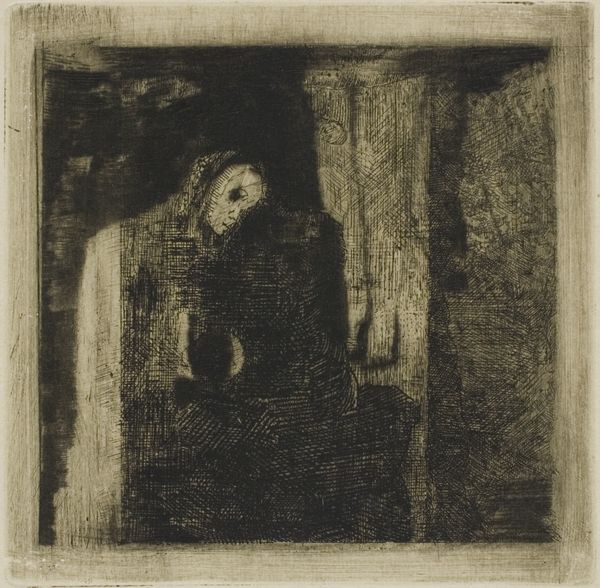
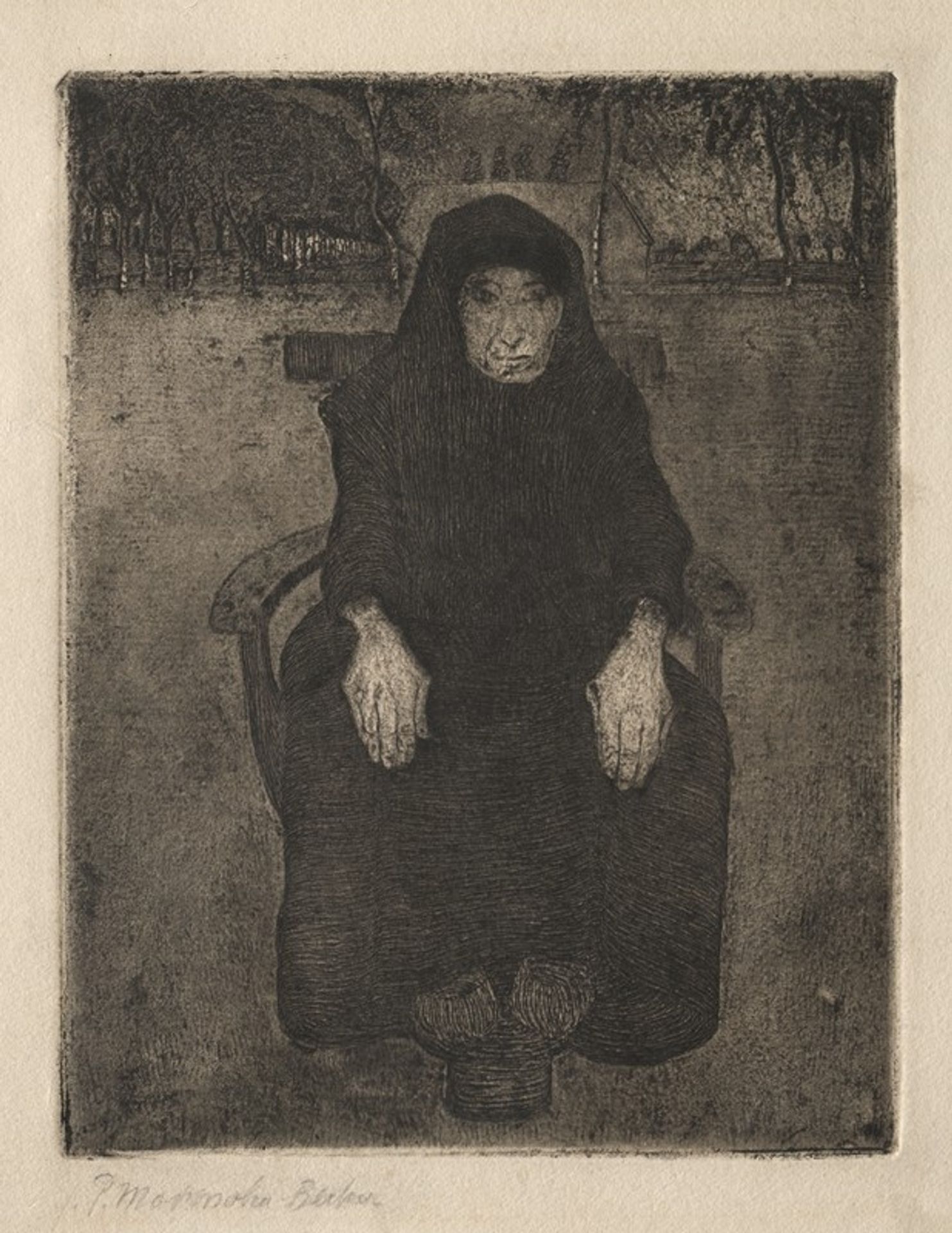
Editor: This etching, "Seated Old Woman" by Paula Modersohn-Becker, made around 1905, has a really haunting quality. The stark contrasts and the woman's intense gaze create a very powerful, almost unsettling, mood. What do you see in this piece? Curator: For me, this work exists at an intersection of social commentary and artistic rebellion. Modersohn-Becker created it at a time when images of women were largely dictated by patriarchal norms. What do you notice about the woman's depiction, particularly in relation to those norms? Editor: I see strength, definitely not the delicate beauty ideal. She's presented as weathered, solid. Her gaze is unwavering. Curator: Exactly. This unflinching portrayal challenges the idealized representations of women prevalent in art at the time. This etching, in its roughness, its almost brutal honesty, is part of a larger move in early 20th-century art. Expressionism, of course, as noted in the description, pushed against academic standards and embraced a more visceral emotional expression. And it did it through portraits that reflected a wider scope of people, which included old women, a group commonly unseen. Editor: So, it's a social and political statement woven into the art itself? Curator: Absolutely. The figure’s age, her clothing, her posture, all speak to a life outside the circles of power and privilege. And that Modersohn-Becker chose to depict this challenges a society that prefers to forget this class of person. Editor: I hadn't thought of it that way. Seeing the etching now as a counter-narrative makes it even more compelling. Curator: Precisely! Art often participates in the dialogue with social norms. Editor: This has really changed my perspective on the role of art. I'm off to study political perspectives now!