c. 1854
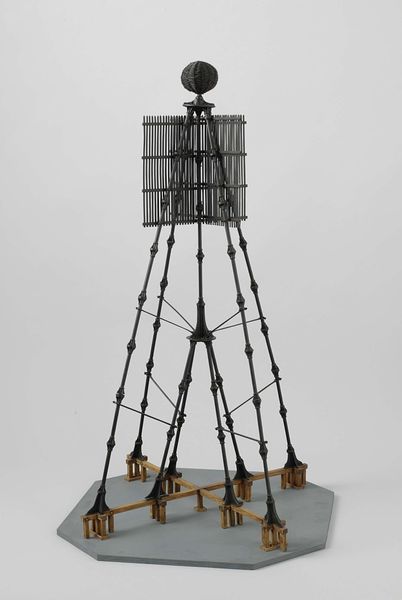
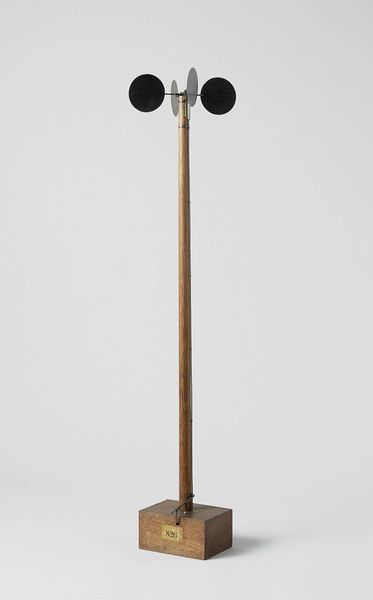
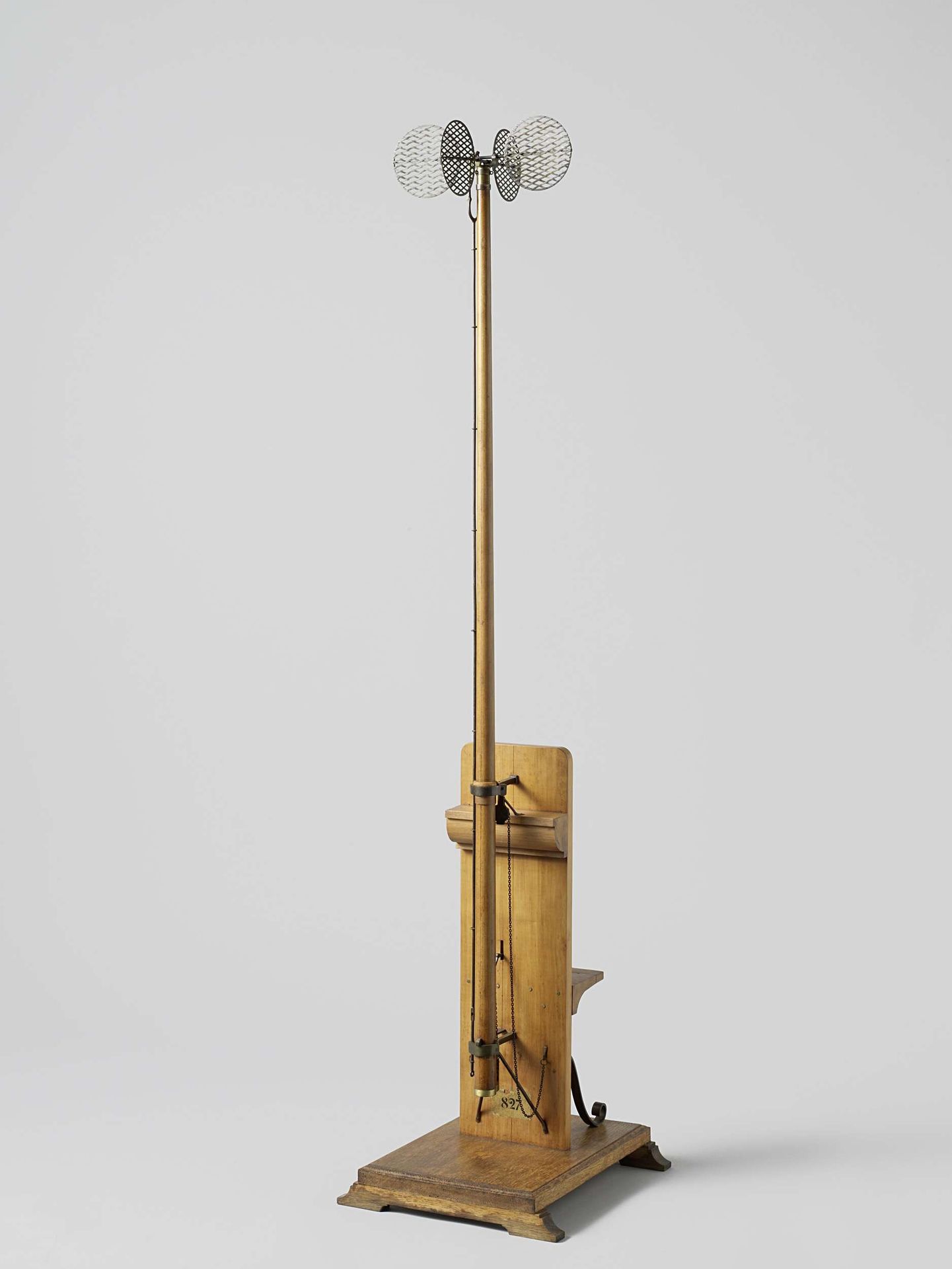
Model of a Time Signal

Listen to curator's interpretation
Curatorial notes
Here we have a ‘Model of a Time Signal’ made by Rijkswerf Vlissingen. The model’s neutral wood tones and clean lines make it appear both functional and aesthetically pleasing. The structure is dominated by verticality, reinforced by the long pole that rises from a sturdy base to the delicate wire mesh spheres. The pole is suggestive of a spine. This isn't merely a rendering of form, but a signifier of the era's fascination with precision and control. As a model, it embodies a set of rules and underlying principles that aim to standardize time, and by extension, social activity. The time signal, through its physical structure, thus becomes a potent symbol. The spheres at the top are more than mere decoration, they represent a kind of ordered cosmos, an attempt to bring celestial regularity down to the human scale. As such, this ‘Model of a Time Signal’ stands as a cultural artifact that shows us how the desire for order can be materialized into a distinct aesthetic form.