About this artwork
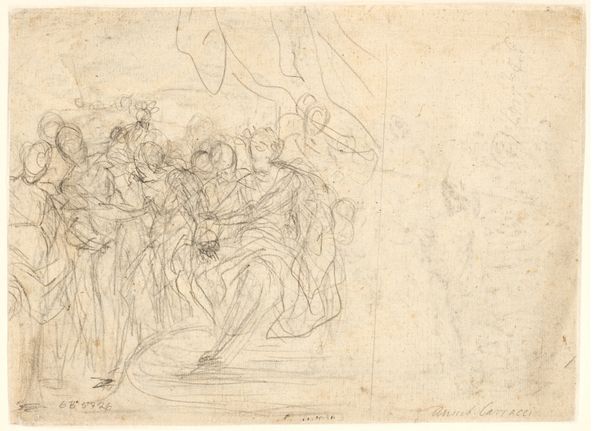
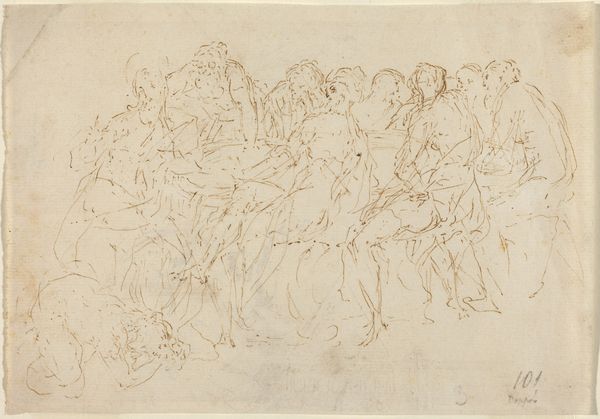
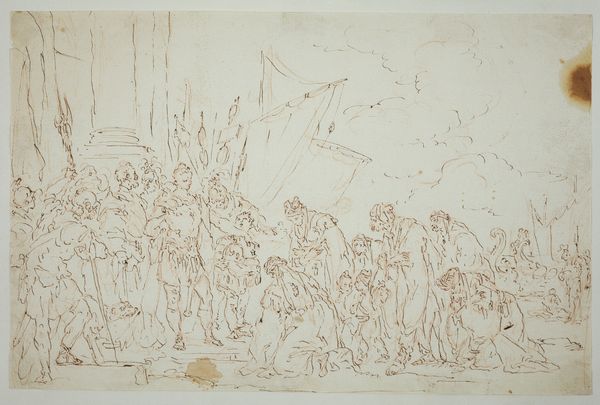
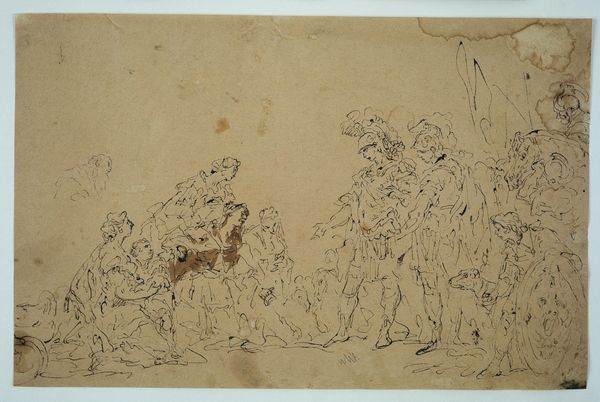
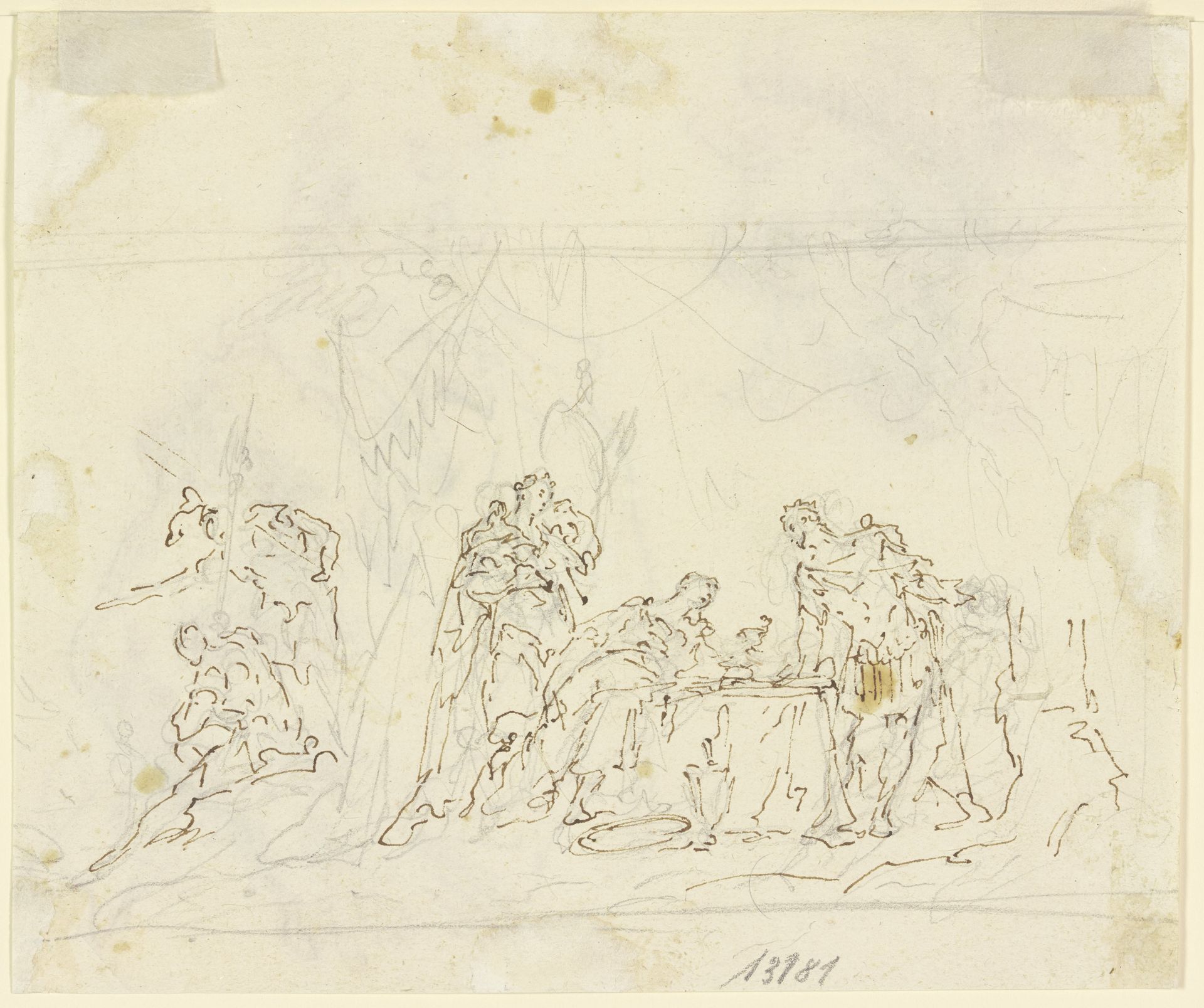
Gaspare Diziani sketched this representation from Roman history in the 18th century. It is a preparatory drawing. The sketch illustrates a scene from Roman history, likely intended for a larger painting or fresco cycle. In eighteenth-century Venice, history painting served a vital public role. It could reinforce civic virtues, convey moral lessons, and consolidate the power of the ruling elite. The scene depicted in the drawing is unclear, but the artist’s visual language draws heavily on classical art and architecture. This adds an air of authority and legitimacy. Diziani's interest in ancient Rome reflects a broader European fascination with classical antiquity during the Enlightenment. To better understand the drawing, we might delve into the history of Venice in the 1700s. We might research the artist’s patrons and the institutional frameworks that supported his artistic production. The social function of art always depends on its historical moment.
Darstellung aus der römischen Geschichte (_)


Artwork details
- Medium
- drawing, ink, chalk, pen
- Location
- Städel Museum
- Copyright
- Public Domain
Tags
drawing
baroque
pen sketch
figuration
ink
chalk
line
pen
history-painting
Comments
Be the first to share your thoughts about this work.
About this artwork
Gaspare Diziani sketched this representation from Roman history in the 18th century. It is a preparatory drawing. The sketch illustrates a scene from Roman history, likely intended for a larger painting or fresco cycle. In eighteenth-century Venice, history painting served a vital public role. It could reinforce civic virtues, convey moral lessons, and consolidate the power of the ruling elite. The scene depicted in the drawing is unclear, but the artist’s visual language draws heavily on classical art and architecture. This adds an air of authority and legitimacy. Diziani's interest in ancient Rome reflects a broader European fascination with classical antiquity during the Enlightenment. To better understand the drawing, we might delve into the history of Venice in the 1700s. We might research the artist’s patrons and the institutional frameworks that supported his artistic production. The social function of art always depends on its historical moment.
Comments
Be the first to share your thoughts about this work.