1880s
På marken


Listen to curator's interpretation
Curatorial notes
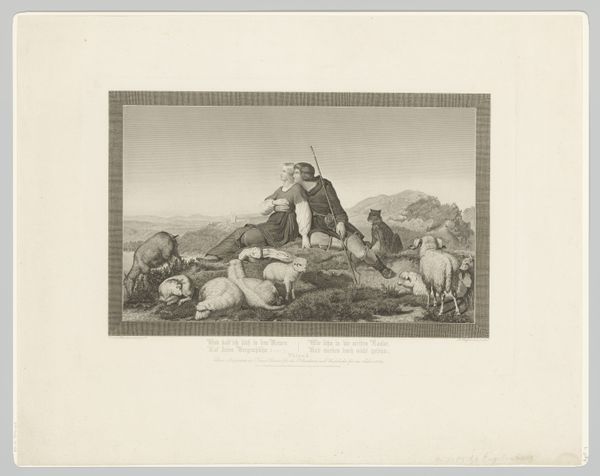
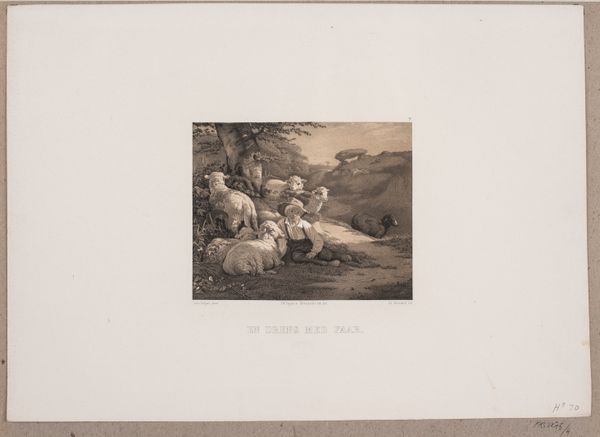
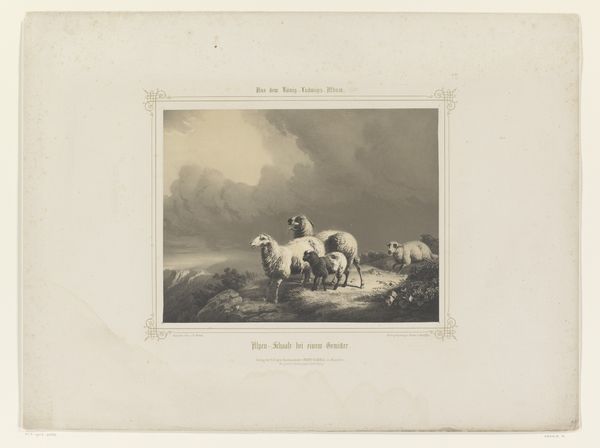
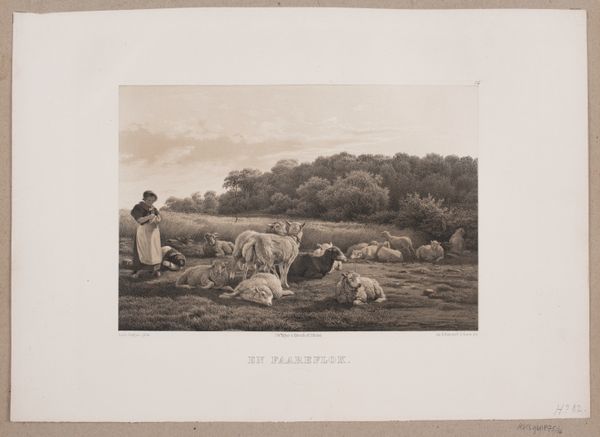
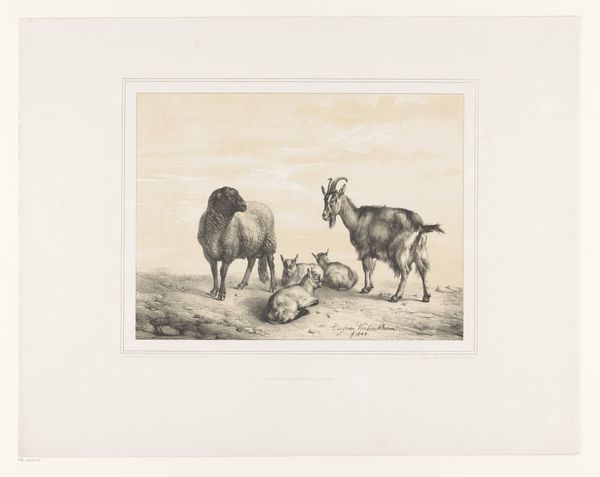
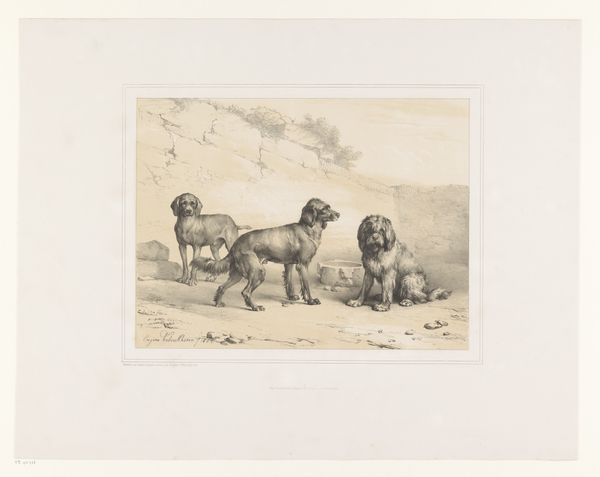
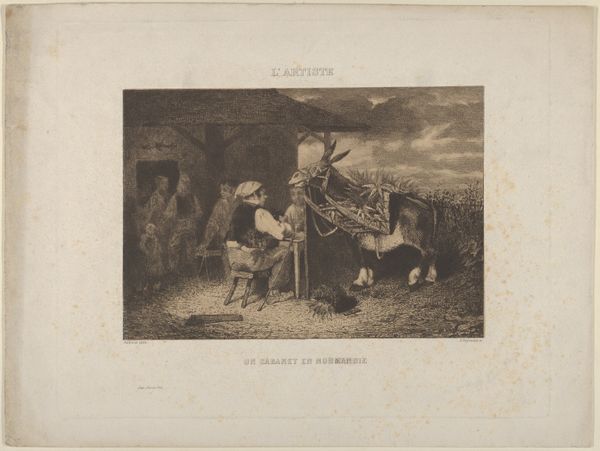
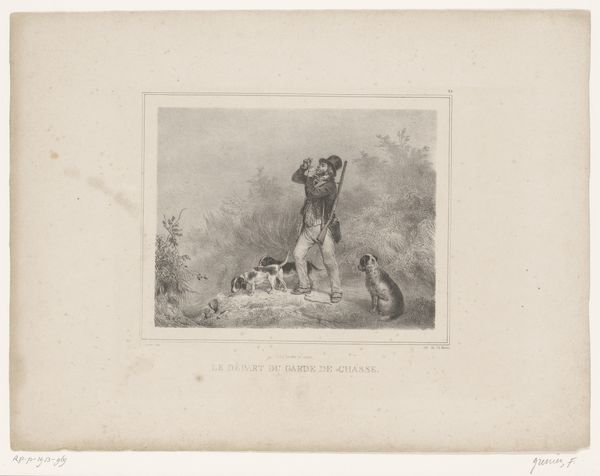
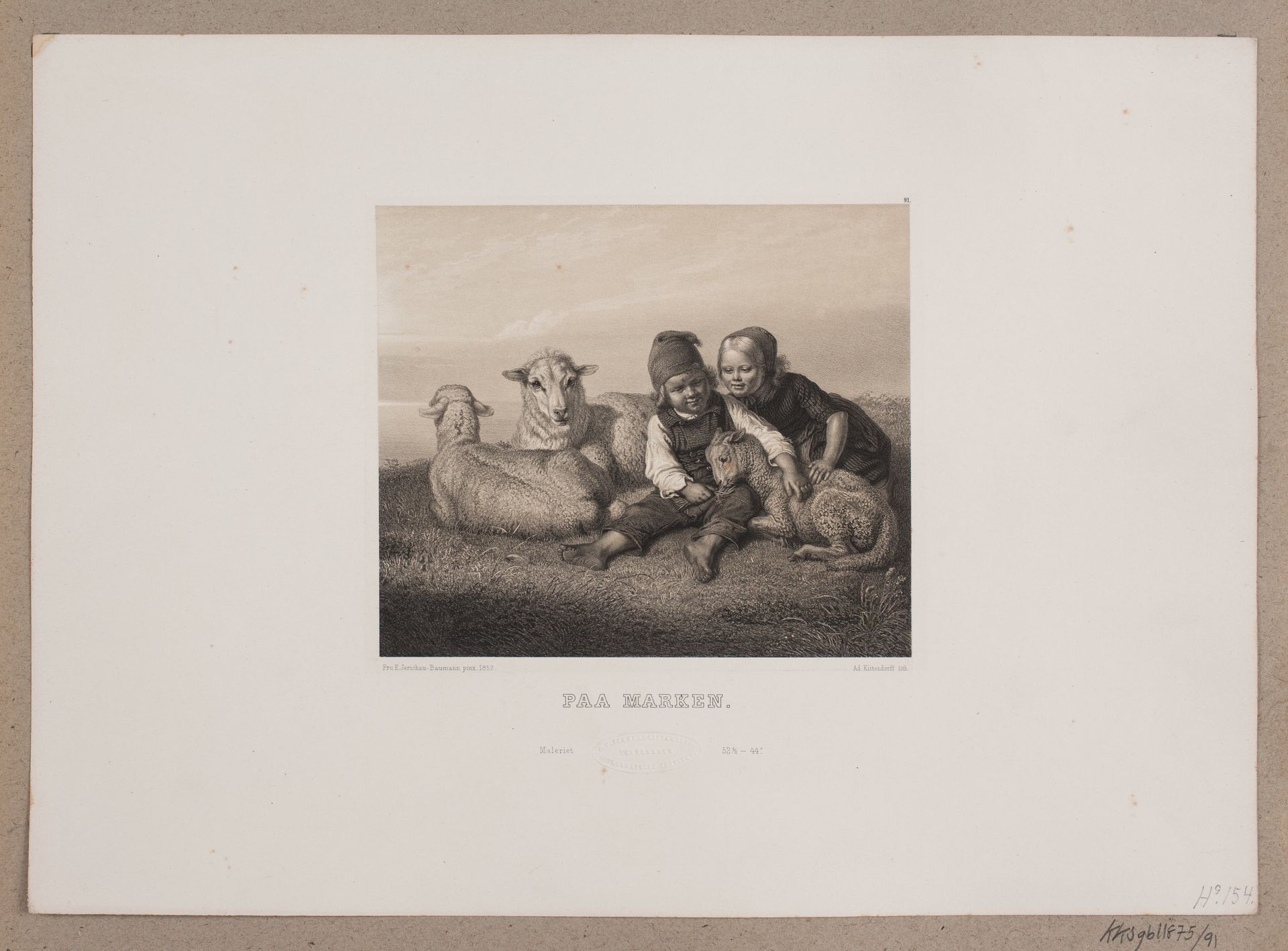
Curator: Before us we have "Paa Marken," a lithograph by Adolph Kittendorff from the 1880s. Editor: My immediate impression is a scene of pastoral tranquility, the soft gradations of the lithographic process giving the figures and animals a tender, almost ethereal quality. Curator: Indeed. Kittendorff's work taps into a growing urban interest in idealized rural life. This print reflects the romanticism of the period and how artists were representing simple folk engaged with the land. Prints like these gained traction with the wider public, beyond paintings that only wealthier audiences could enjoy. Editor: Focusing on the visual components, look at the delicate rendering of light and shadow across the sheep's wool and the children's clothing. The artist’s emphasis is clear, drawing us towards the center where a beautiful symbiosis exists between the human and animal figures, their positioning suggestive of comfort and unity. Curator: Lithography allowed for broader circulation, embedding idealized scenes into daily life and collective consciousness. One can ask: does the artist’s use of a Realist style and Genre painting truly represent children’s interactions with animals or provide just another level of cultural fabrication for urban tastes? Editor: While considering the social implications is indeed relevant, I also observe that each individual form and texture interacts uniquely with light. There’s also an intricate understanding of composition; see how our gaze is gently led through various focal points and balanced across the entire artwork? Curator: That is undeniable. Ultimately, Kittendorff’s lithograph embodies 19th-century social ideals, its impact reaching beyond aesthetic considerations. The work serves as a looking glass into a rapidly modernizing society and its hunger for connection to the soil, naturalness, and the countryside. Editor: From its captivating aesthetic unity to the emotive harmony imbued within, "Paa Marken" compels our aesthetic senses and sparks our cognitive understanding through close observation. The visual artistry holds as much interest as any cultural underpinnings.