About this artwork
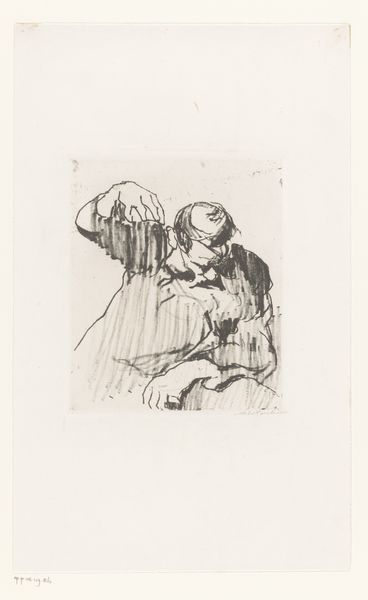
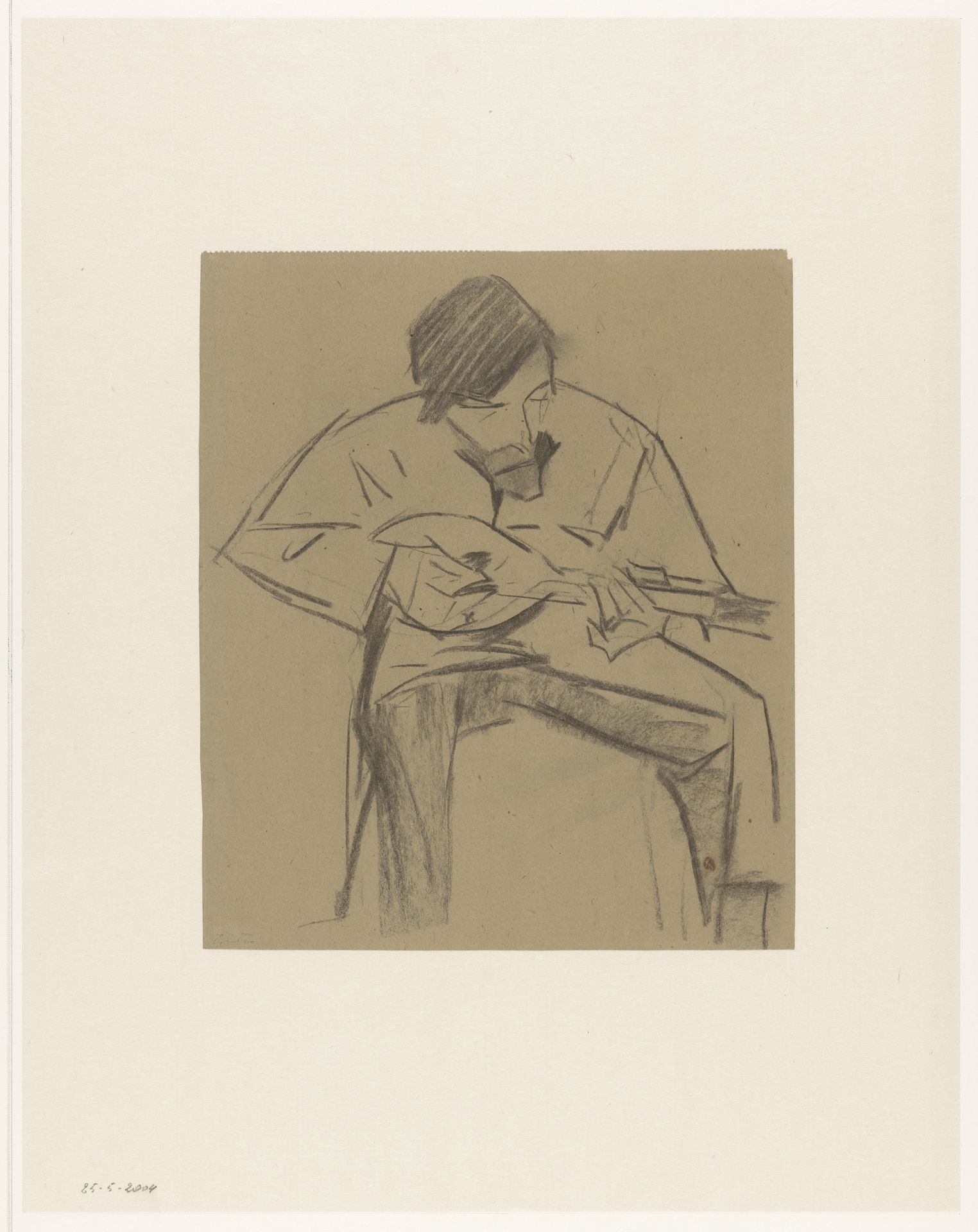
Leo Gestel captured 'Jan Ponstijn, mandoline spelend' in an undated drawing now housed in the Rijksmuseum. The image, set against a neutral background, is defined by angular lines and planes. Gestel disrupts traditional representation, fracturing the figure into geometric forms that echo the era's Cubist explorations. Notice how the intersecting lines create a sense of depth and movement, even within the static medium of drawing. Gestel's emphasis on structure reflects early 20th-century ideas where artists sought to deconstruct and reassemble the visual world. What we see is not merely a portrait but a study in form, where the interplay of lines and shapes takes precedence over realistic detail. The drawing presents a tension between representation and abstraction. Gestel invites us to reconsider how we perceive and construct meaning from visual information.

Artwork details
- Medium
- drawing, pencil
- Dimensions
- height 307 mm, width 260 mm
- Location
- Rijksmuseum
- Copyright
- Rijks Museum: Open Domain
Tags
portrait
pencil drawn
drawing
pencil sketch
figuration
pencil drawing
pencil
expressionism
Comments
Be the first to share your thoughts about this work.
About this artwork
Leo Gestel captured 'Jan Ponstijn, mandoline spelend' in an undated drawing now housed in the Rijksmuseum. The image, set against a neutral background, is defined by angular lines and planes. Gestel disrupts traditional representation, fracturing the figure into geometric forms that echo the era's Cubist explorations. Notice how the intersecting lines create a sense of depth and movement, even within the static medium of drawing. Gestel's emphasis on structure reflects early 20th-century ideas where artists sought to deconstruct and reassemble the visual world. What we see is not merely a portrait but a study in form, where the interplay of lines and shapes takes precedence over realistic detail. The drawing presents a tension between representation and abstraction. Gestel invites us to reconsider how we perceive and construct meaning from visual information.
Comments
Be the first to share your thoughts about this work.