About this artwork
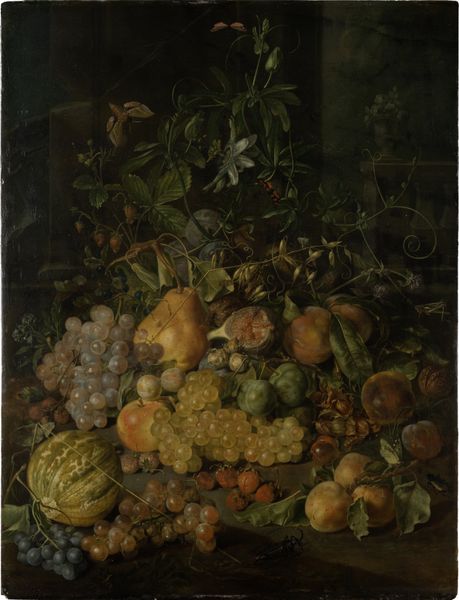
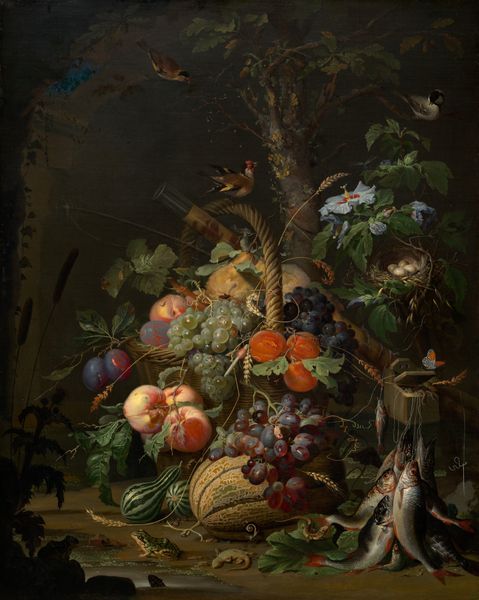
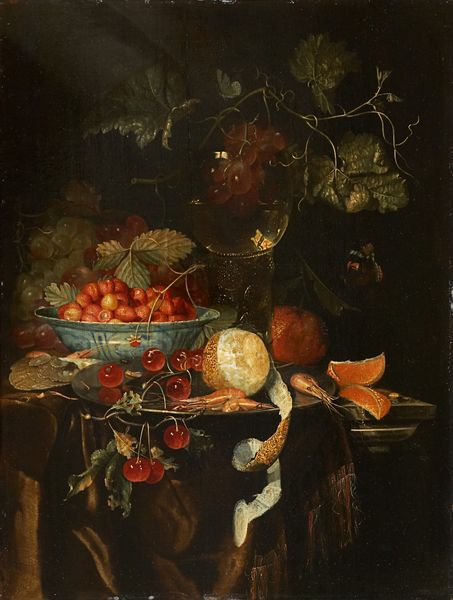
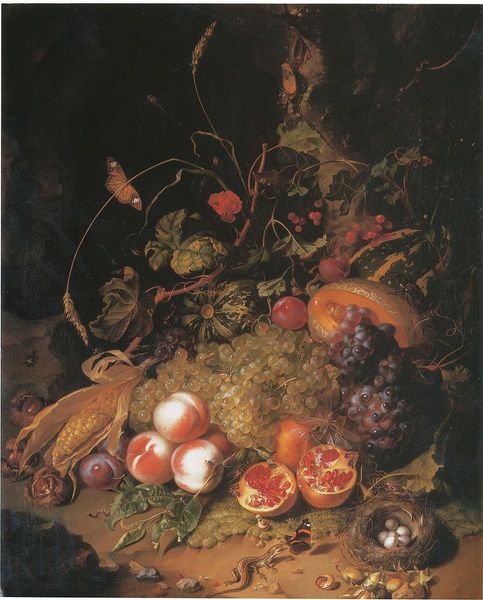
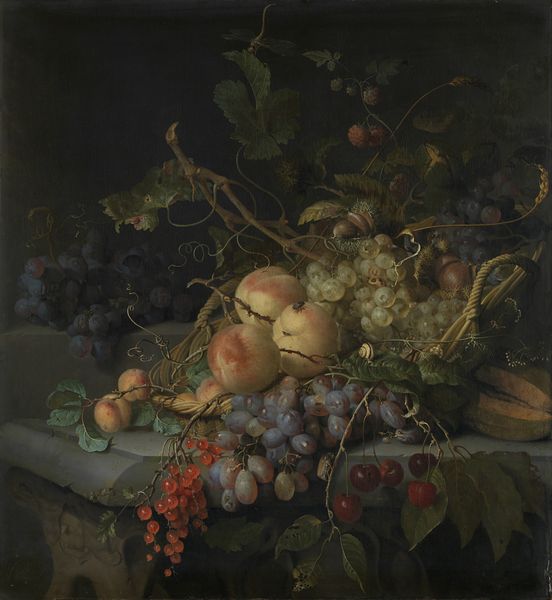
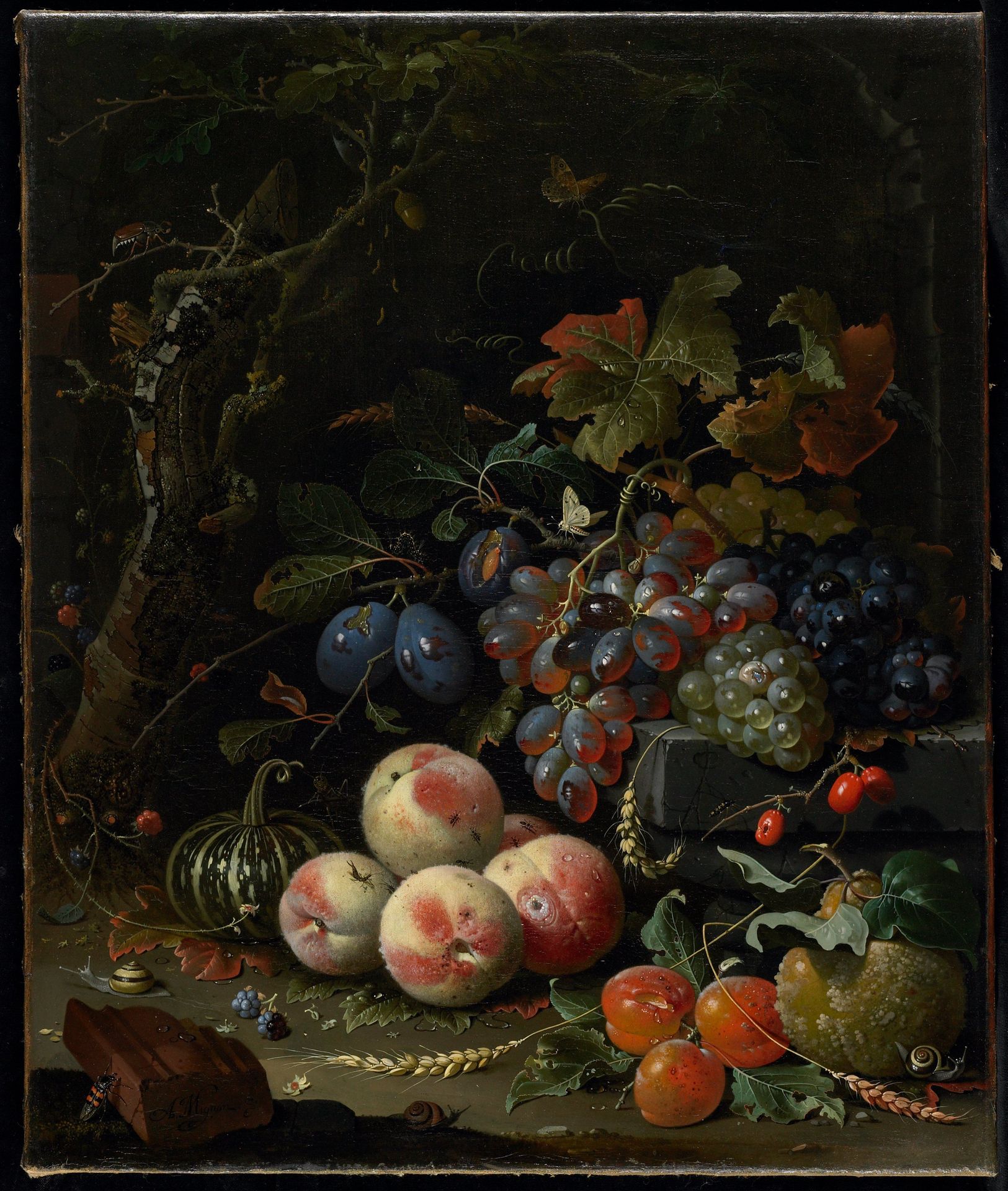
Abraham Mignon created "Still Life with Fruits" using oil on canvas. The eye is immediately drawn to a profusion of fruits arranged against a somber, almost theatrical backdrop. A dark and undefined space, punctuated by foliage, sets the stage for the vivid display of colors and textures in the foreground. The composition is deliberately constructed to contrast light and shadow, emphasizing the textures of the fruits. Grapes, plums, and peaches are rendered with a high degree of realism. Mignon’s keen observation of light creates a dynamic interplay between the abundance of nature and a sense of vanitas, reminding us of life's transience. The inclusion of insects introduces an element of decay into this otherwise luscious still life. The composition is far from arbitrary; the arrangement of elements serves as a semiotic system. The profusion signifies the bounty of nature, yet the presence of decaying elements suggests an engagement with the philosophical notion of mortality, a common theme in Dutch Golden Age painting. The interplay between these elements serves to destabilize any singular interpretation, inviting a more nuanced understanding of nature.
Still Life with Fruits
c. 1669


Artwork details
- Medium
- painting, oil-paint, oil-on-canvas
- Dimensions
- 23 x 19 1/2 in. (58.42 x 49.53 cm) (canvas)
- Location
- Minneapolis Institute of Art
- Copyright
- Public Domain
Tags
Comments

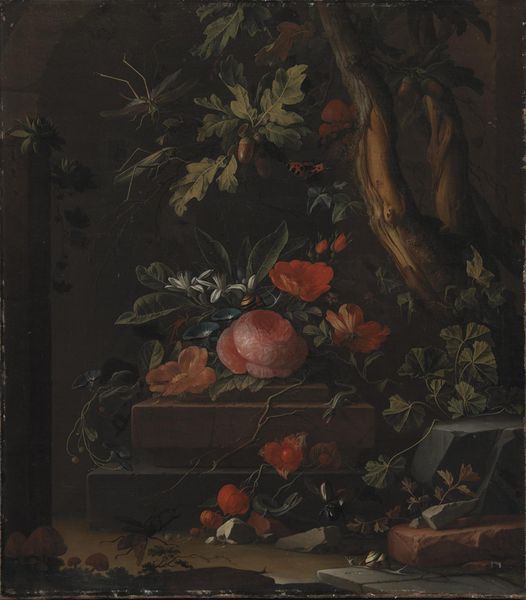
Still lifes often carried symbolic meanings for their original Dutch viewers. Here, the crowded display of fruit and insects testifies to the bounty of nature. Abraham Mignon’s virtuoso technique also reveals his desire to vie with the natural world and briefly halt time’s passage by fixing these objects in paint. The sheer variety of natural organisms still fascinates. But the fruit has begun to rot, and the once-mighty oak tree shows signs of blight. The stone in the foreground has fallen from a once-perfect building, and the arch in the right background crumbles. Butterflies and caterpillars, traditional symbols of transience, also allude to the impermanence of earthly things.
About this artwork
Abraham Mignon created "Still Life with Fruits" using oil on canvas. The eye is immediately drawn to a profusion of fruits arranged against a somber, almost theatrical backdrop. A dark and undefined space, punctuated by foliage, sets the stage for the vivid display of colors and textures in the foreground. The composition is deliberately constructed to contrast light and shadow, emphasizing the textures of the fruits. Grapes, plums, and peaches are rendered with a high degree of realism. Mignon’s keen observation of light creates a dynamic interplay between the abundance of nature and a sense of vanitas, reminding us of life's transience. The inclusion of insects introduces an element of decay into this otherwise luscious still life. The composition is far from arbitrary; the arrangement of elements serves as a semiotic system. The profusion signifies the bounty of nature, yet the presence of decaying elements suggests an engagement with the philosophical notion of mortality, a common theme in Dutch Golden Age painting. The interplay between these elements serves to destabilize any singular interpretation, inviting a more nuanced understanding of nature.
Comments
Still lifes often carried symbolic meanings for their original Dutch viewers. Here, the crowded display of fruit and insects testifies to the bounty of nature. Abraham Mignon’s virtuoso technique also reveals his desire to vie with the natural world and briefly halt time’s passage by fixing these objects in paint. The sheer variety of natural organisms still fascinates. But the fruit has begun to rot, and the once-mighty oak tree shows signs of blight. The stone in the foreground has fallen from a once-perfect building, and the arch in the right background crumbles. Butterflies and caterpillars, traditional symbols of transience, also allude to the impermanence of earthly things.