1745
Marriage à la Mode


Listen to curator's interpretation
Curatorial notes
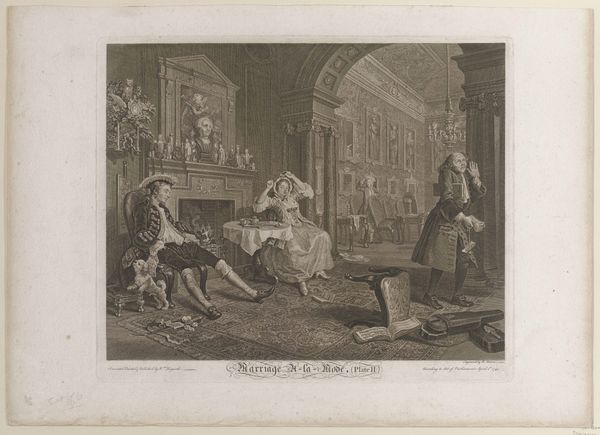
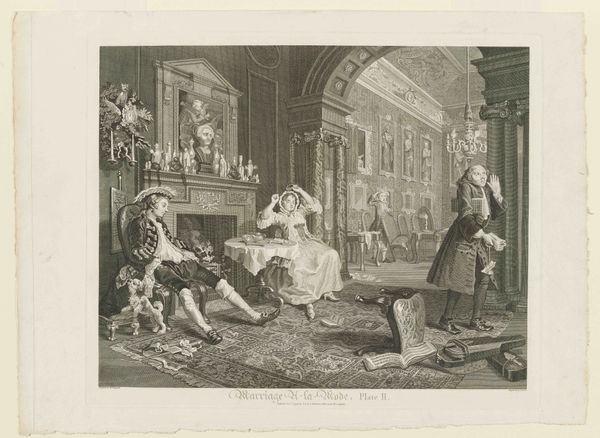
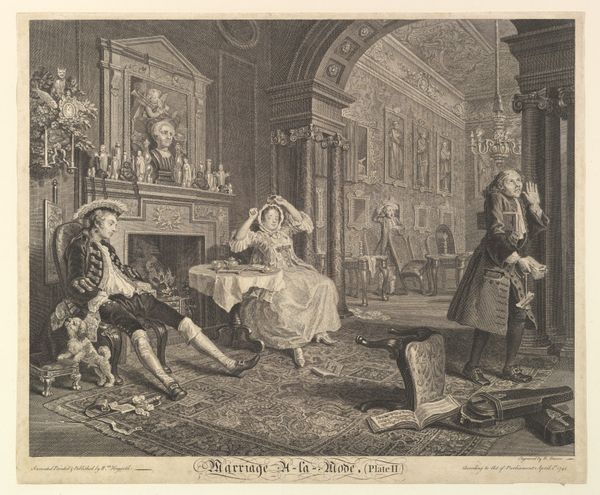
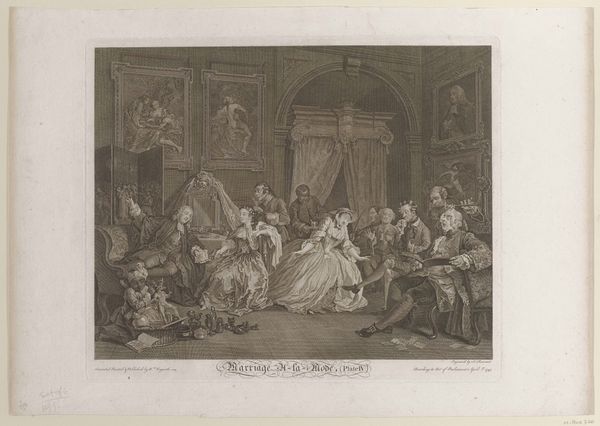
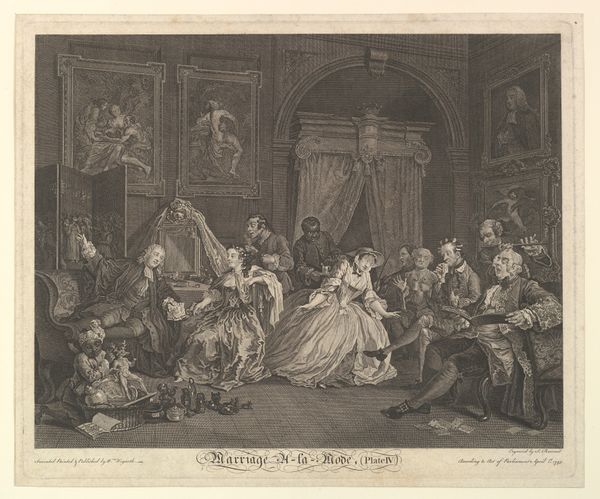
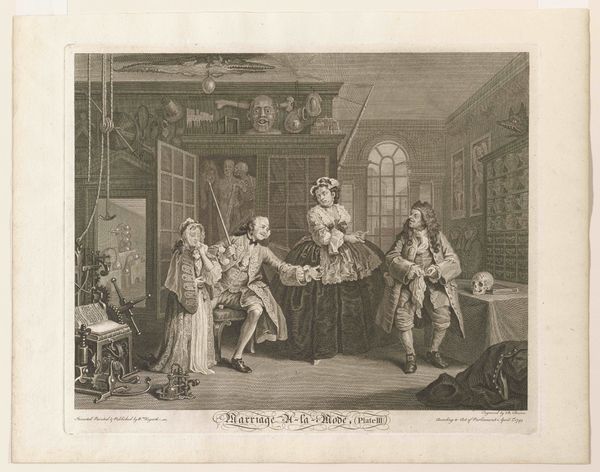
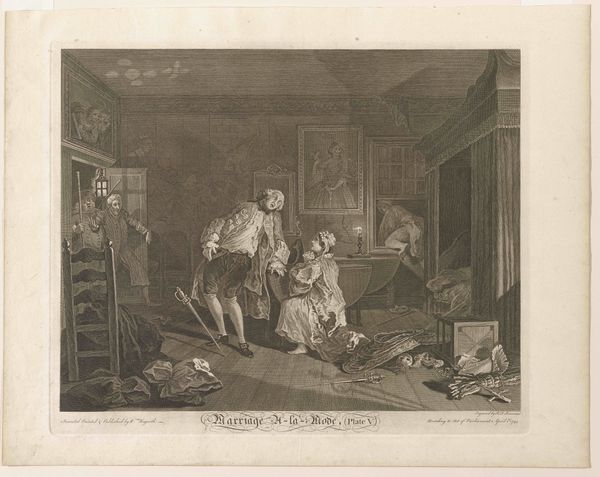
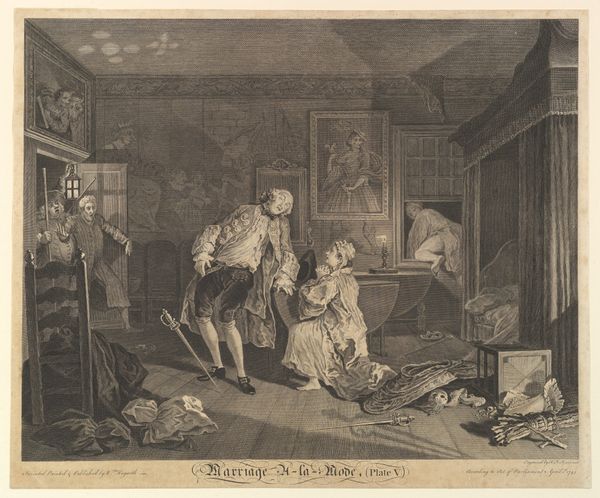
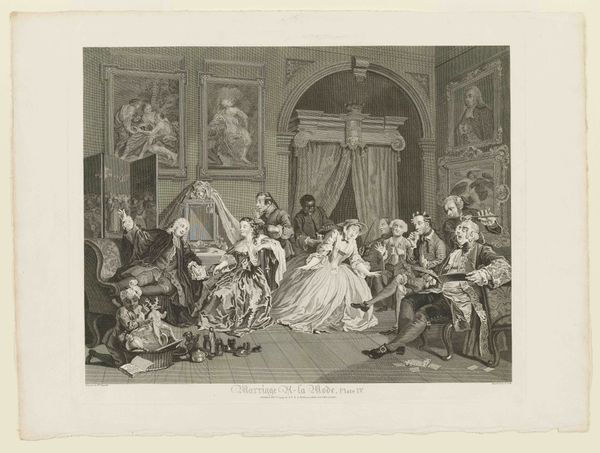
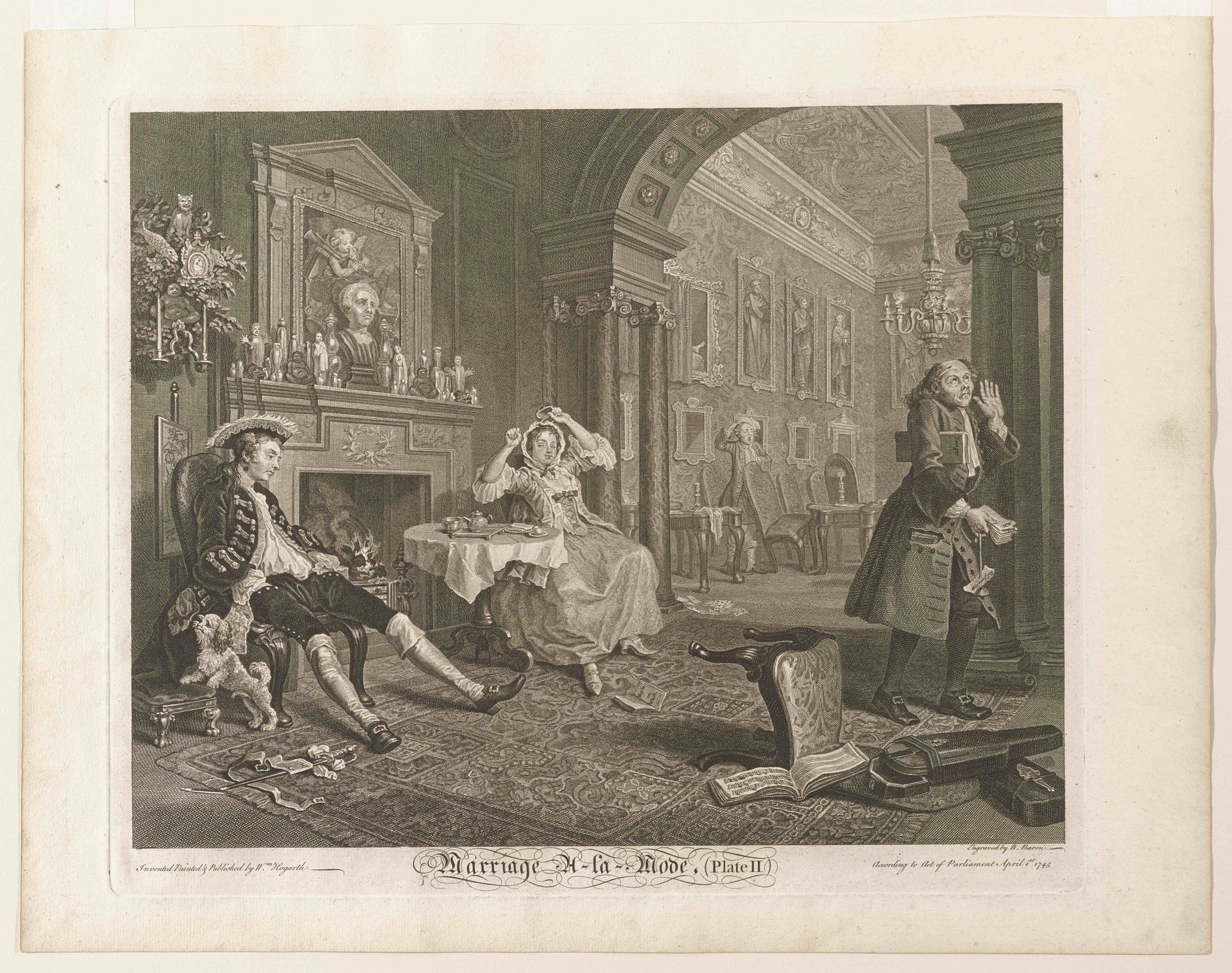
William Hogarth crafted this etching, "Marriage à la Mode," as a mirror reflecting the moral decay of his era. Note the overturned chair, the discarded musical instruments. They signify discord, a broken harmony. The steward, aghast with raised hands, embodies the shock of discovering the household's financial and moral bankruptcy. It reminds me of similar gestures in Renaissance paintings depicting the Annunciation. Consider the dog, sniffing at a lady's cap. Such animal symbolism has deep roots, often representing base instincts or hidden truths. Here, it hints at infidelity, a theme that resonates throughout history. These visual cues are not isolated. They speak to a collective memory, a shared understanding of symbols that transcend time. Like motifs in ancient tragedies, they engage us on a deep, subconscious level, stirring primal emotions of betrayal and ruin. See how Hogarth uses these symbols to expose the cyclical nature of human folly, where history repeats itself in ever-changing costumes.