after 1655
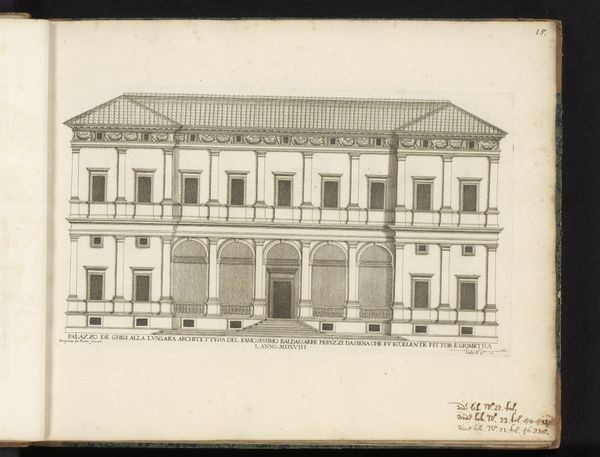
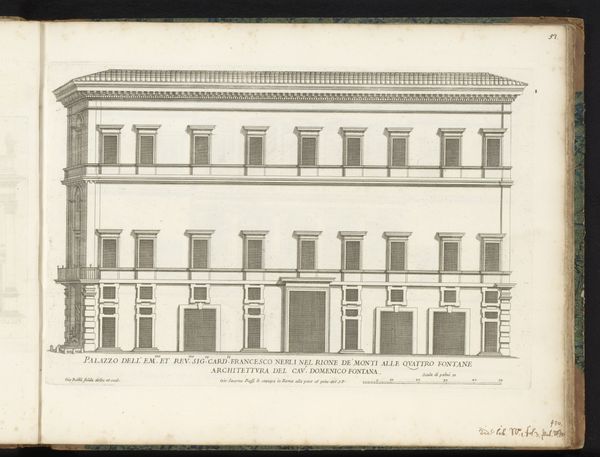
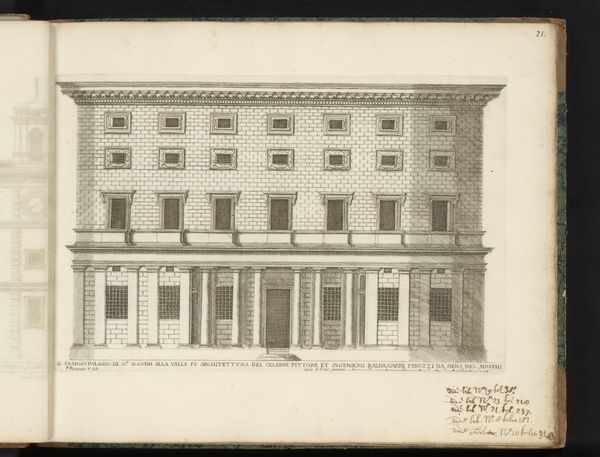
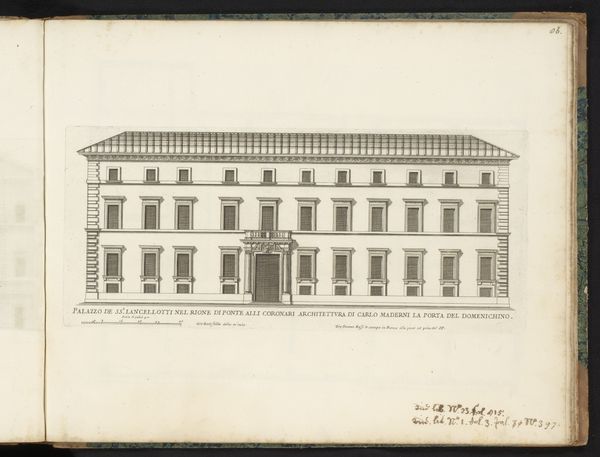
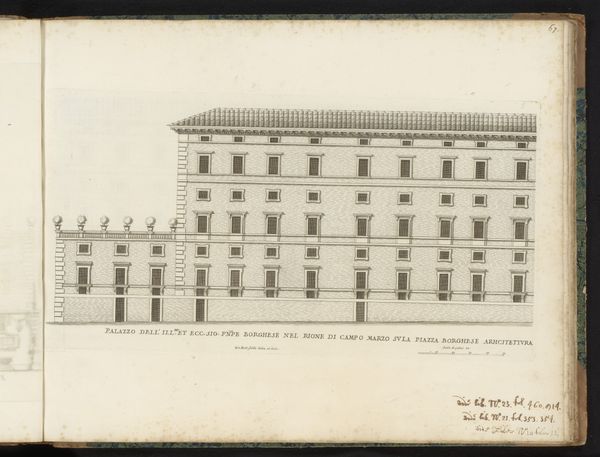
Façade van Palazzo Borghese

Giovanni Battista Falda
1643 - 1678Location
RijksmuseumListen to curator's interpretation
Curatorial notes
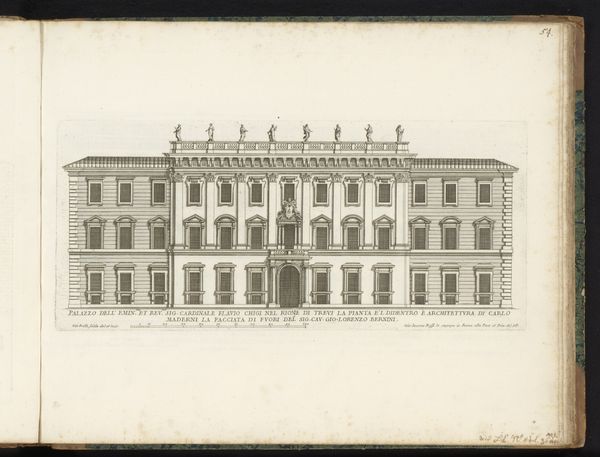
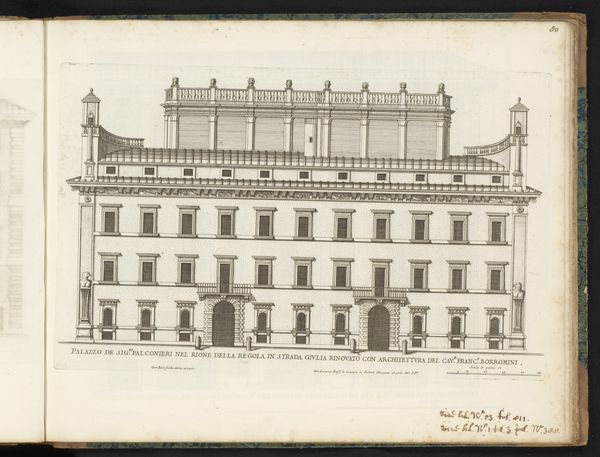
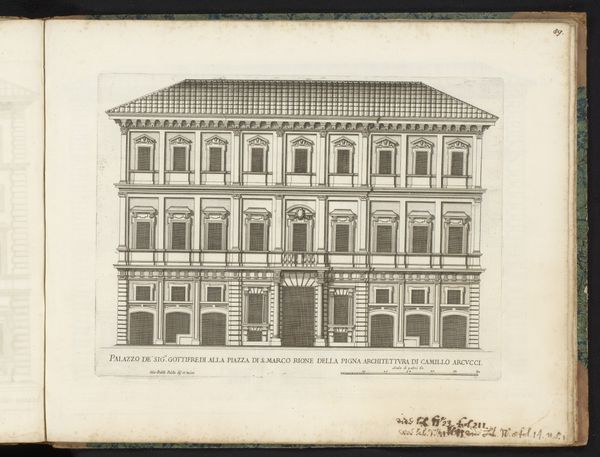
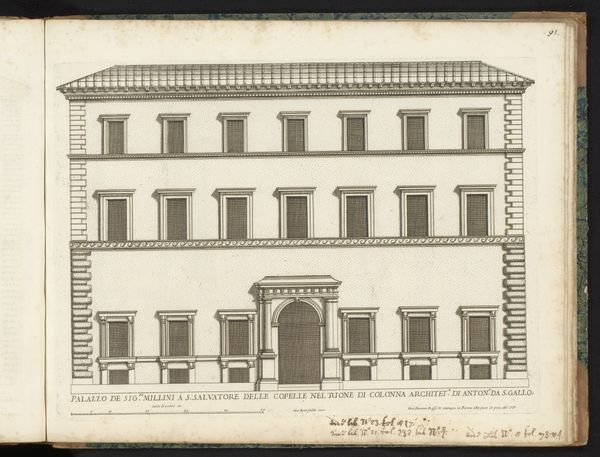
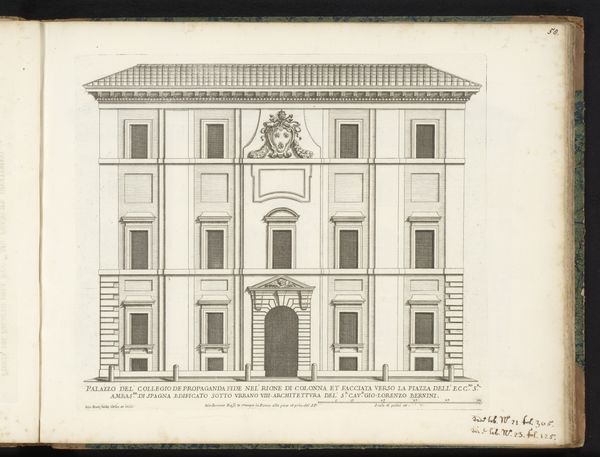
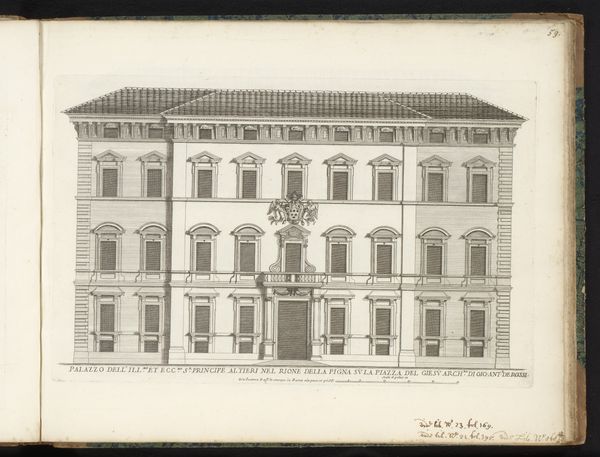
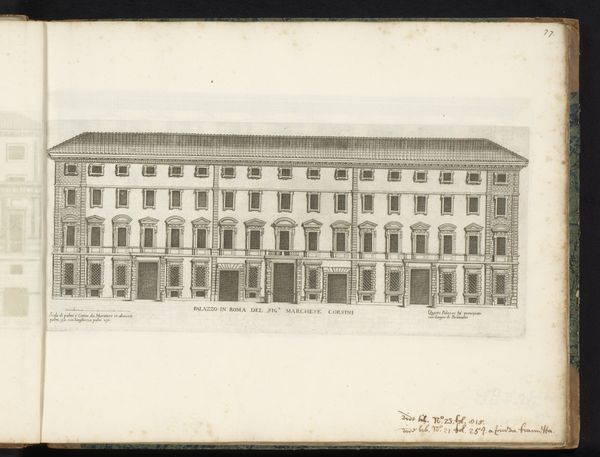
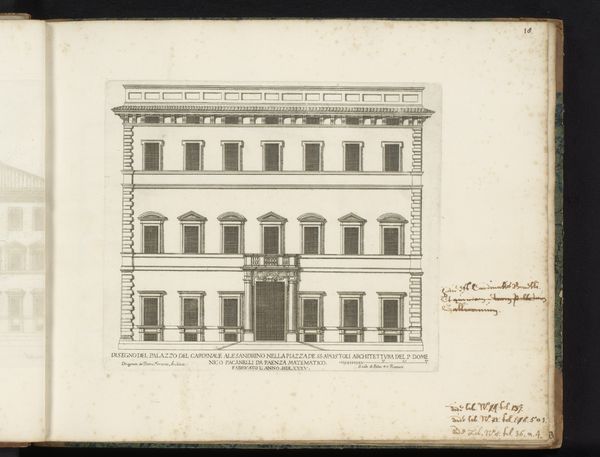
Curator: There’s a remarkable sense of order here. Look at the repeating patterns, the precise lines. It almost feels like a musical score. Editor: This engraving, called "Facade van Palazzo Borghese," dates from after 1655 and is currently held in the Rijksmuseum. It’s by Giovanni Battista Falda. There’s a lot we can unpack here, even with just a facade depicted in ink on paper. Curator: It's undeniably imposing. The Borghese family crest would surely have signaled immense power and privilege in its time. But consider, too, how this carefully crafted image of stability also acts as a kind of aspirational symbol – an assertion of permanence against the ever-shifting tides of history. Editor: Absolutely. Think of what the Baroque style signifies: a time of intense socio-political change and religious conflict. Depicting a perfect and orderly building is itself a statement. Beyond that, architecture serves a practical purpose by reinforcing hierarchy and exerting control within urban spaces. Whose voices, then, are erased in these grand designs? Curator: A very relevant consideration. Yet, I am captivated by the symbolism, too. Notice the play of light and shadow meticulously rendered even within this linear composition. Doesn't it hint at a deeper dialogue about appearance and reality, truth and illusion—themes that ran deep in the collective psyche? Editor: I agree, symbolism is layered. This is more than an architectural document. I would argue it’s a visual representation of hegemonic power encoded within art itself. It's about legitimizing particular narratives and masking inequalities. Curator: Power certainly resides here. For me, though, this Palazzo facade whispers secrets of ambition. We can read an enduring drive for immortality, a resonance between artistic aspiration and its creators' dreams. Editor: A dream that demanded and continues to demand the unequal distribution of space, visibility, and opportunity. I would have been more content with such perfect lines, if this image had reflected a reality of shared abundance and respect for our interconnected ecologies. Curator: A utopian vision worth aspiring to. In the meantime, images like this offer us complex glimpses of the symbolic and material worlds that we continue to co-inhabit. Editor: They challenge us to reconsider who defines these representations, and to reshape our world into something far more just.