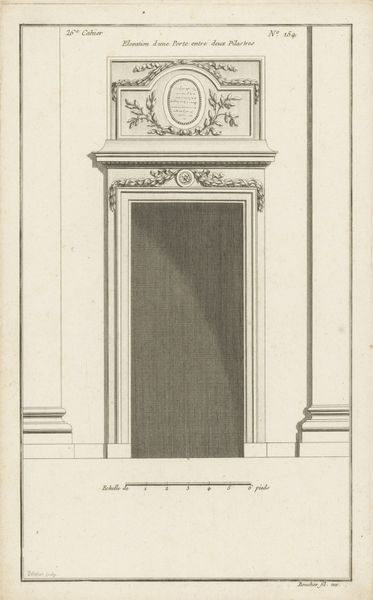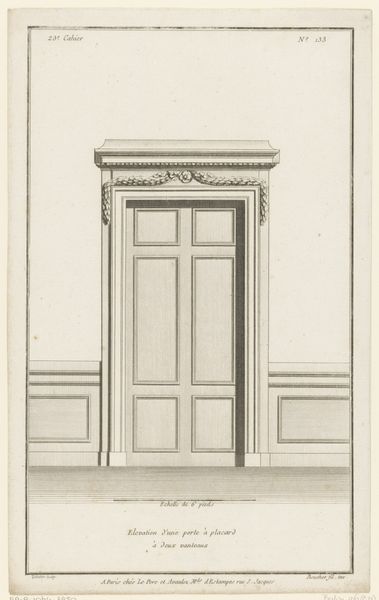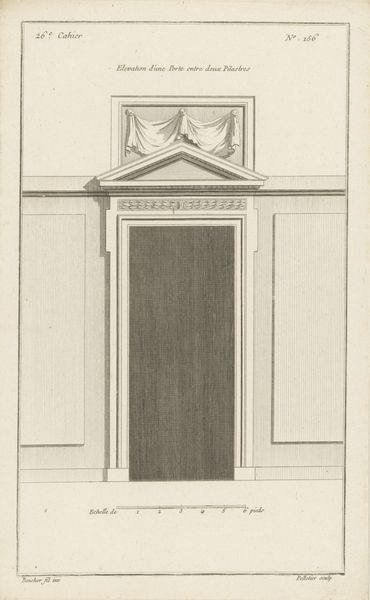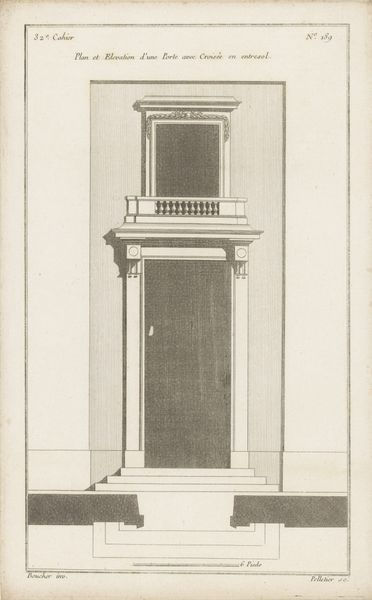
1772 - 1779
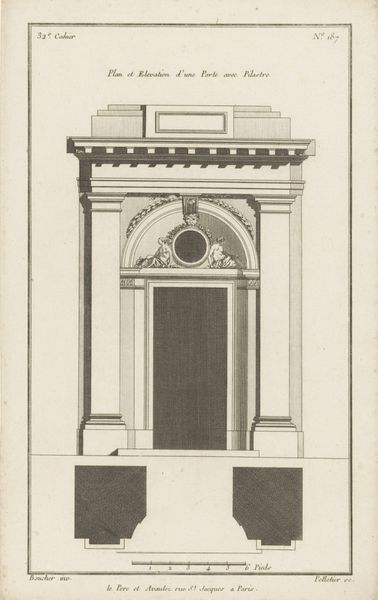
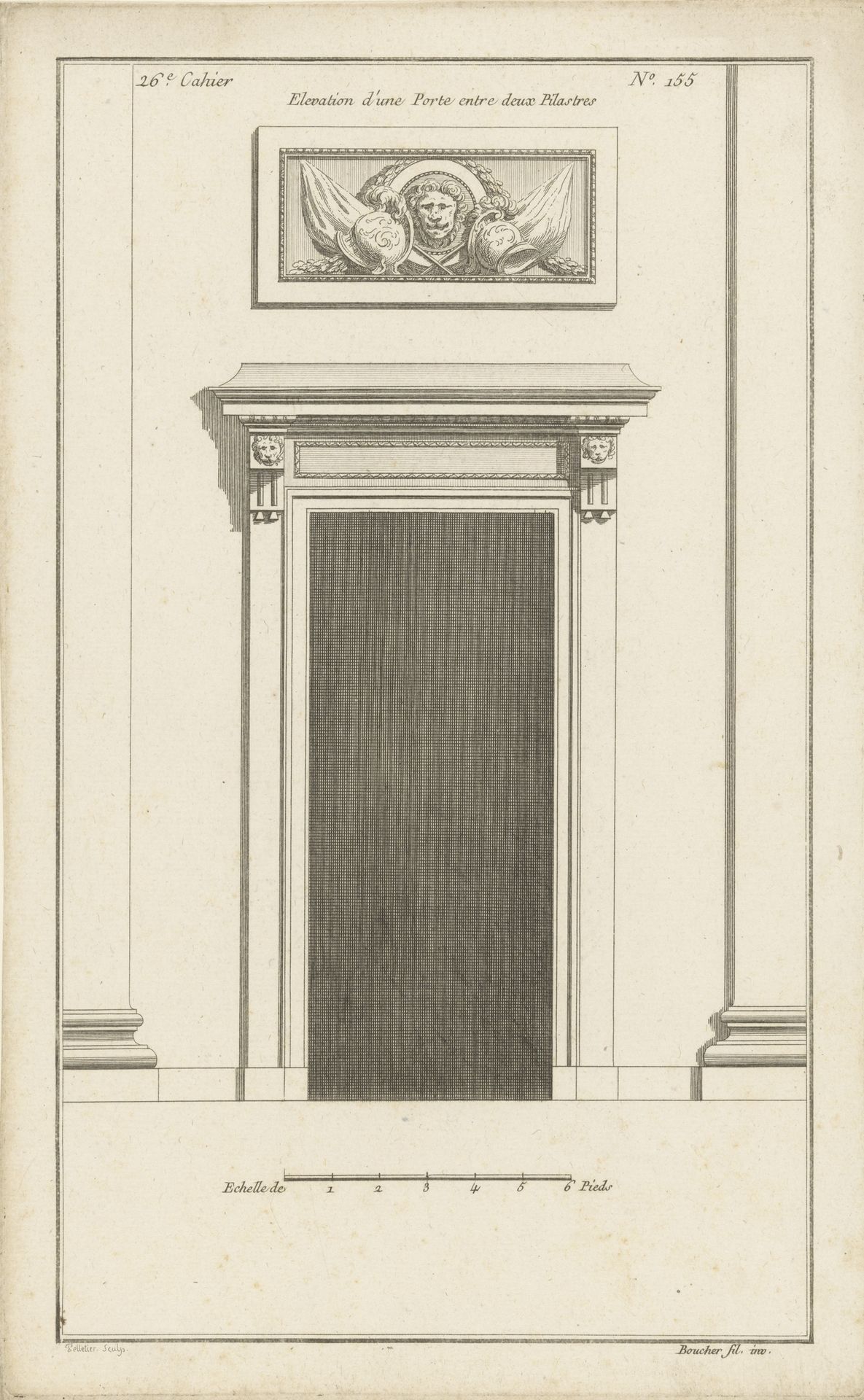
Portaal met leeuwenkoppen tussen pilasters

Jean Pelletier
1736Location
RijksmuseumListen to curator's interpretation
Curatorial notes
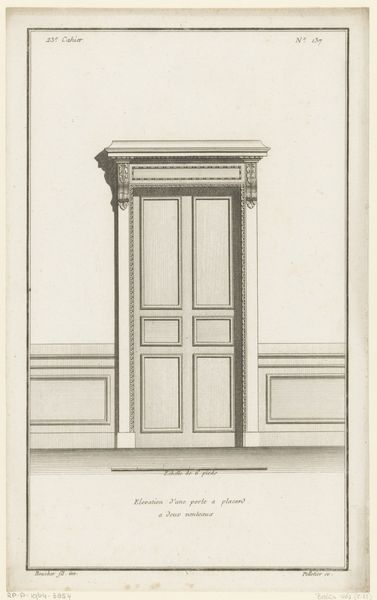
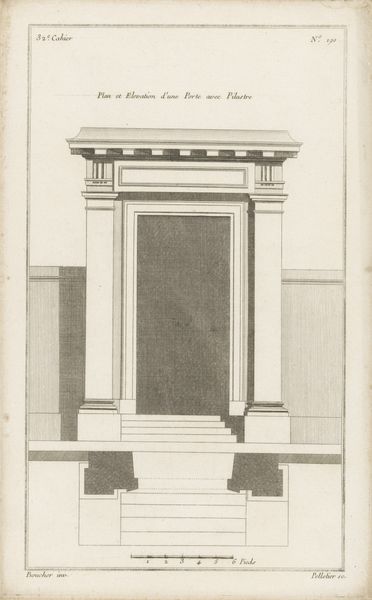
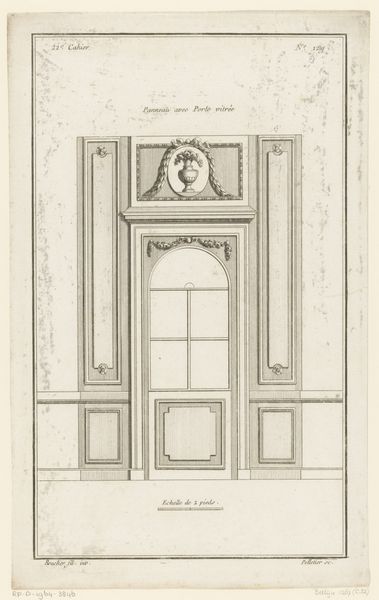
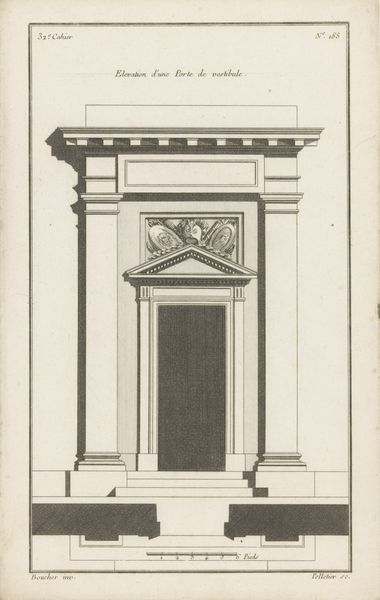
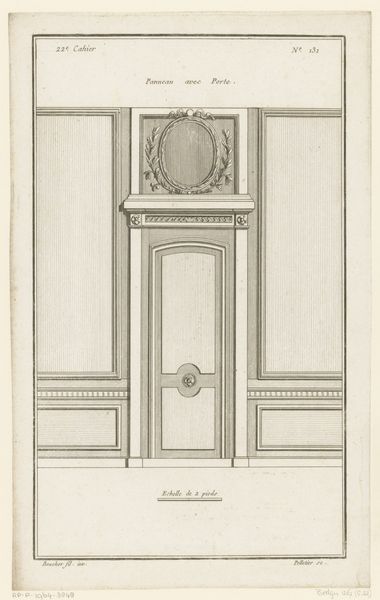
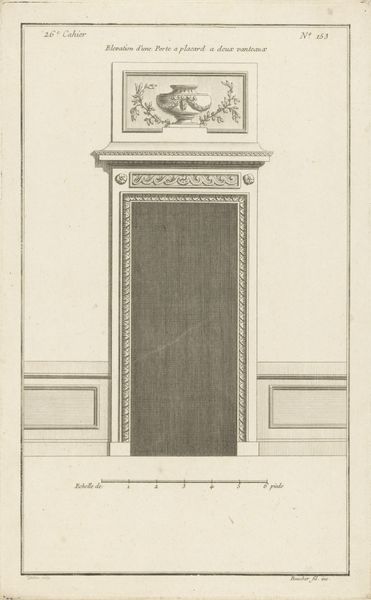
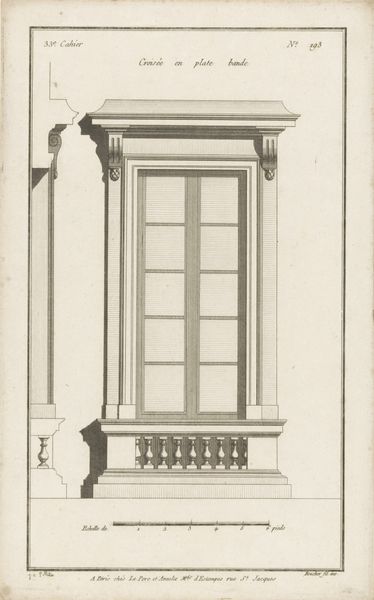
Editor: Here we have Jean Pelletier’s “Portaal met leeuwenkoppen tussen pilasters,” or "Portal with lion heads between pilasters" created between 1772 and 1779. It's an engraving, showcasing a neoclassical architectural design. I find the rigid symmetry quite striking, but also a little cold. What can you tell me about this piece? Curator: The chill you're sensing might stem from Neoclassicism's conscious rejection of the preceding Rococo style, which was considered overly ornamental and decadent. This print exemplifies the 18th-century obsession with classical antiquity. But what's being designed isn't an actual Roman ruin but something new. Editor: So it’s not necessarily meant to be a copy? More of an idealization? Curator: Precisely. Architects used these prints to promote and disseminate this new visual language, constructing buildings that were meant to symbolize reason, order, and civic virtue - projecting an image of authority for the state and those who had money to build things. Think about what that lion imagery signals – and where one might see it placed! Do you think ordinary people were likely to encounter something like this? Editor: I imagine seeing this on some grand civic building, a courthouse maybe, intended to make the public feel a certain way…safe, secure. This wasn’t really meant for private homes, was it? Curator: Indeed, you're seeing the interplay between architecture and power. Prints like these shaped the visual culture of the era. What do you take away from our discussion? Editor: I see it differently now, it's less about classical beauty and more about the function of that imagery in society! Thanks.