1830
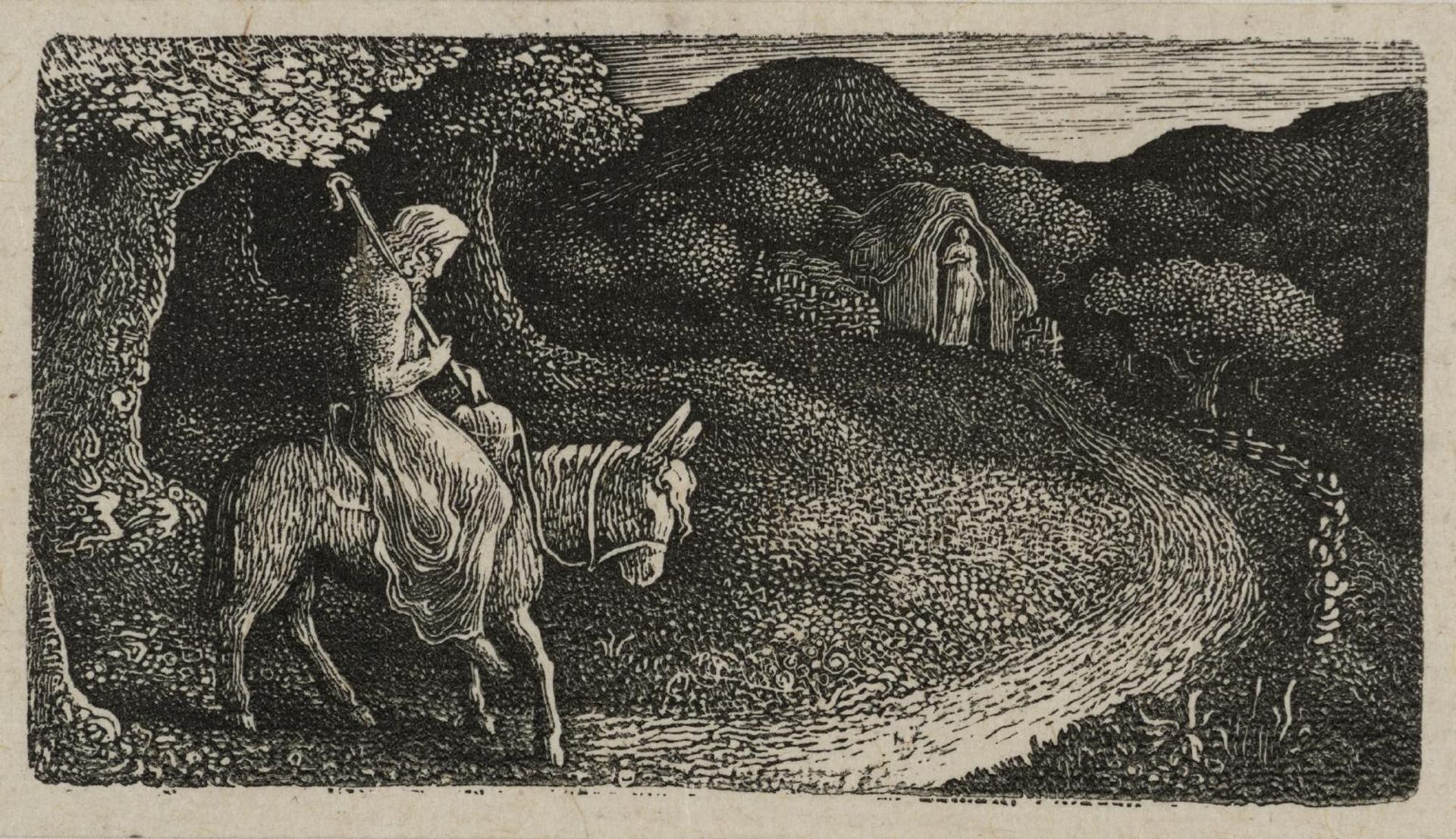
The Return Home


Listen to curator's interpretation
Curatorial notes
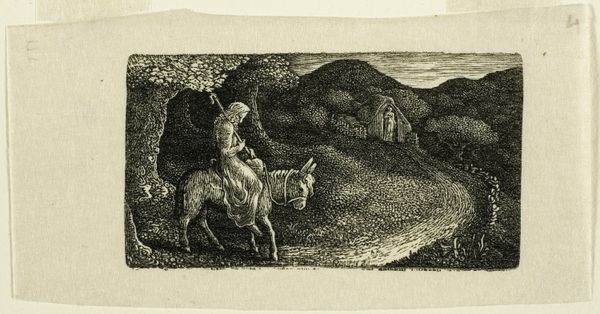
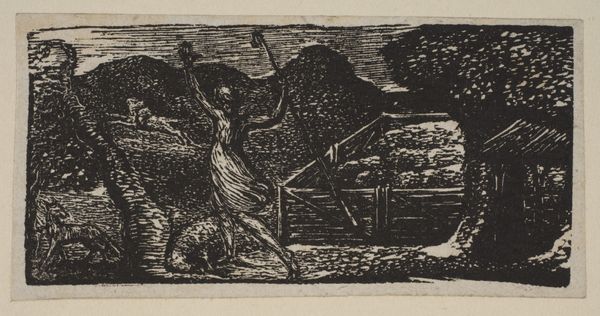
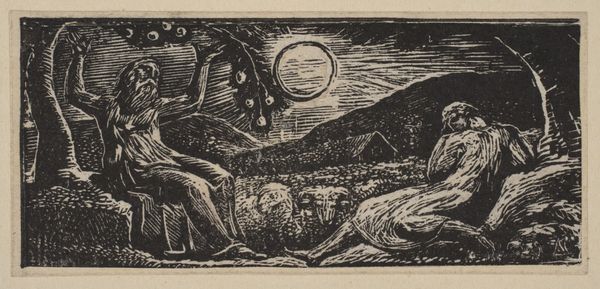
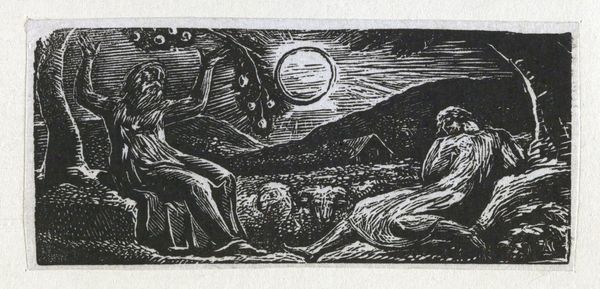
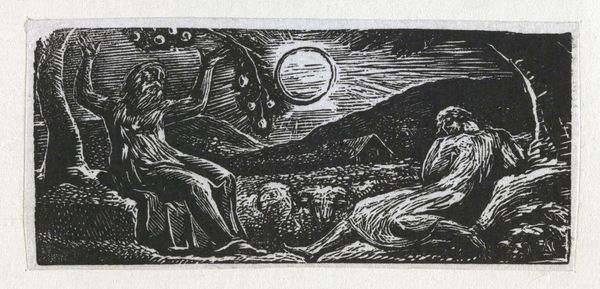
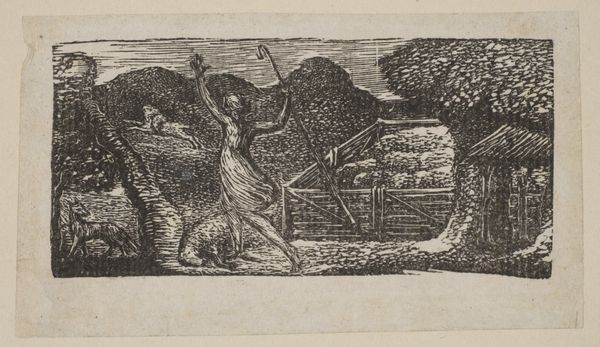
Curator: Edward Calvert's "The Return Home" presents us with a pastoral scene in miniature, its dimensions a mere 41 by 76 millimeters. Editor: It's incredibly evocative. The high contrast gives it a dreamlike, almost allegorical quality. Curator: Indeed. Note the intricate, almost obsessive mark-making. The figure on the donkey, the dwelling, the landscape itself—all are meticulously rendered. The composition leads the eye inward. Editor: It's interesting to consider this return in the context of early 19th-century England, a time of immense social upheaval and the rise of industrialization. Is this idealized rural life a response to those changes, a yearning for something lost? Curator: Possibly. The formal construction suggests a symbolic intent beyond the purely representational. The density of the marks creates a rich, textured surface which adds to the overall feeling of harmony. Editor: I find myself wondering about the female figure in the doorway. Is she a welcoming presence, or a symbol of something more complex? Perhaps the promise, or the illusion, of domestic tranquility? Curator: A valid point. Ultimately, "The Return Home" invites us to contemplate the interplay between form, content, and historical context. Editor: It seems to be an intimate reflection on longing, belonging, and the search for sanctuary in a changing world.