c. 1880 - 1910
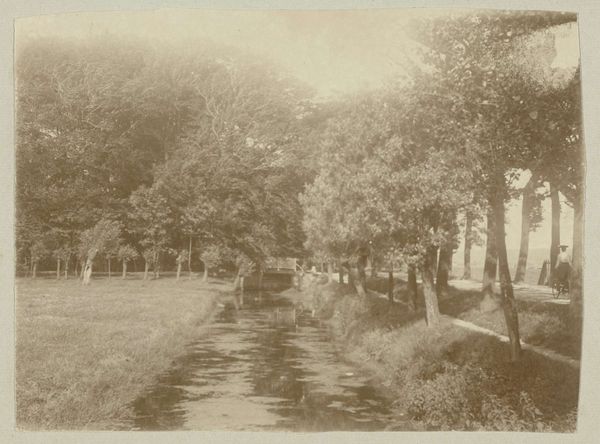
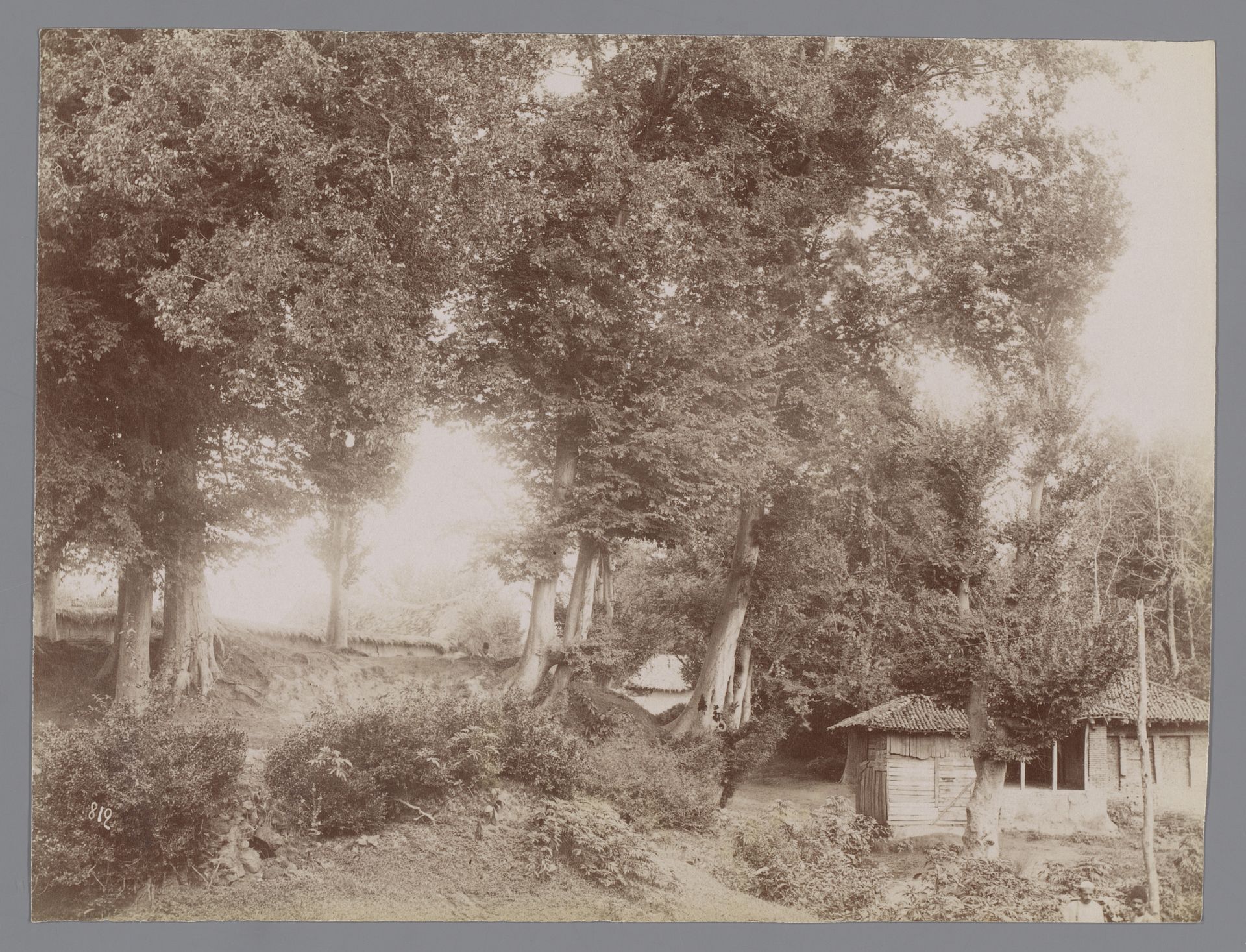
Landschap met enkele hutjes en bomen ("La route de Rescht")

Listen to curator's interpretation
Curatorial notes
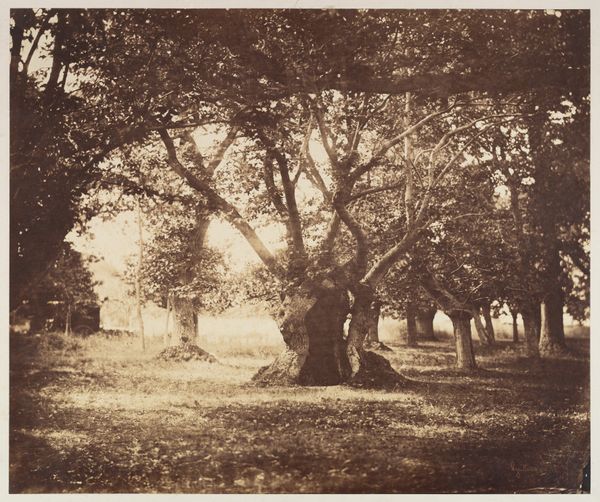
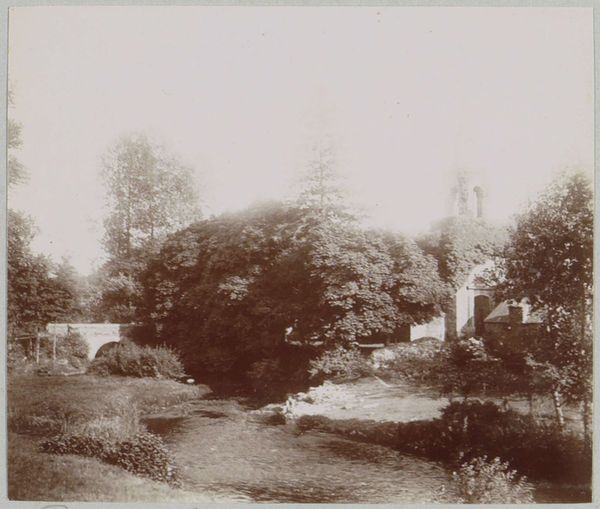
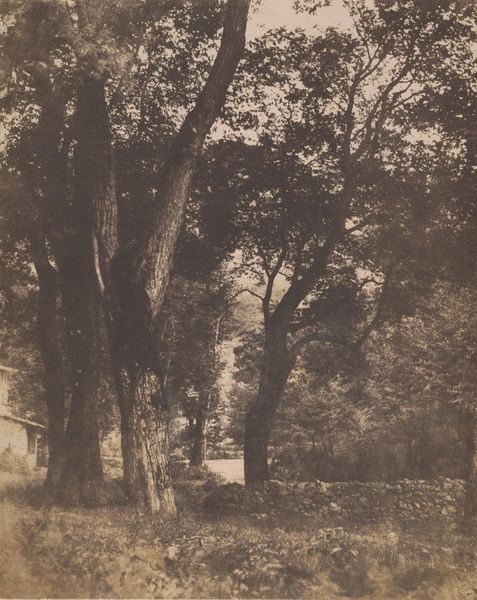
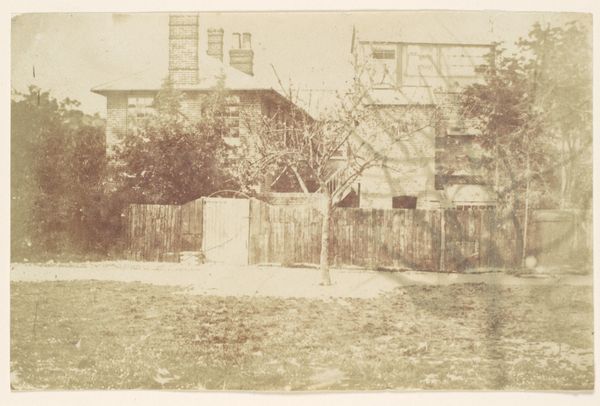
Curator: Here we have an albumen print by Antoine Sevruguin, entitled "Landschap met enkele hutjes en bomen ('La route de Rescht')," dating roughly from 1880 to 1910. Editor: It feels dreamlike, almost fading. The light behind the trees is overwhelming, washing out detail, and the composition feels divided. Curator: Sevruguin's work often captured the visual culture of Persia for a European audience. The albumen print process gives a warm sepia tone that evokes a sense of the past. The way the landscape is framed may relate to ideas around exoticism that were common at that time. Editor: Exactly. Structurally, the strong horizontal of the path intersects with the verticality of the trees creating a stage-like effect. It flattens the image, lending a sense of constructedness. The artist is less concerned with replicating visual experience than framing a kind of symbolic encounter. Curator: The houses themselves can also be interpreted as cultural symbols within this representation. Note their proximity, huddled near each other and integrated into the surrounding foliage; these are indicators of a relationship between man and the environment and carry social meaning. Editor: But is that integration natural or a constructed fantasy? Look at the uniformity of the trees, how their trunks are evenly spaced—there is an artificial order at play here. Even the hazy quality could be a way to distance the scene, softening the reality. Curator: Perhaps it is about presenting an idealized vision, reflecting European desires for an "authentic" yet tamed landscape. Editor: Yes, the light also obscures potentially disruptive details; it’s like a scrim over harsh realities. The romantic sepia and picturesque arrangement ultimately mask a deeper cultural narrative. Curator: Examining such images urges us to consider how photography contributed to shaping perceptions and cultural narratives around landscape, place, and identity during the late 19th century. Editor: Ultimately, it invites us to critically examine how the visual is constructed. This image, like many others from the period, shows that seeing isn't simply believing but carefully framing.