About this artwork
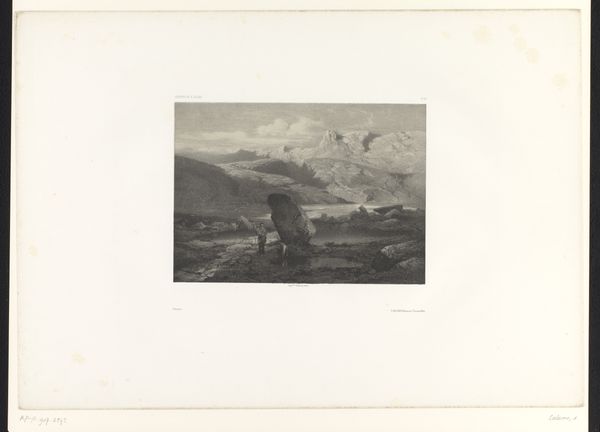
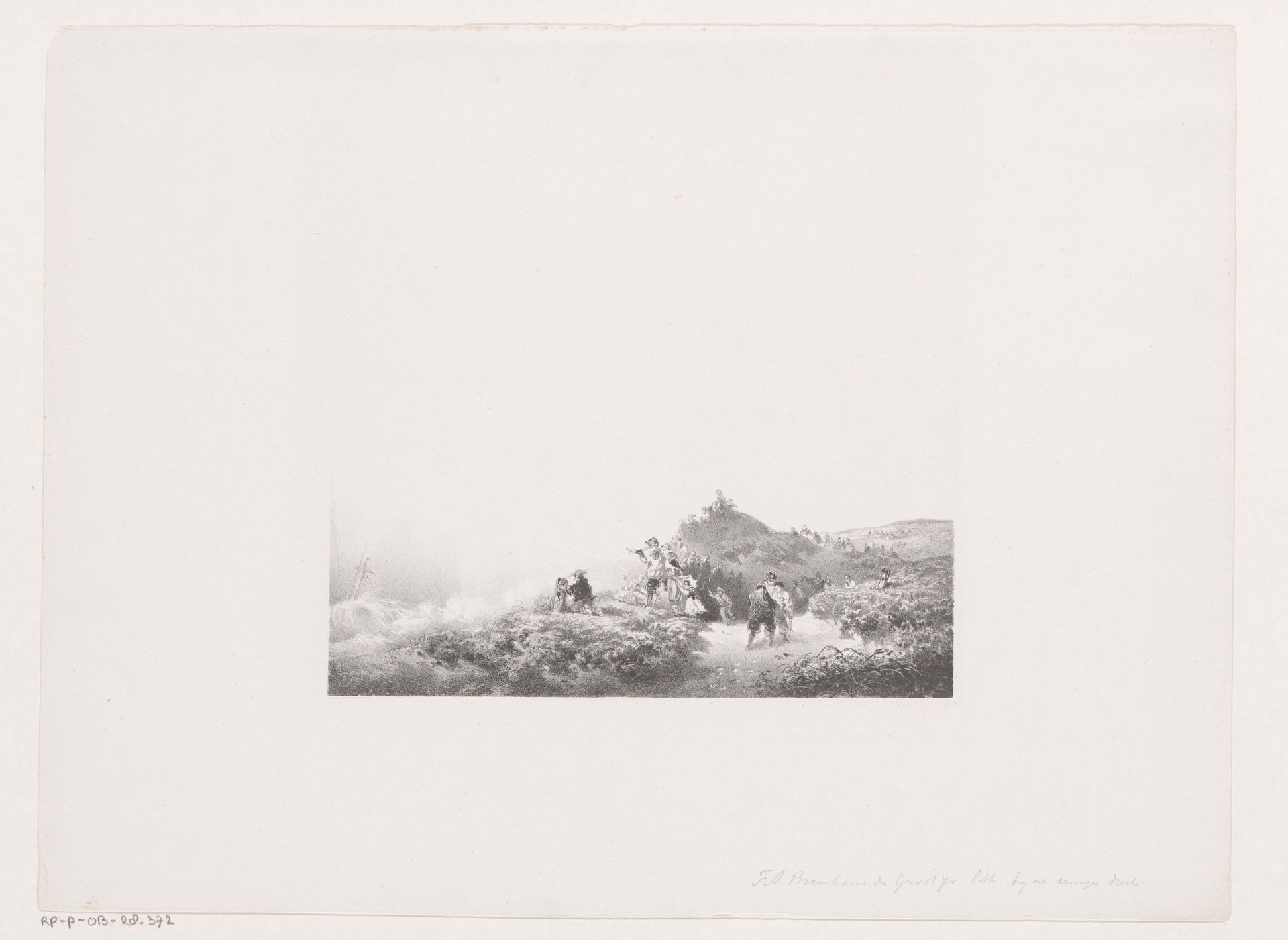
This lithograph, 'People in the Dunes Watching a Ship in Distress', was made by Frans Arnold Breuhaus de Groot in the mid-19th century. Lithography is a printmaking process that relies on the contrast between greasy and water-receptive areas on a flat stone or metal plate. The artist draws an image on the stone with a greasy crayon, then treats the surface so that ink adheres only to the drawn areas. The print is then made by pressing paper against the inked stone. In this print, you can appreciate the subtle tonal variations, achieved by the artist's skillful use of the greasy crayon. The grainy texture evokes the sandy dunes, and crashing waves, while the precision capture the figures’ emotional intensity as they witness the ship's struggle against the sea. The print hints at the human drama of maritime disasters and also evokes a sense of community among those who witness it. By understanding the printing process, we gain a deeper appreciation for the artwork, bridging the gap between fine art and the skilled craft involved in its creation.
Mensen in de duinen kijken naar een schip in nood
1834 - 1872

Frans Arnold Breuhaus de Groot
1824 - 1872Location
RijksmuseumArtwork details
- Dimensions
- height 275 mm, width 365 mm
- Location
- Rijksmuseum
- Copyright
- Rijks Museum: Open Domain
Comments
Share your thoughts
About this artwork
This lithograph, 'People in the Dunes Watching a Ship in Distress', was made by Frans Arnold Breuhaus de Groot in the mid-19th century. Lithography is a printmaking process that relies on the contrast between greasy and water-receptive areas on a flat stone or metal plate. The artist draws an image on the stone with a greasy crayon, then treats the surface so that ink adheres only to the drawn areas. The print is then made by pressing paper against the inked stone. In this print, you can appreciate the subtle tonal variations, achieved by the artist's skillful use of the greasy crayon. The grainy texture evokes the sandy dunes, and crashing waves, while the precision capture the figures’ emotional intensity as they witness the ship's struggle against the sea. The print hints at the human drama of maritime disasters and also evokes a sense of community among those who witness it. By understanding the printing process, we gain a deeper appreciation for the artwork, bridging the gap between fine art and the skilled craft involved in its creation.
Comments
Share your thoughts