About this artwork
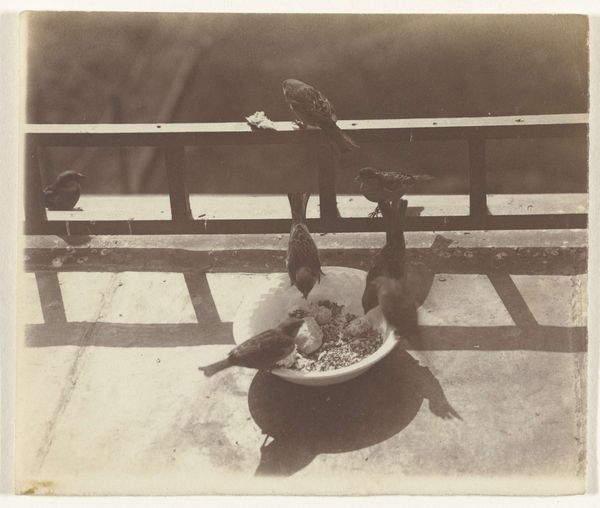
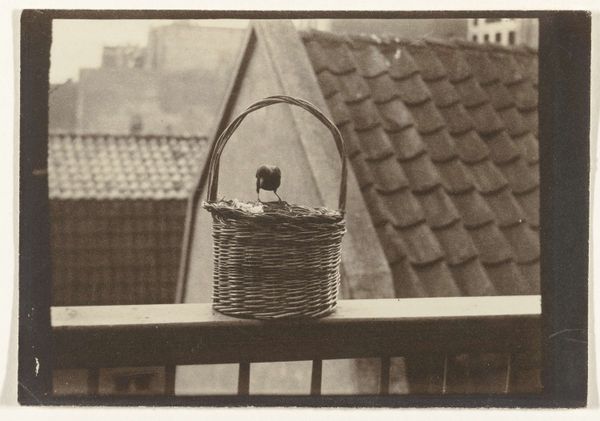
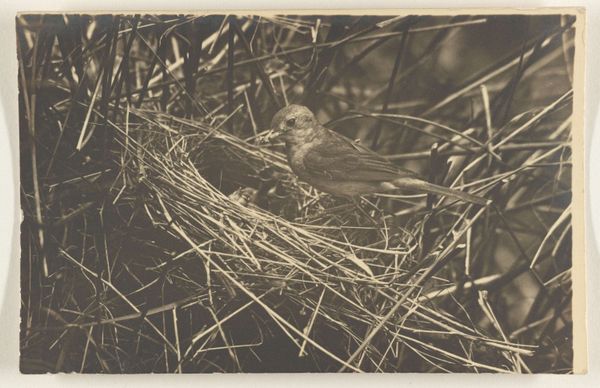
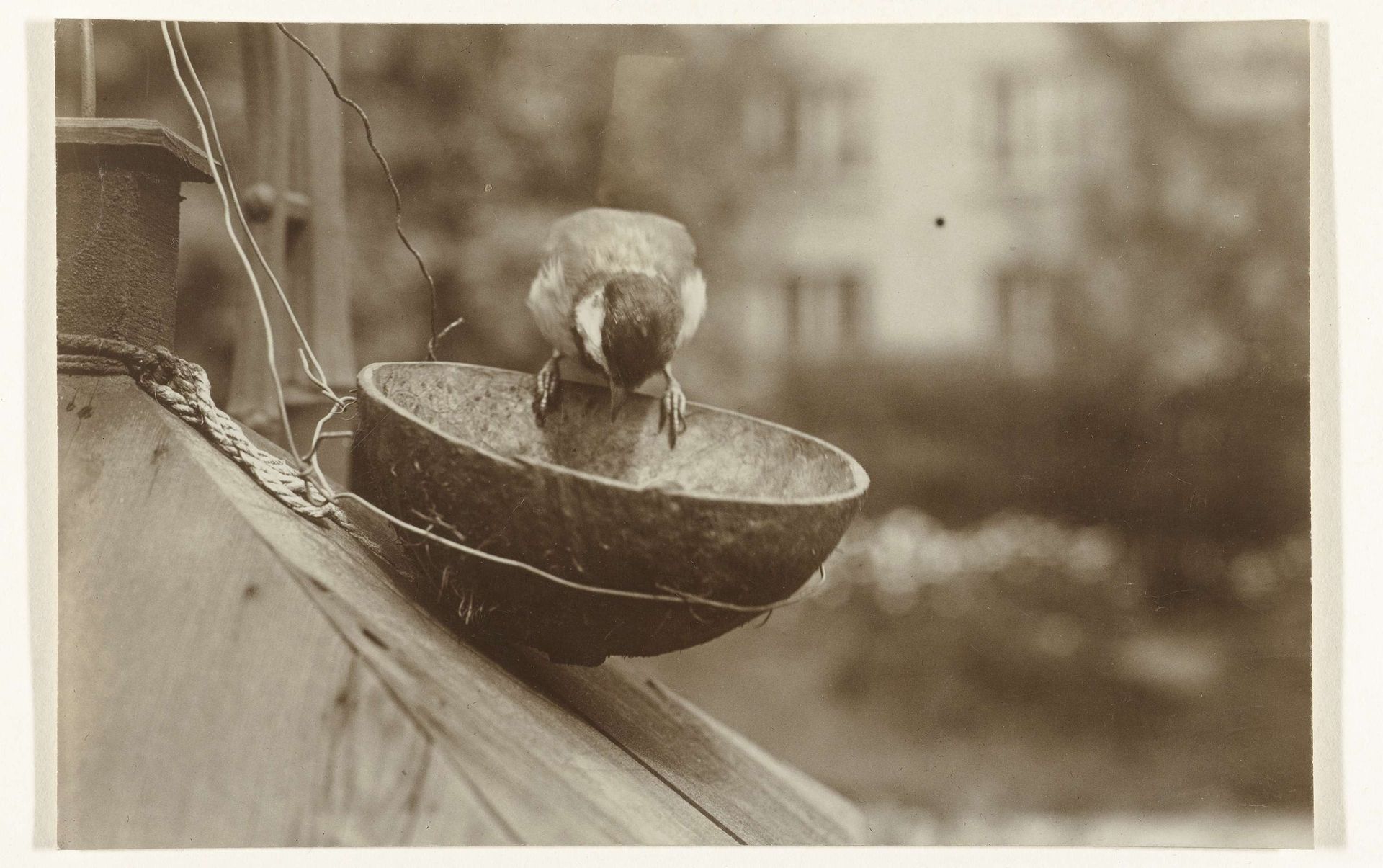
This photograph by Richard Tepe captures a small bird eating from a halved coconut on a balcony. It’s hard to date precisely, but you can tell by the sepia tones that it comes from another era. The textures of the coconut shell and the bird’s feathers are so tangible. Look at how the light catches the rough surface of the coconut! It’s like you could reach out and feel it. And the bird, perched so delicately on the edge, its tiny claws gripping the rim—there is something so immediate about it. The limited tonal range evokes the work of 19th century artists like Whistler, who reveled in subtle gradations of tone to create atmosphere. There’s a real intimacy in the way Tepe frames this scene. It feels like a stolen moment, a private glimpse into the everyday life of this little creature. The photograph embraces ambiguity. It’s a simple scene, yet it speaks volumes about the connection between nature and the human world.
Koolmees eet uit een gehalveerde koksnoot op een balkon
c. 1900 - 1930

Richard Tepe
1864 - 1952Location
RijksmuseumArtwork details
- Dimensions
- height 108 mm, width 164 mm
- Location
- Rijksmuseum
- Copyright
- Rijks Museum: Open Domain
Comments
Share your thoughts
About this artwork
This photograph by Richard Tepe captures a small bird eating from a halved coconut on a balcony. It’s hard to date precisely, but you can tell by the sepia tones that it comes from another era. The textures of the coconut shell and the bird’s feathers are so tangible. Look at how the light catches the rough surface of the coconut! It’s like you could reach out and feel it. And the bird, perched so delicately on the edge, its tiny claws gripping the rim—there is something so immediate about it. The limited tonal range evokes the work of 19th century artists like Whistler, who reveled in subtle gradations of tone to create atmosphere. There’s a real intimacy in the way Tepe frames this scene. It feels like a stolen moment, a private glimpse into the everyday life of this little creature. The photograph embraces ambiguity. It’s a simple scene, yet it speaks volumes about the connection between nature and the human world.
Comments
Share your thoughts