print, engraving
#
portrait
# print
#
figuration
#
line
#
italian-renaissance
#
engraving
Dimensions: height 167 mm, width 125 mm
Copyright: Rijks Museum: Open Domain
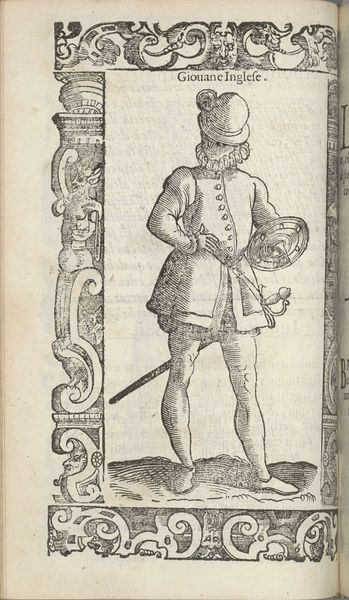
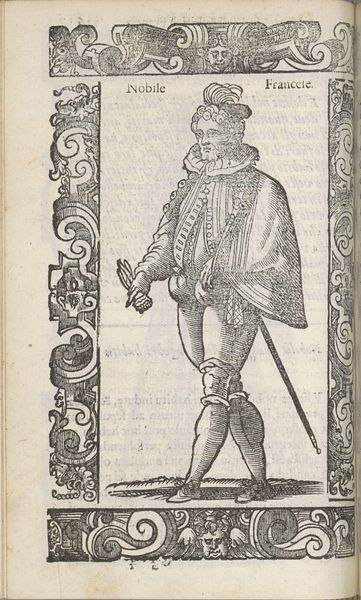
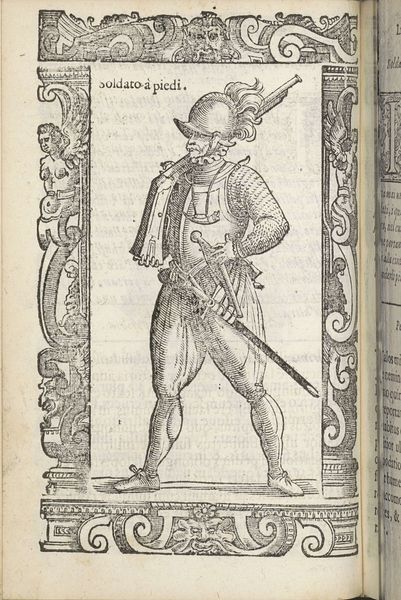
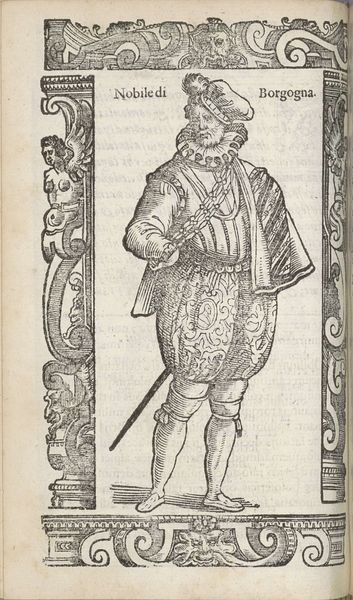
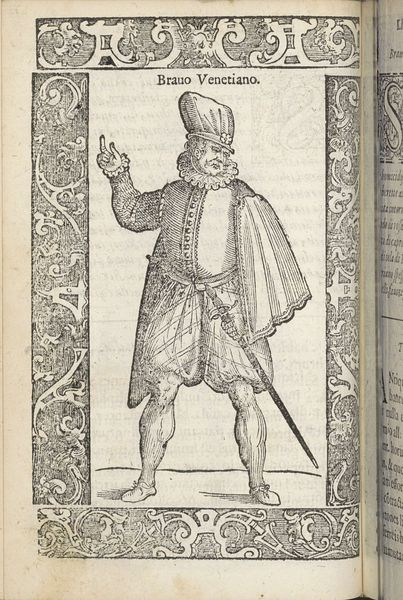
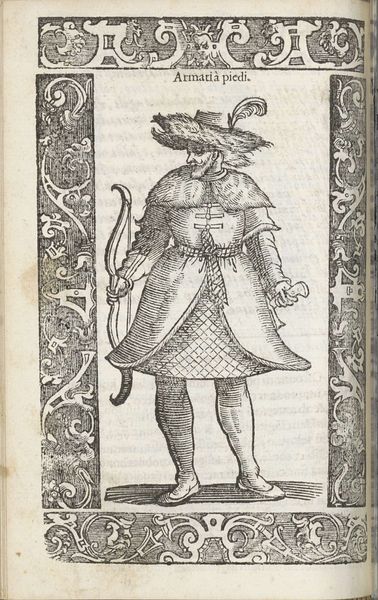
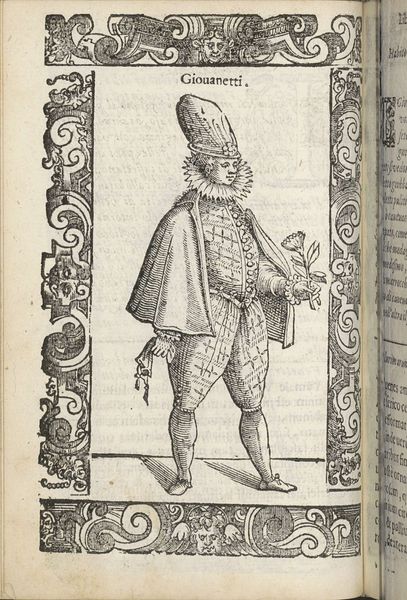
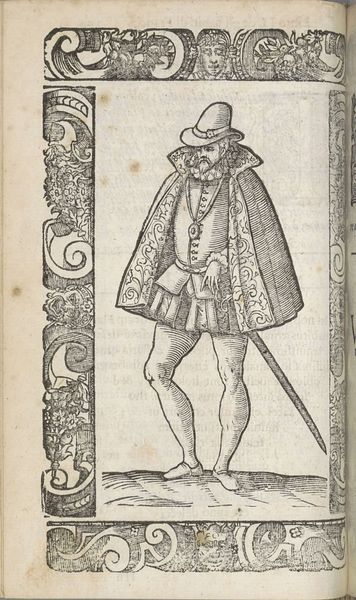
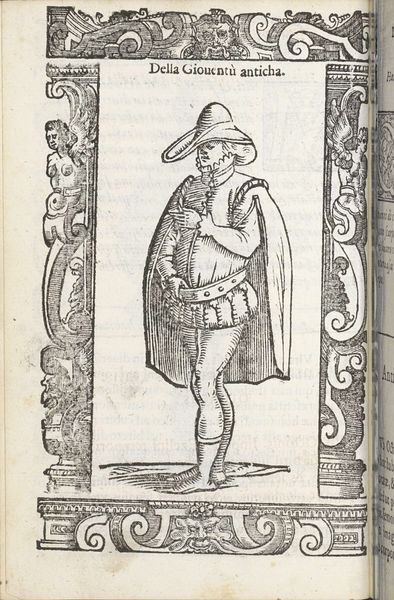
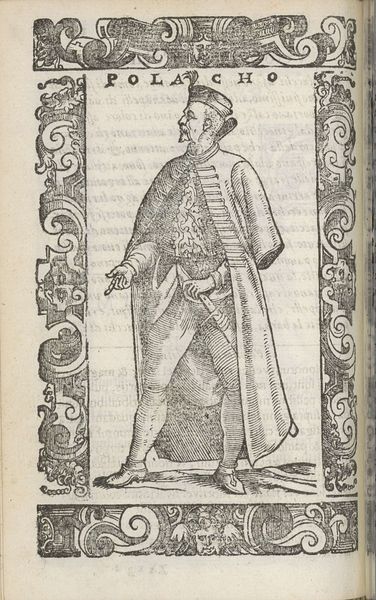
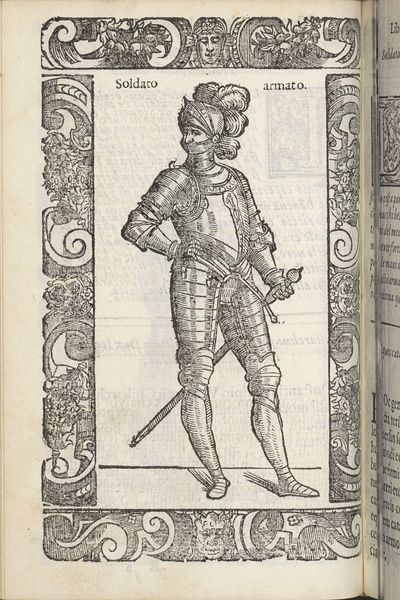
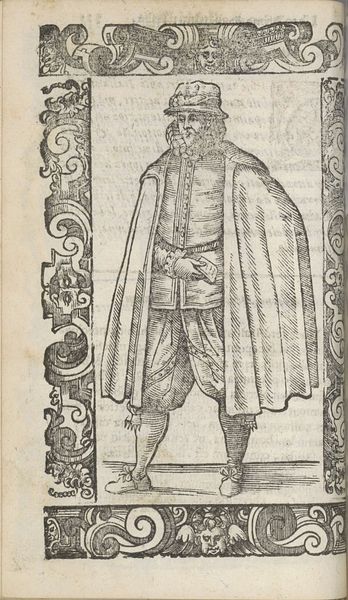
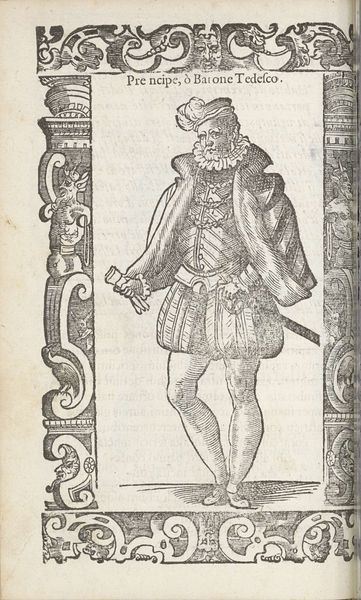
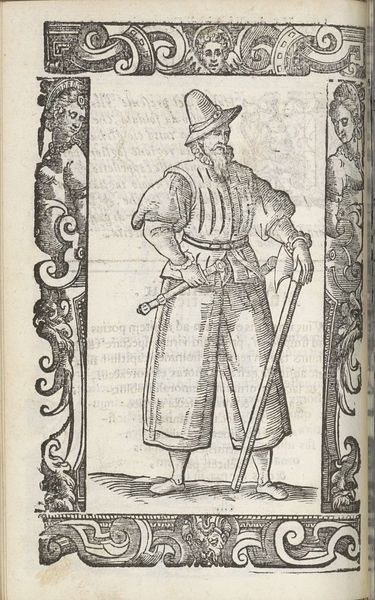
Curator: Look at the striking details of "Delli Cassi," an engraving made around 1598 by Christoph Krieger, offering us a glimpse into the persona and style of the time. What strikes you initially about this piece? Editor: The line work is quite strong and deliberate, it gives him an almost theatrical appearance. The ornamentation also adds to the image's powerful and enigmatic air, almost as though he is being framed or set apart. What was this imagery intended to convey at the time it was created? Curator: Well, Christoph Krieger, during his time, tapped into printmaking as an increasingly powerful means of social commentary and record. Through techniques such as line engraving we see more and more individuals immortalized within portraiture, allowing greater access and distribution amongst a growing public. This piece then, reflects and shapes understandings of class, roles, and public images of the time. Editor: Given the artistic movements during that time, does this figure signify a social class or profession in any specific way? Because he carries a rather peculiar tool over his shoulder that does not immediately suggest wealth. Curator: Absolutely, his attire combined with his weapon hints at a position, maybe of authority, within a sort of militia, a guard of sorts. And the engraving itself would signify the popular appetite of accessible and engaging representations and the way visual imagery had a social function, documenting and creating identities, but it can also raise questions about who had the power to portray who, and the narratives that became dominant in art history. Editor: What implications do these details have when viewed through a contemporary lens? Are we romanticizing figures of power, or examining complex roles within their society? Curator: Those very considerations help us engage more honestly. The level of access allows us now to question long-held perspectives and enrich our view, using the artwork as the site where this takes place. Editor: In a nutshell, then, it serves as a mirror reflecting societal structures while simultaneously becoming a tool for interrogating those constructs and providing space for new dialogues. Thanks. Curator: Precisely. An important dialogue that I, as a Historian, and you, as an Activist, engage in every day.
Comments
No comments
Be the first to comment and join the conversation on the ultimate creative platform.
 Collect
 React
React Comment
More like this