1885 - 1932
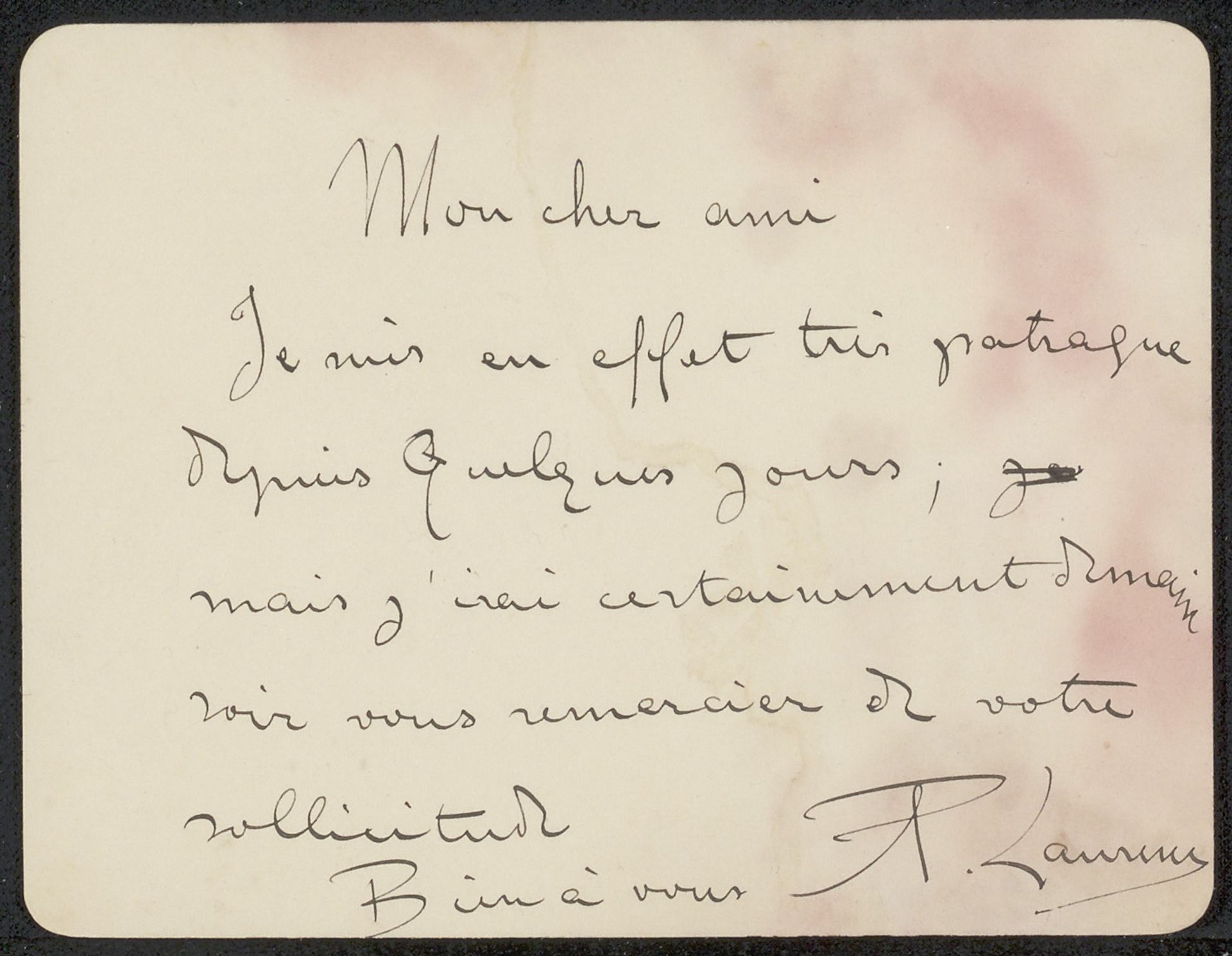
Brief aan de heer A. Rosnoblet

Listen to curator's interpretation
Curatorial notes
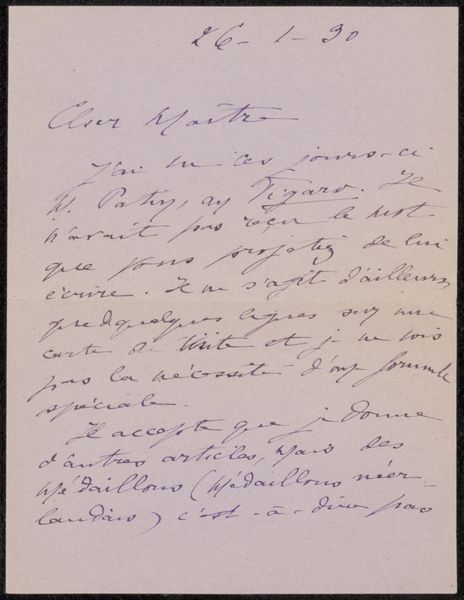
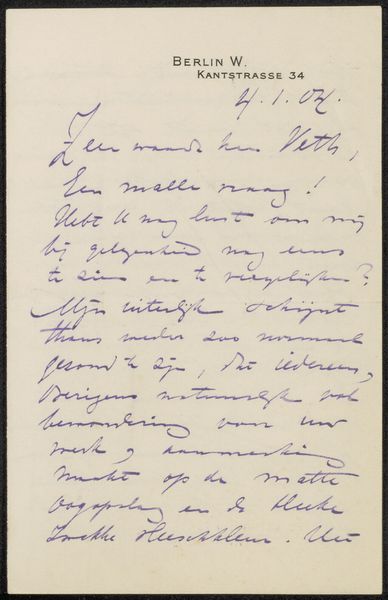
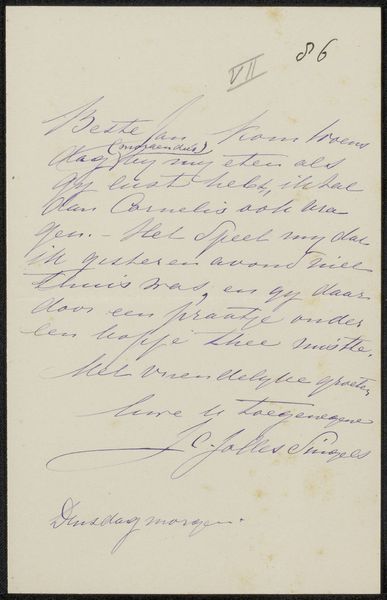
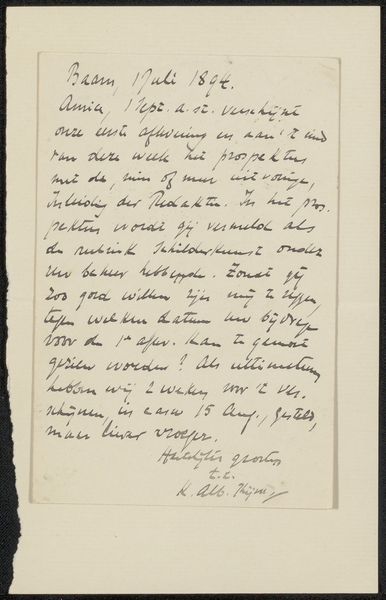
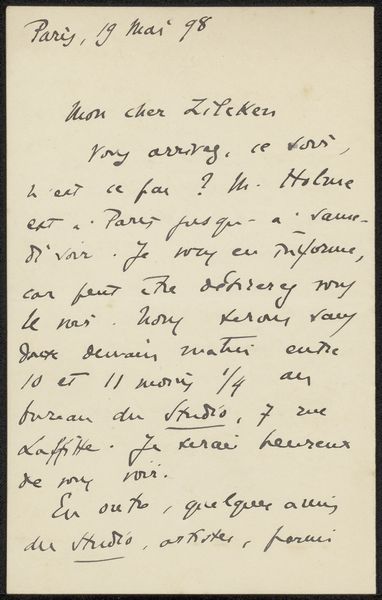
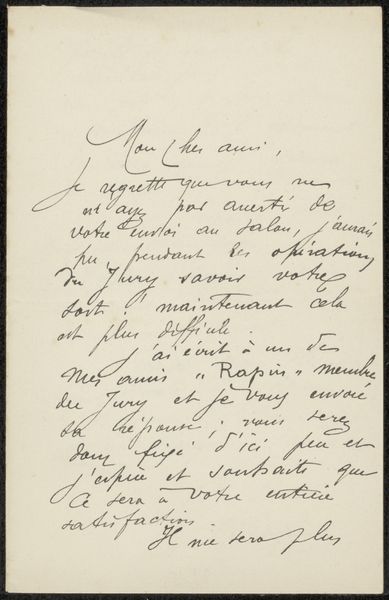
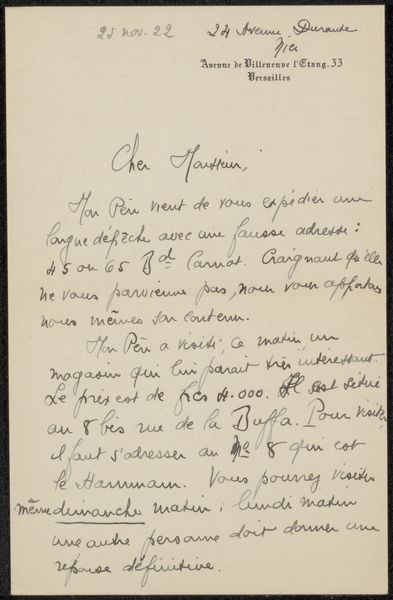
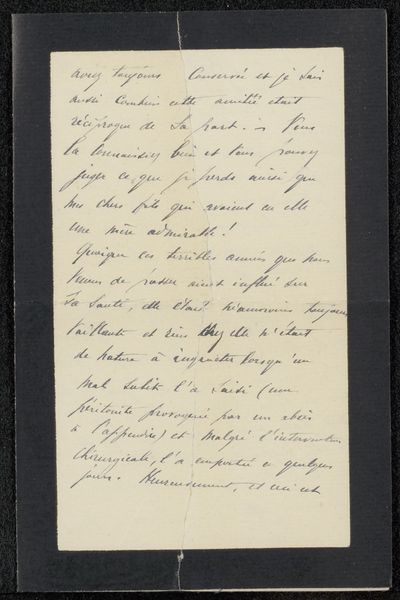
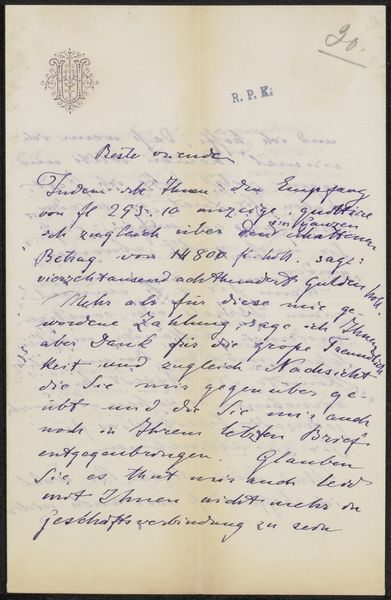
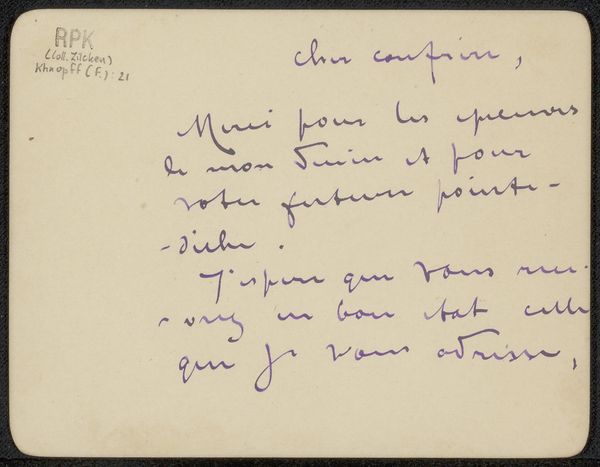
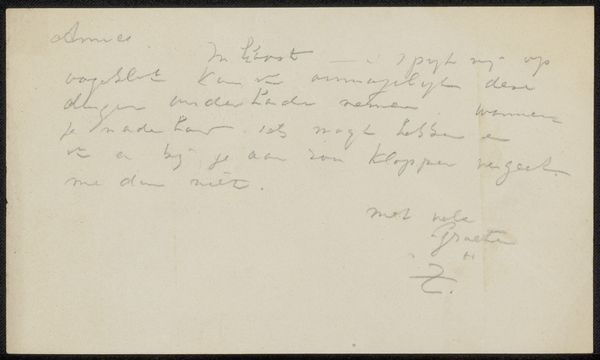
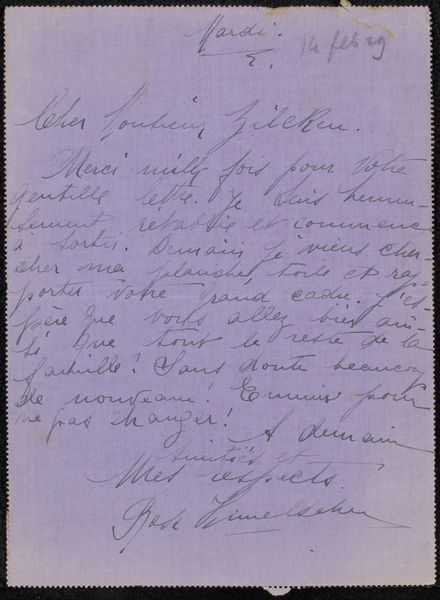
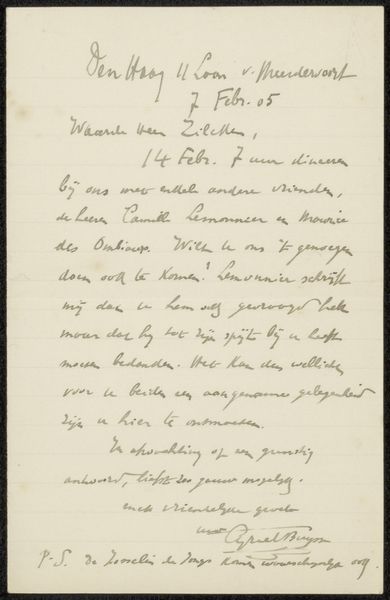
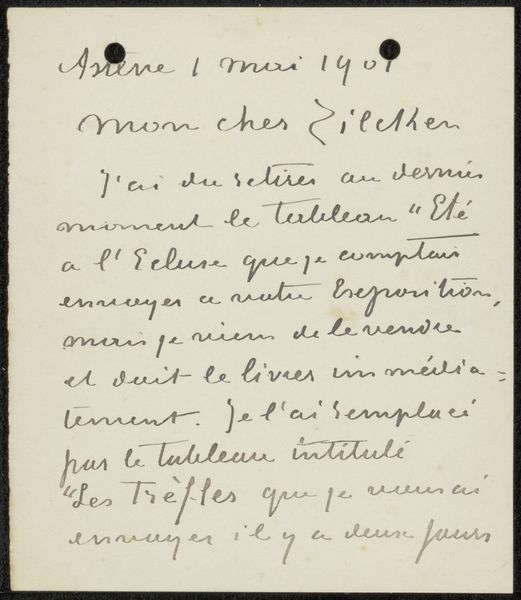
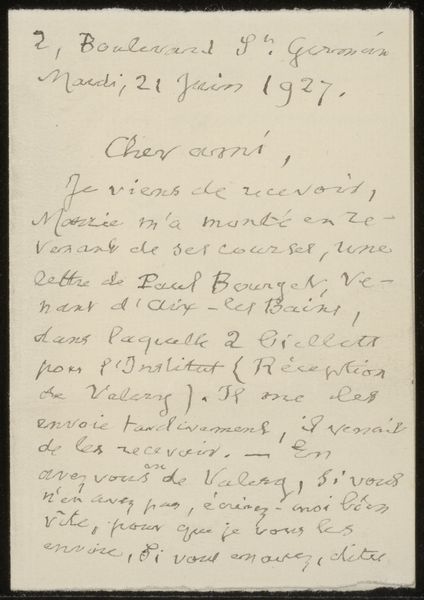
Curator: Let’s turn our attention to this ink drawing on paper, "Brief aan de heer A. Rosnoblet," crafted sometime between 1885 and 1932 by Jean Pierre Laurens. It presents a handwritten letter, elegant and seemingly personal. Editor: Immediately, I'm struck by the intimacy. The slightly faded ink and cursive script give the sense of uncovering a private exchange, laden with history. There's a palpable emotional texture there. Curator: Precisely. Laurens, better known for his academic paintings, demonstrates a mastery of a more utilitarian craft here – the art of the letter. The consistent line weight and graceful curves reveal precision and practiced skill. Editor: But think about the act of handwriting in the late 19th and early 20th centuries. This wasn’t simply a mode of communication, it was a cultivated skill, indicative of social standing and education. This letter speaks volumes, no pun intended, about literacy and class during that time. How accessible was such a practice? And to what extent was it considered women’s work? Curator: Those are critical points. Examining the materials—ink, pen, paper—we confront a very different mode of production compared to, say, his history paintings. It's not about monumental scale or lavish display; it's an economy of means serving a communicative purpose. The labor is direct, immediate. Editor: And the vulnerability is intense, no? This is far more unfiltered than any publicly exhibited work. A letter like this, written for an individual’s eyes, gains particular power for how the writer might address societal expectations or disrupt them. It makes one think about epistolary forms like those we see in letters by famous authors, how the mundane can become an intensely personal, and powerful, statement. Curator: Exactly. The lack of ornamentation emphasizes function, yet the very act of handwriting infuses it with a personality lost in mass-produced text. The careful inscription, "R. Laurens," functions as a material affirmation of the artist's presence. Editor: So in looking at this humble letter we gain insights into intimate human interaction, the evolution of language as technology and tools evolved, the dynamics between labor and art, between the personal and the performative. Curator: Absolutely. This unassuming work quietly reveals layers of practice and cultural meaning, inviting us to reconsider what constitutes "art." Editor: Ultimately, the artifact underscores the politics inherent even within personal exchange; what is written or shared—by whom and with whom. And that awareness profoundly changes how we see the work and interpret what might seem, on the surface, a very traditional message.