1788
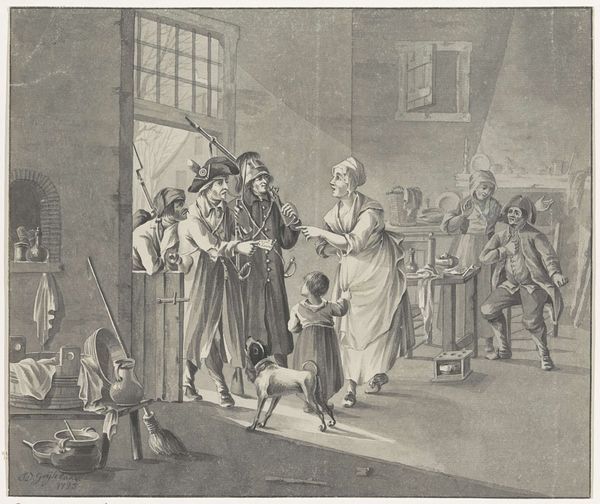
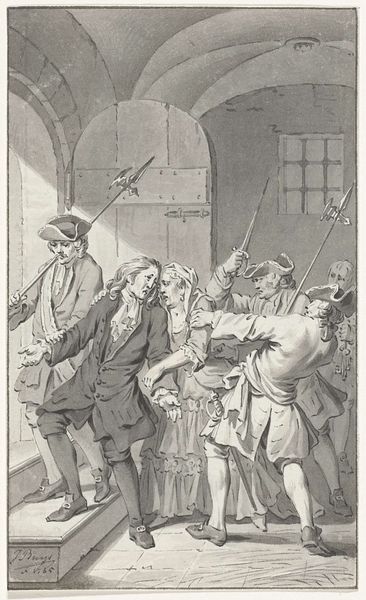
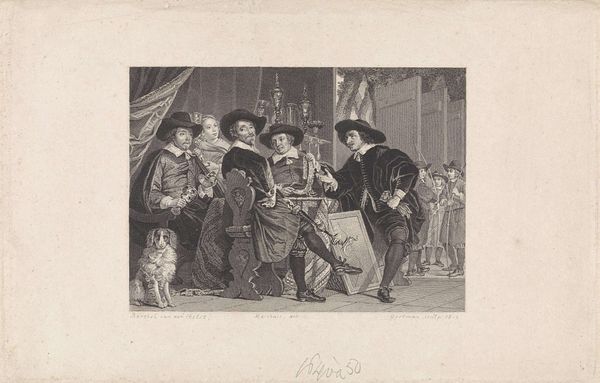
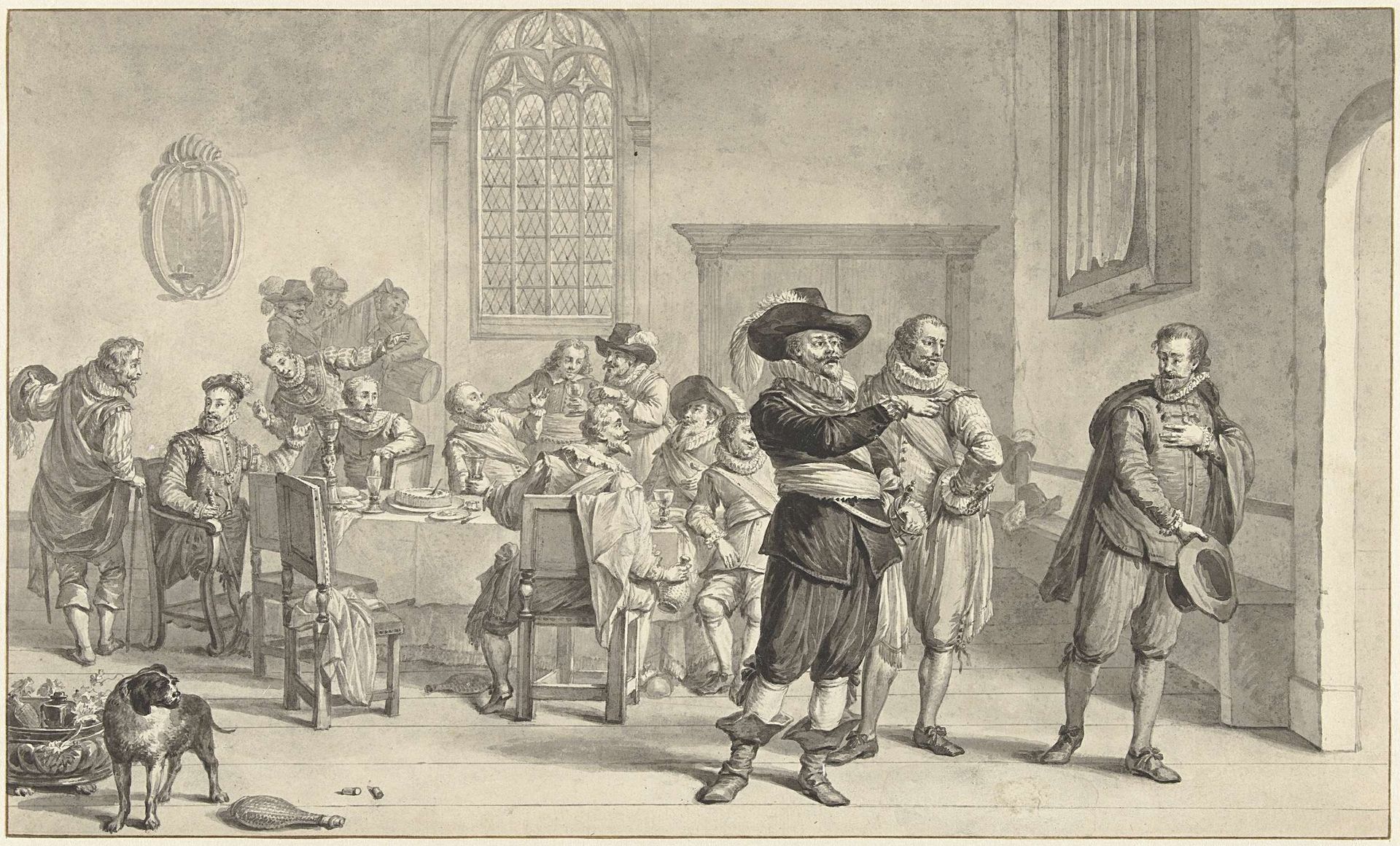
Burgemeester P.C. Boom verijdelt een aanslag van Leicester op Amsterdam, 1587

Wybrand Hendriks
1744 - 1831Location
RijksmuseumListen to curator's interpretation
Curatorial notes
This print, made by Wybrand Hendriks, depicts Burgemeester P.C. Boom thwarting an attack on Amsterdam in 1587. Executed in ink on paper, this artwork employs the traditional printmaking process of etching or engraving. The material itself, paper, is relatively humble, but the skilled application of the artist elevates it. The fine lines and intricate details, achieved through careful labor, showcase a mastery of the medium. The varying tonal values suggest the amount of work required to create shading and depth. Printmaking allowed for the wide distribution of images, and played a crucial role in shaping public opinion. In this case, it commemorates a specific historical moment, reinforcing civic pride. The choice of printmaking also speaks to the social context of the time, when the medium was used to disseminate both information and propaganda. So, while this artwork may seem like a simple print on paper, its material and making connect it to a rich history of labor, social commentary, and the power of images to shape our understanding of the world.